
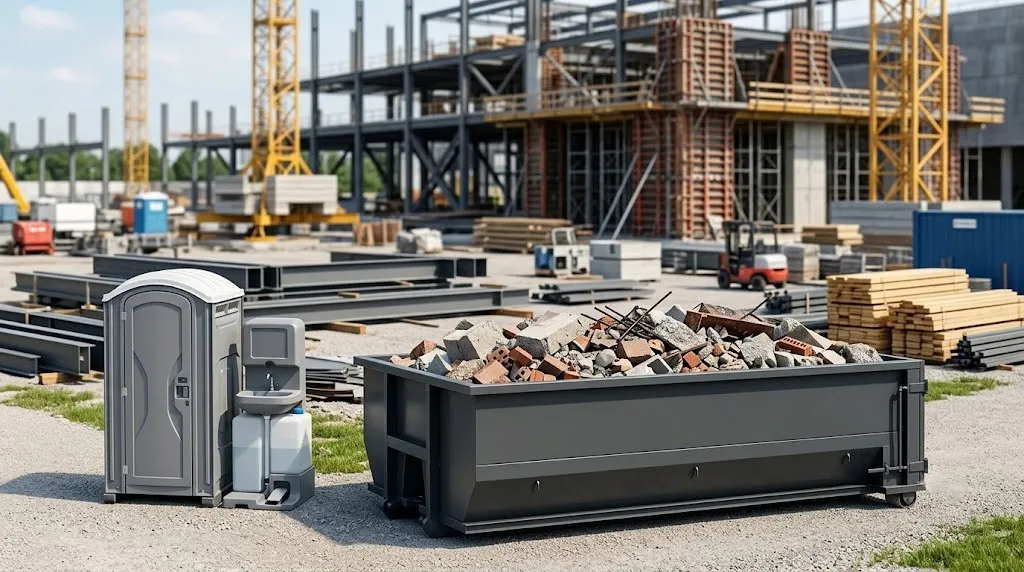
How many tons does each dumpster size hold?
Included tonnage does not scale with volume, which is the single most misunderstood thing about roll-off rental. A 40 yard holds four times the cubic yards of a 10 yard but carries barely twice the weight allowance.
| Size | Typical tons included | Typical tare weight of the empty can | Practical debris |
|---|---|---|---|
| 10 yard | 1 to 2 tons | 2,000 to 3,000 lb | Concrete, brick, soil, tile |
| 20 yard | 2 to 3 tons | 3,500 to 4,500 lb | Renovation debris, roofing |
| 30 yard | 3 to 4 tons | 4,500 to 6,000 lb | Framing, fit-out, bulky mixed |
| 40 yard | around 4 tons | 5,500 to 7,500 lb | Light demolition debris only |
Tare is the empty weight of the container. It comes off at the scale, so you are only billed for debris. Every dimension sits alongside these figures on the sizes and dimensions page.
Why is there a weight limit at all?
Because a loaded roll-off is a highway vehicle before it is a waste container. Pennsylvania's Vehicle Code at 75 Pa.C.S. Section 4941 caps gross weight at 80,000 pounds for a combination on a highway, and the federal limits at 23 CFR 658.17 add 20,000 pounds on a single axle and 34,000 on a tandem group.
Work backwards from 80,000. Subtract the tractor and roll-off body, then subtract the tare weight of the container itself, and what is left is your allowance. There is no negotiating with it. A driver who arrives at a can loaded past the limit cannot legally take it, and on a Philadelphia rowhouse block there is nowhere to offload half of it. That is why the fill line on the container wall is a legal mark and not a suggestion.
What does each material weigh per cubic yard?
Density is where jobs go wrong. These are working figures used across the trade for load planning, and they are the numbers a hauler runs against the 80,000 pound ceiling in 75 Pa.C.S. Section 4941 before agreeing a size.
| Material | Approximate weight per cubic yard | Yards to hit 2 tons |
|---|---|---|
| Broken concrete | about 4,000 lb | 1 |
| Brick and block | about 3,000 lb | 1.3 |
| Wet soil | about 2,700 lb | 1.5 |
| Dry soil and sand | about 2,200 lb | 1.8 |
| Asphalt shingles | about 1,800 to 2,500 lb | 1.6 to 2.2 |
| Old plaster and lath | about 1,000 lb | 4 |
| Drywall | about 500 lb | 8 |
| Mixed construction debris | about 400 to 600 lb | 6 to 10 |
| Framing lumber | about 300 lb | 13 |
| Household junk and furniture | about 200 to 300 lb | 13 to 20 |
Read the concrete row and the lumber row together. The same container holds one cubic yard of one and thirteen of the other before it hits 2 tons. That single fact drives every sizing recommendation on this site, from the 10 yard up to the 40 yard, and it is why the roll-off overview asks about material before volume. Jobsite crews should read it alongside construction dumpster rental.
Why Philadelphia rowhouse debris is heavier than people expect
Philadelphia housing stock is old, and old means plaster. A cubic yard of plaster and lath runs roughly twice the weight of the same volume of modern drywall, and a full gut on a two or three story rowhouse produces a lot of it. OSHA 1926.25 requires that scrap and debris be cleared from work areas as the job progresses, so it does not sit and accumulate.
Add cast iron waste stack, old radiators, slate, and the layers of flooring that accumulate over a century, and a 20 yard container on a Fishtown or Point Breeze gut routinely hits its tonnage before the walls are half full. That is normal here and it is not a mis-sized container. Plan for it by pricing the overage rate up front rather than being surprised at the invoice. The cost breakdown has the line items.

How overage is billed
By the ton, at the transfer station rate, on top of the rental. There is no flat penalty and there should not be one. The container is weighed loaded, the tare is deducted, and anything above your included allowance is charged at the disposal rate.
Ask for that per-ton figure before you book, in writing. A hauler who will not state it in advance is a hauler you will argue with later. Ask two other things at the same time: what happens to a clean masonry or soil load, which is usually quoted on its own rate, and what the trip charge is if the truck arrives at an overloaded can and has to leave it.
How do you avoid an overage charge?
- Separate heavy material out and put it in a dedicated 10 yard clean load rather than mixing it into general debris
- Break concrete down small so the container fills evenly rather than bridging
- Keep soil dry if you can. Wet soil at about 2,700 pounds per cubic yard against 2,200 dry is a 20 percent penalty for rain
- Pull metal for scrap before loading, which removes weight and can pay something back
- Don't load above the top rail. Federal cargo rules at 49 CFR 393.100 require that nothing leaks, spills, blows or falls from the vehicle, so an over-height load gets refused
- Tell us the debris type at booking so we size on weight rather than volume
Does the load need to be covered?
Yes, and it is not optional. Federal cargo securement rules at 49 CFR 393.100 require that cargo not leak, spill, blow or fall from a commercial vehicle, so the driver tarps the container before pulling off. On an 8 foot walled 40 yard carrying light demolition debris, wind is the real reason.
This is also why the load has to sit level with the top rail. A heaped container cannot be tarped properly, which means it cannot legally move, which means a wasted trip. Load flat, load low, and if it is heavy material, stop early.
Common questions about dumpster weight
How many tons does a 20 yard dumpster hold?Rental allowances are usually 2 to 3 tons. The physical ceiling is set by 75 Pa.C.S. Section 4941 at 80,000 pounds gross for the whole vehicle.
How much does a 20 yard dumpster weigh empty?Roughly 3,500 to 4,500 pounds depending on the manufacturer and steel gauge.
How many tons does a 30 yard dumpster hold?Usually 3 to 4 tons included. A 30 yard is a volume container, so it rarely reaches that on light debris.
How many tons does a 40 yard hold?Around 4 tons. If your material is dense enough to worry about, you want a smaller container, not a bigger one.
Can I mix concrete into general debris?You can, and it will cost you. Better to keep it separate. See what cannot go in a dumpster for the materials that cannot go in at any weight.
Does the permit change if the load is heavy?No. Philadelphia's street placement rules under Philadelphia Code Section 10-722 and the Streets Department Right-of-Way Unit at (215) 686-5500 are about the footprint, not the tonnage. See dumpster permit requirements.
How many tons can a 30 yard dumpster hold?
Three to four on a normal allowance. How many tons does a 30 yard dumpster hold legally is a truck question.
How many tons does a 40 yard dumpster hold?
Rarely more than 4 tons of allowance. Volume is the point of a 40, not weight.
How much does a 20 yard dumpster weight empty?
Roughly 4,000 to 6,000 pounds of steel. That tare comes off at the scale.
Start with the roll-off dumpster overview if you're still choosing, or construction dumpster rental for jobsite swaps and construction site services for the rest of the setup. Everything we run is listed on the home page and on porta potty rental in Philadelphia. Send the debris type through the quote form, call the contact page number, or check service areas and the FAQ.
Next step
Get a delivery date
Tell us the address, the dates and the headcount. We size the order and confirm the route.