
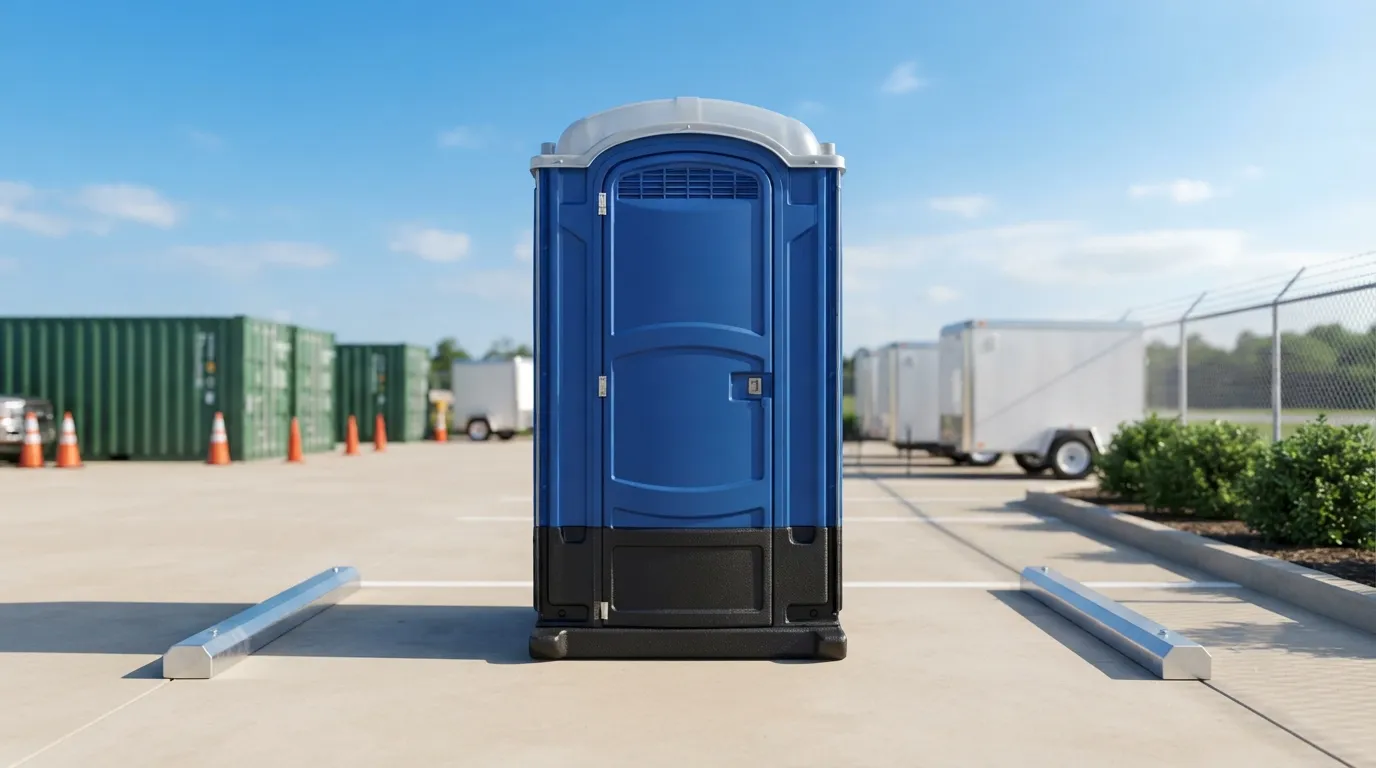
What is a standard porta potty?
A standard porta potty is a single-occupancy chemical toilet mounted over a sealed holding tank, with no running water and no connection to a sewer. Inside you get a seat and lid, a urinal on most models, a paper holder and a vent stack that runs floor to roof. That is the entire machine, and it has barely changed in thirty years because it does not need to.
Manufacturer specifications on the units in common circulation put the holding tank between 60 and 70 gallons and the cabin height near 92 inches. Empty, a unit weighs roughly 150 to 200 pounds. That number matters in this city more than most, because a walked-in placement behind a Fishtown rowhouse is a two person carry, not a one person one.
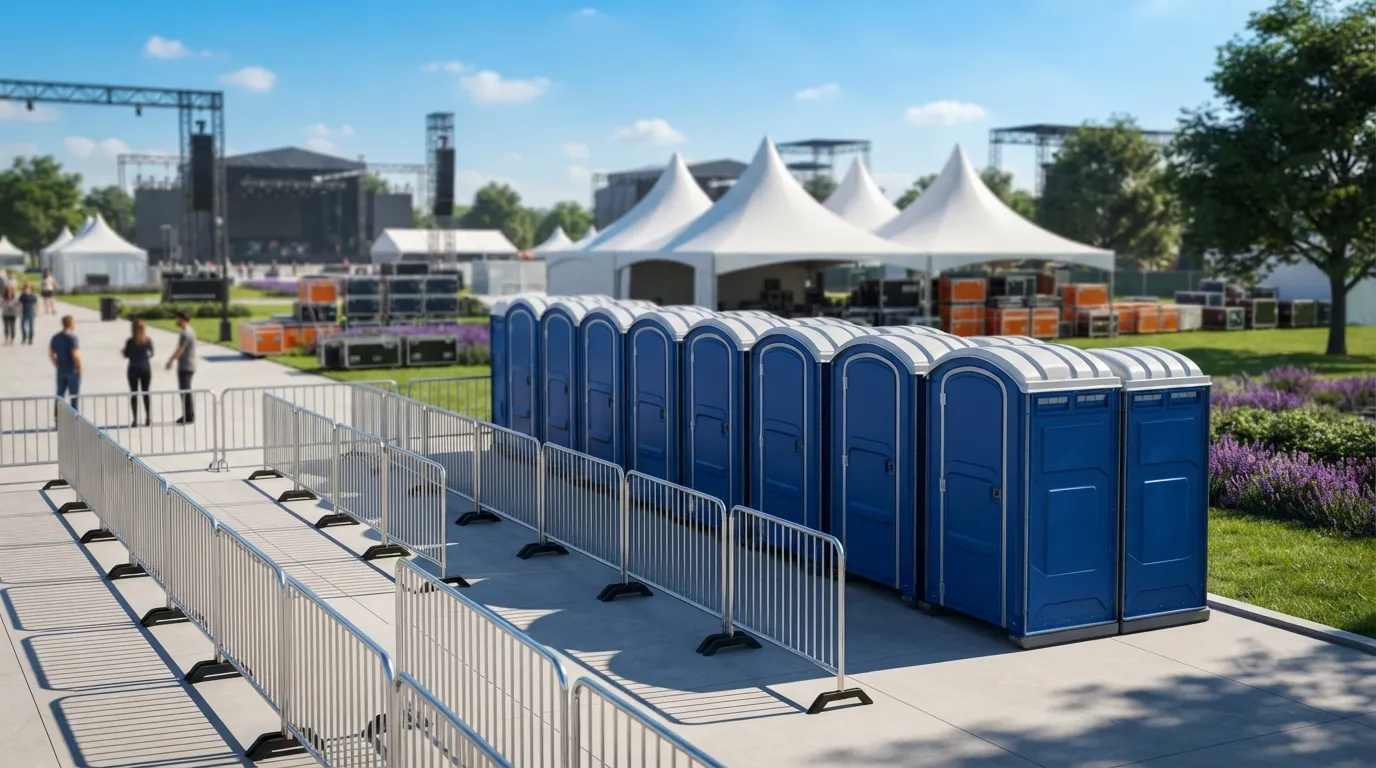
Standard porta potty dimensions and size
Typical manufacturer figures for a standard unit, which is what most people mean by basic porta potty rental:
| Measurement | Typical figure |
|---|---|
| Footprint | 44 by 48 inches |
| Height | 90 to 92 inches |
| Door opening | 24 to 26 inches wide |
| Holding tank | 60 to 70 gallons |
| Empty weight | 150 to 200 pounds |
| Full tank weight | over 500 pounds at 8.34 pounds per gallon |
Four feet square reads small on paper. On a Passyunk Square sidewalk it is most of the walking route, which is why placement usually ends up curbside or in a rear yard rather than against the house. The 2010 ADA Standards require 36 inches of clear width on an accessible route under section 403.5.1, so if the unit leaves less than that past it on a public footway, it is in the wrong spot. Our placement guide covers the clearances a driver actually checks.
If the footprint is the problem, the answer is usually a different placement, not a different unit. Nobody makes a meaningfully smaller standard cabin.
What does a standard porta potty rental cost in Philadelphia?
Typical Philadelphia market ranges, reviewed July 2026. These are ranges, not a quote.
| Duration | Typical range |
|---|---|
| One day | $100 to $350 |
| Weekend | $125 to $250 |
| One week | $130 to $500 |
| One month | $125 to $325 |
Delivery normally adds $50 to $150 and each weekly service visit $30 to $60. Standard porta potty rental prices move with drive time and service count far more than with the calendar, so a single day booking is the worst value per day and a monthly jobsite rate is the best. Full detail, including every add-on line, sits on the porta potty rental cost page.
How often does a standard unit get serviced?
Weekly, under normal use. ANSI/PSAI Z4.3, the industry standard for non-sewered waste disposal systems, treats one visit per week as the baseline for a single unit in ordinary service. A visit means pumping the tank out, rinsing it, recharging the deodoriser, restocking paper and wiping the touch points.
Heavy use changes the arithmetic. A 60 gallon tank holds over 500 pounds of waste when it is full, at
8.34 pounds per gallon, and a crew of eight on a summer rehab will fill one faster than a back yard party of twenty. If a quote you are comparing carries one service visit where ours carries two, it is not cheaper. See how often units are cleaned and the honest answer on smell, which is nearly always a servicing gap rather than a fault in the unit.
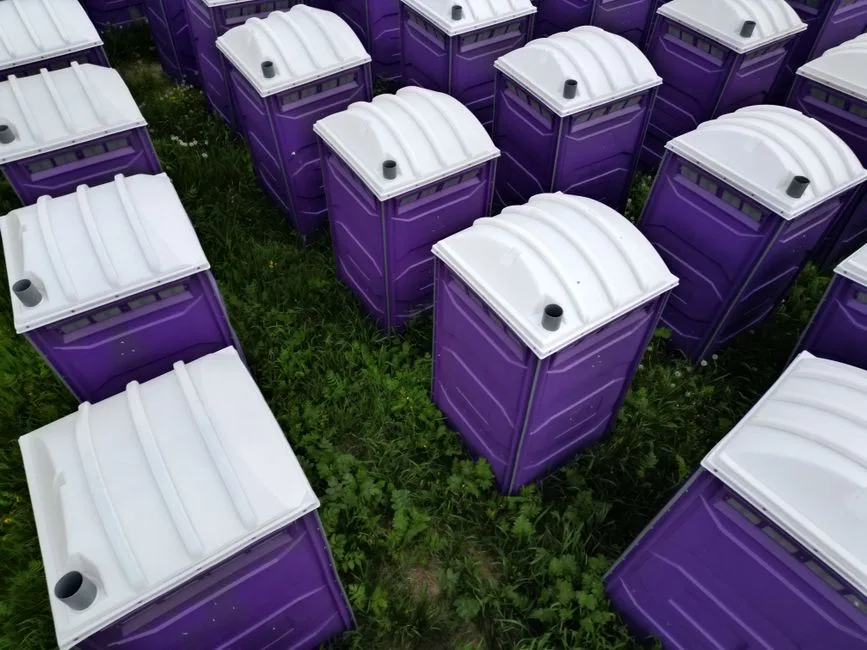
Where a standard unit is the right call
Standard units carry the bulk of the work in Philadelphia:
- Rowhouse gut rehabs in Point Breeze, Grays Ferry, Kensington and Port Richmond
- Home renovation jobs where one unit covers a small crew for months
- Block parties, sports fields and casual outdoor gatherings
- Construction site packages alongside a dumpster and fencing
- Overflow at large events, in banks of six or ten
- Camping and remote placements where there is no water at all
Where it is the wrong call is anything with a guest list and a dress code. A garden party in Chestnut Hill usually wants a deluxe flushing unit, and a wedding almost always ends up at a restroom trailer instead.
Getting a standard unit onto a Philadelphia block
Access is the whole game here, and it is the one thing a national price calculator cannot model. South Philadelphia, Bella Vista, Grays Ferry and much of West Philadelphia are narrow, parked solid and often one-way. The cabin fits. The truck is what fails.
What we ask before we schedule:
- The block, not just the street name
- Whether the placement is curbside, driveway, rear yard or walked in
- Whether the street is one-way, and which way
- What time the parked cars usually clear
- Whether anything overhead sits under 12 feet
- Who on site can move a car if one is in the way
Northeast Philadelphia and the suburbs are a different exercise entirely. A driveway drop in Abington at 8.6 miles or Bensalem at 14.8 miles takes a fraction of the time of a tight Center City stop, and the delivery charge reflects that. The full ring is on the service areas page.
Do I need a permit for a standard unit in Philadelphia?
Only for public ground. Philadelphia routes portable toilet permits through the Department of Public Health, under its infectious waste program, on the application that covers portable toilets and holding tanks together. Most people go looking for a streets department process first and lose a day or two finding out it does not exist here.
A unit in your own back yard or on a private lot does not need it. An event with portable units on public ground does. The permit requirements page walks the route step by step, and dumpster permits run on a separate track again.
How many standard units does a jobsite need?
OSHA 1926.51(c)(1) requires one toilet for 20 or fewer workers on a construction site, then one toilet seat and one urinal per 40 workers above that. It counts people on site rather than companies, so a rowhouse rehab with a framer, an electrician and a plumber counts all three trades together. Fixed workplaces sit under OSHA 1910.141(c)(1)(i) instead, which requires one toilet for 1 to 15 employees and two for 16 to 35.
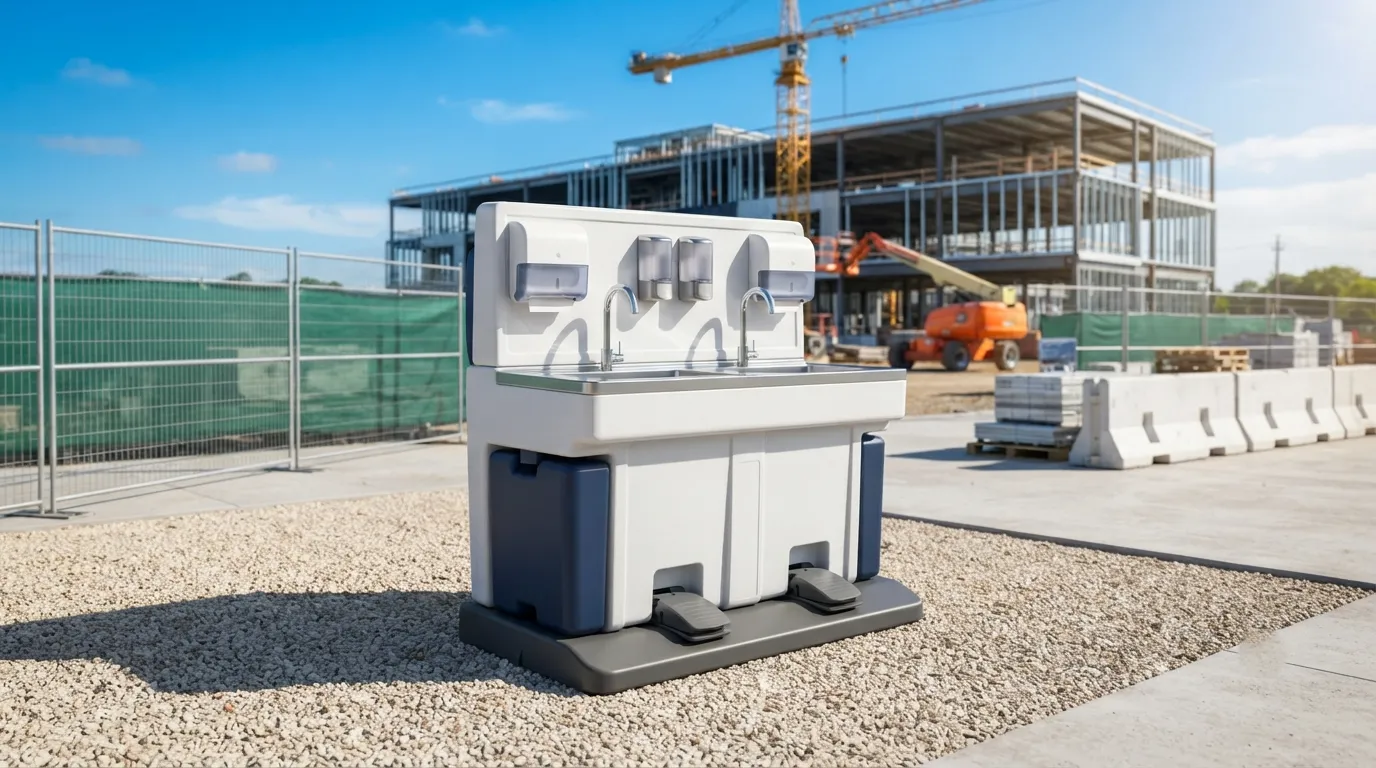
Washing facilities are a separate requirement under OSHA 1926.51(f), which is what a handwashing station or a portable sink covers. The OSHA requirements guide has the full table and the unit calculator does the sums.
Questions about standard porta potty rental
What is the difference between standard and basic?Nothing. Basic porta potty rental, standard unit, porta john, portable toilet and portable restroom all describe the same blue box in this market.
Does it have a sink?No. A standard unit has a hand sanitiser dispenser at most. Running water means either a deluxe unit or a separate station.
Will it work through a Philadelphia winter?Yes, with a winter chemical mix and a service schedule that accounts for the cold. See porta potties in winter.
How fast can you deliver one?Next working day on most standard units, same day if you call early and access is clear. Genuine urgency goes to emergency rental.
Can I move it once it is placed?Please do not. A full unit is heavy, awkward and easy to tip. Call and we will reposition it.
Book a standard unit
Have the block, the dates and the placement in mind and this takes four minutes. Request a quote, contact us, read the booking checklist or the Philadelphia rental page, check the FAQ, or go back to the home page.
Next step
Get a delivery date
Tell us the address, the dates and the headcount. We size the order and confirm the route.