
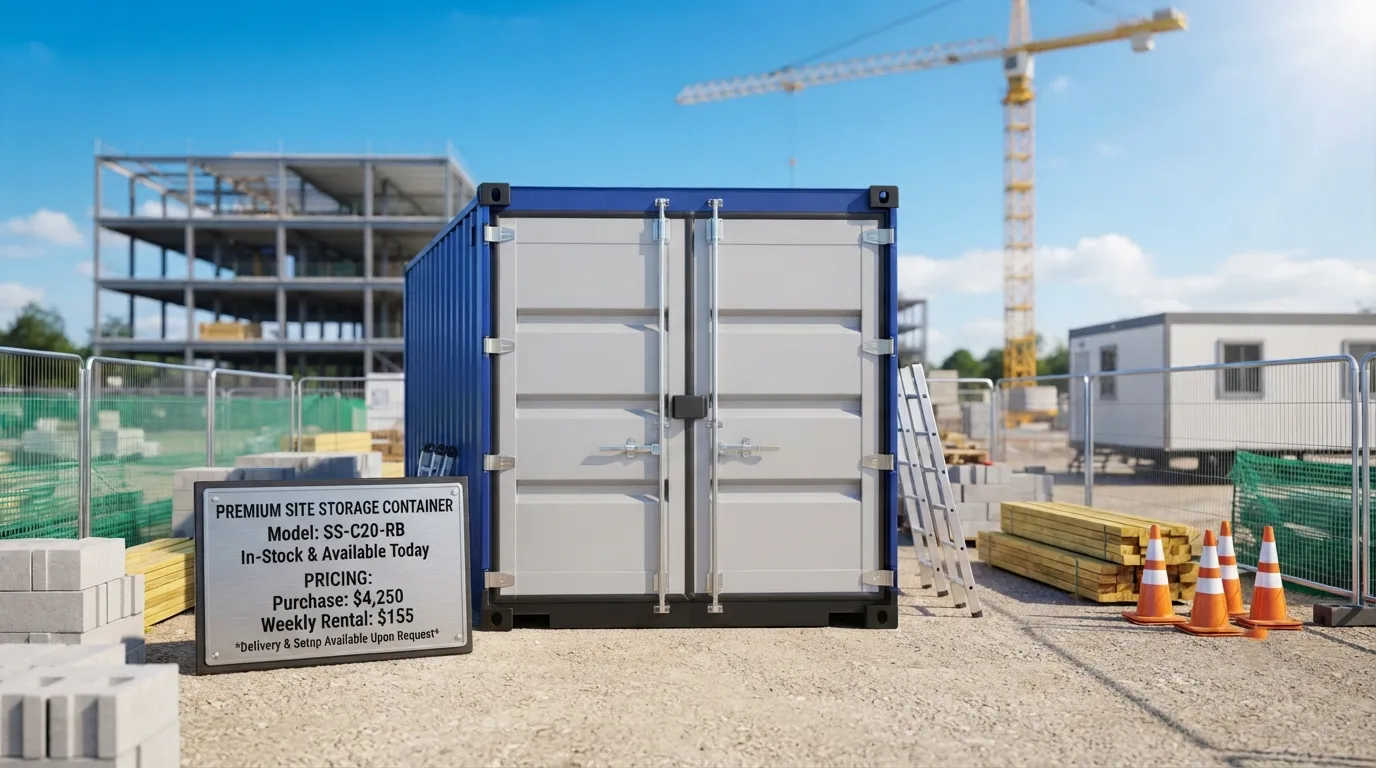
How much does a storage container cost to rent in Philadelphia?
| Line | Low | Typical | High |
|---|---|---|---|
| Container rental, per month | $100 | $125 | $250 |
| Delivery and collection | $50 | $100 | $150 |
| Repositioning on the same site | quoted | quoted | quoted |
| Failed delivery, no access | charged as a run |
Two numbers, not one. The monthly rate is the cheap part. The truck is what costs money, and any quote that folds delivery into a single figure without saying so is hiding the number you would use to compare.
Those are market ranges from published operator pricing, reviewed July 2026. What you actually pay depends on the box, the term and the drop, and we quote the real job. Sizes are set out on storage container rental, 20ft containers and 40ft containers.
What is in the rate, and what is not
In the monthly rate:
- The container itself, sound and lockable
- Standard placement on level, prepared ground
- The lockbox on units going to open sites
Charged separately, and it should be itemised:
- Delivery to site and collection at the end
- Moving the box once it is on your ground
- A second run if the truck arrives and cannot place
- Plates or cribbing on soft ground, on some jobs
- Any crane placement, which is a specialist lift
Ask for those lines broken out before you sign anything. It is the same principle we apply on porta potty rental cost and dumpster rental cost, and it is the fastest way to compare two quotes honestly.
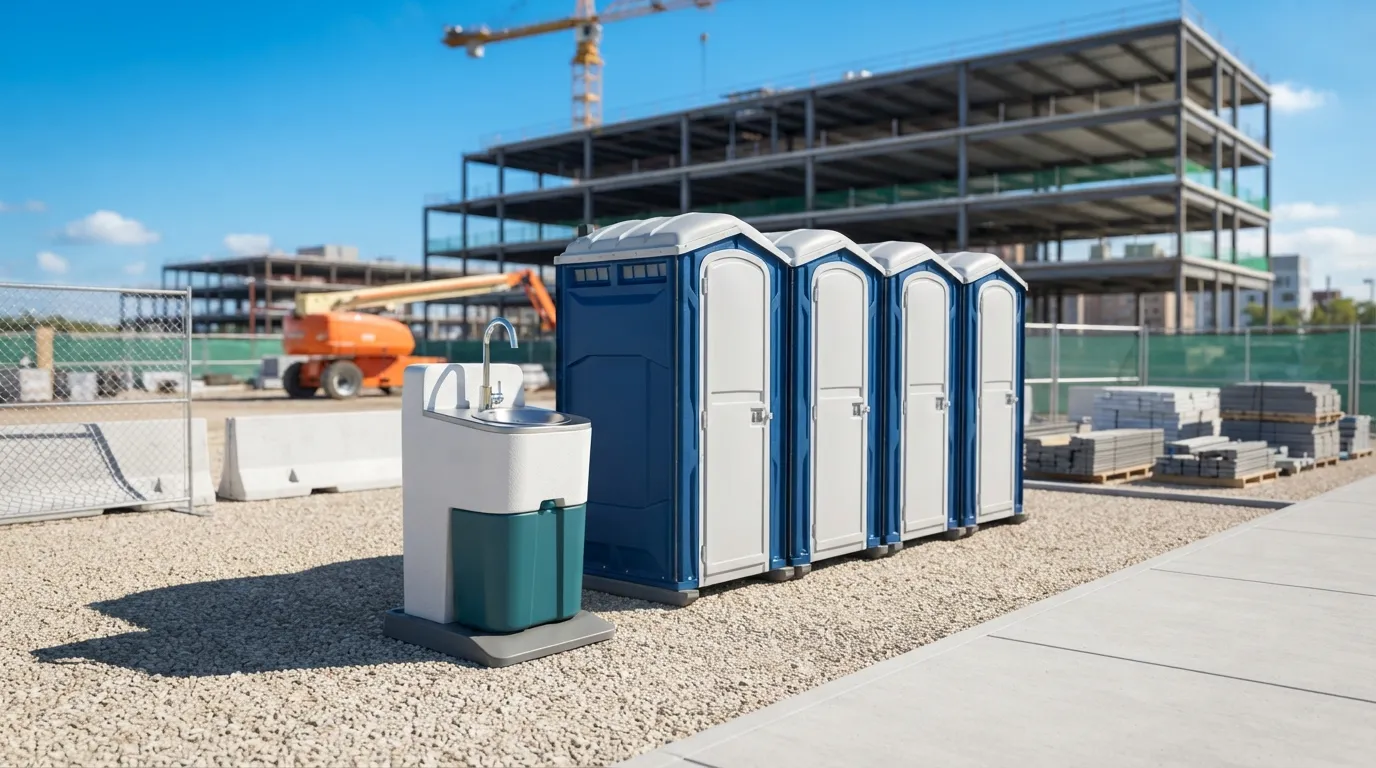
What moves the price up or down
- Distance from the yard. The single biggest factor. A drop in Fishtown and a drop in Doylestown are not the same job.
- Size. A 40 foot box is a bigger truck and a longer set. See what fits in each size for the equivalent logic on skips.
- Term. Six months and up prices below the monthly band. Rolling a short rate five times costs more.
- Access. A tilt bed needs about 60 feet of straight run for a 20 foot container and close to 100 feet for a 40. Where that does not exist, the job gets harder and the price follows.
- Ground. Asphalt and concrete are free. Soft ground needs plates.
- Season. Spring and early summer are the busy end of the renovation calendar in this city.
- Specialist boxes. Refrigerated and office conversions sit well outside the standard band and need a power feed, usually a temporary power pole or a generator.
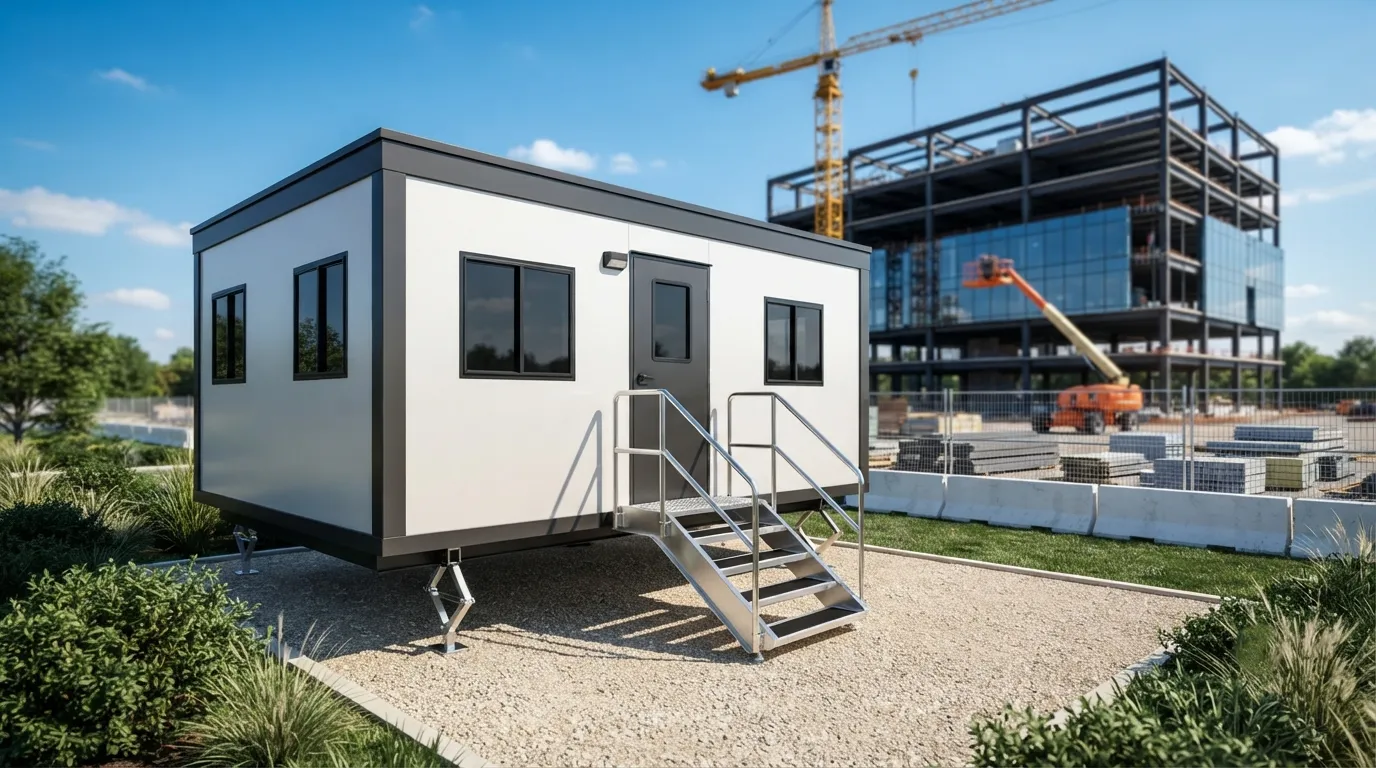
Three real Philadelphia jobs, with totals
These use the typical figures above. They are worked examples, not quotes.
A Fishtown rowhouse gut renovation, 20 foot box, four months. Four months at the $125 typical rate is $500, plus roughly $100 delivery and collection. Call it $600 for the container across the job. Add a 10 yard dumpster for the strip out and portable toilet rental for the crew, since OSHA 1926.51(c)(1) requires one toilet for 20 or fewer workers whatever else is on site, and ANSI/PSAI Z4.3 treats weekly service as the baseline.
A university compound in West Philadelphia, 40 foot box, twelve months. Twelve months sits in long term territory, which prices below the monthly band, and delivery at the upper end because it is a bigger truck and a planned move. The comparison worth running is one 40 against two 20s, which is set out on the 40ft page.
A festival at Penn's Landing, 20 foot box, ten days. A short hire pays close to a full month plus delivery, because the truck runs twice either way. If the same event needs temporary fence rental and crowd control barriers, putting them on one order removes a second delivery charge.
Is a container cheaper than a self storage unit?
Usually yes for a working site, and usually no for household storage you rarely touch. The arithmetic is straightforward. A 20 foot container gives you about 148 square feet of floor with 24 hour access on your own ground. A 10 by 20 self storage unit gives you 200 square feet in a facility, with access hours and a drive each way.
Where the container wins:
- The job is on site and you need the stock next to the work
- Trades are in and out of it daily
- The alternative is renting a unit and paying someone to drive to it
- You need it locked and yours, not shared
Where self storage wins:
- No room on site, which on a rowhouse block is common
- Long term storage of things nobody touches
- Climate sensitive items, since a steel box swings hard with the weather
If the site genuinely has no room, that is worth knowing before you book rather than after a failed delivery. Send a photo. The placement guide covers what we look for.
Does a 40ft container cost more than a 20ft?
Yes, on both lines. The rental rate sits toward the upper end of the $100 to $250 band and the delivery sits above the $50 to $150 band, because it is a longer vehicle, a longer set and a permitted move on some routes.
The question worth asking is whether you need 40 feet of length or just more volume. A 40 foot box holds about 2,390 cubic feet against roughly 1,170 in a 20, and ISO 668 fixes both, along with a maximum gross weight of 30,480 kilograms for either size. Tare weight is the practical difference: around 4,850 pounds for a 20 and around 8,340 for a 40, which is a bigger truck and a longer set. If you are storing pallets rather than 39 foot lengths of steel, two 20s often cost about the same, place far more easily on a Philadelphia site, and let one leave early when a trade finishes.
What a failed delivery costs
A full run, every time, and it is the avoidable charge on this whole page. The truck was booked, the driver drove, the box came back. Nobody enjoys billing it.
The usual causes, in the order we see them:
- A car parked across the drop point on a rowhouse block
- Overhead wires or branches under the 15 feet the raised bed needs
- Soft ground after a wet week, with nothing to plate onto
- A gate narrower than the site plan said
- Nobody on site with authority to say where it goes
All five are solved by a photograph and a phone number. That is the whole prevention plan. Coverage and distances are on service areas, and we run out to King of Prussia, Norristown, Conshohocken, Bensalem, Upper Darby, Camden and Cherry Hill.
Does a permit add to the cost?
Not on private ground during active construction, in most cases. Standing a box in the cartway or across a sidewalk is a different matter and it is a right of way question for the Department of Licenses and Inspections before delivery day.
If any part of the box or its approach narrows a footway, the 2010 ADA Standards set a minimum clear width of 36 inches for an accessible route in section 403.5.1, and that width has to hold at the narrowest point rather than on average. Losing that argument on site costs more than the container does.
Philadelphia's one genuinely unusual routing is portable sanitation. Portable toilet and holding tank applications go to the Department of Public Health under its infectious waste program rather than to a streets or transportation department, and contractors who go looking for a streets process lose a week. That is covered on porta potty permit requirements. Skips have their own route on dumpster permit requirements.
Should I rent or buy?
Rent while the job is running. Buying makes sense only when the box has a permanent home and a permanent purpose, and at that point it becomes a structure with zoning attached rather than equipment.
If a project runs long enough that the arithmetic gets close, tell us the honest term and we will quote a long term rate rather than let you compound a monthly one. The same logic runs through monthly porta potty rental and against daily rates.
Container cost against the rest of the compound
| Item | Typical market range | Note |
|---|---|---|
| Storage container, per month | $100 to $250, typically $125 | Plus delivery |
| Delivery and collection | $50 to $150 | Per unit, per run |
| Roll off dumpster, per week | $426 to $778, typically $600 | Weight limits apply |
| Standard porta potty, per month | $125 to $325, typically $200 | Weekly service included |
| Weekly service visit | $30 to $220, typically $60 | Per unit |
Ranges reviewed July 2026, published market data rather than our quote. Skip detail is on roll off dumpster rental, 20 yard, 30 yard and 40 yard sizes, with weight limits and what cannot go in worth reading before you load.
Questions about storage container rental cost
Is there a minimum term?Typically a month, because a shorter hire still costs two truck runs.
Do you charge for the lockbox?It goes out with units heading to open ground as standard.
What if I need it longer than planned?Tell us before the end date and it extends at the agreed rate. Most renovation jobs run over.
Is delivery cheaper if I take more than one thing?Usually. One order, one run. Combining a container with construction site services, a construction dumpster, handwashing stations or fence panels removes duplicate trips.
Do you quote lighting and power too?Lighting yes, through light tower rental. Electrical connection has to be a licensed electrical contractor under permit.
How does this compare with fencing a site instead?Different job, different band. See temporary fence cost.
Get a real number
What is a typical storage container rental price?
Storage container rental rates are monthly, plus a delivery and a collection leg.
Are storage container rental prices lower on long terms?
Yes. Storage container rental costs drop noticeably past three months.
Send the size, the term, the address and a photo of the drop point, and you will get a figure for your job rather than a band. Request a quote or contact us. Also read mobile office trailer rental, restroom trailer rental, home renovation units, the rental checklist, porta potty rental in Philadelphia, about us, the FAQ and the home page.
Next step
Get a delivery date
Tell us the address, the dates and the headcount. We size the order and confirm the route.