
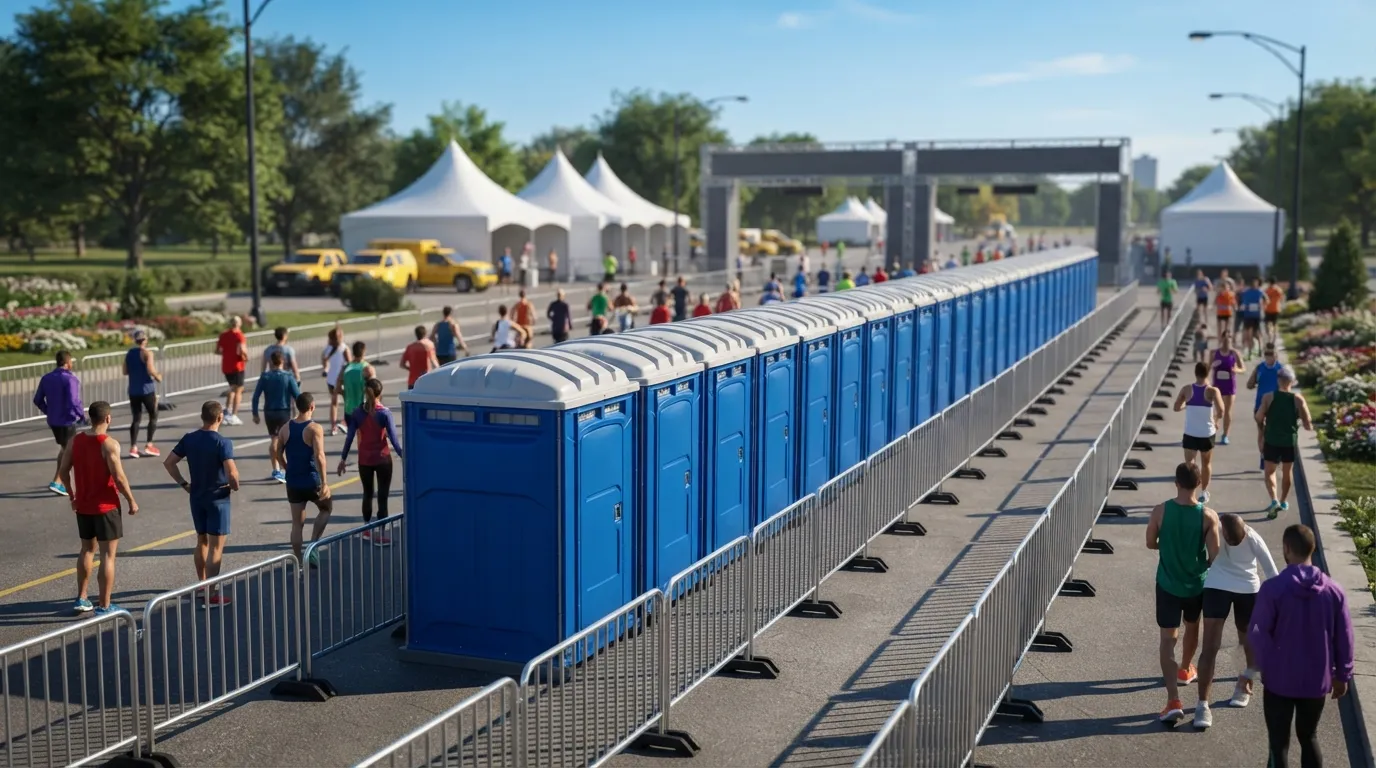
How many porta potties does a marathon start line need?
More than any other event of the same headcount, because a race start is the sharpest usage spike in this trade. Everyone is on site within an hour, everyone needs a toilet before the gun, and the queue has a hard deadline nothing else has.
| Runners | Start line units | Accessible units |
|---|---|---|
| 250 | 8 | 1 |
| 500 | 14 | 1 |
| 1,000 | 25 | 2 |
| 2,000 | 50 | 3 |
| 5,000 | 120 | 6 |
| 10,000 | 230 | 12 |
The accessible column comes straight out of the 2010 ADA Standards. Section 213.2 Exception 4 requires 5 percent of the single-user units in each cluster, and never fewer than one, to comply with section 603. Round up, never down. The unit calculator handles mixed fields and ADA restroom requirements covers the accessible spec.
Spacing units along the course
The start line takes most of the order. The course takes the rest, and course placement is judged in minutes rather than in miles.
- Aim for a unit bank roughly every 2 to 3 miles after mile 3, which is 15 to 25 minutes apart for most finishers
- Nothing before mile 2, because nobody stops that early and the units go unused
- Pair every course bank with a water station rather than putting them somewhere separate
- Add a handwash unit at the finish, since a common two-station model holds about 22 gallons of fresh water and covers roughly 150 to 200 washes before a refill
- Two to four units per course bank on a mid-size race, more on the second half where the field spreads
- One accessible unit per bank, because 5 percent is a per-cluster rule and every bank is a cluster
- Finish line needs a bank of its own, sized at about a quarter of the start line count
Bag drop, family meeting areas and the awards zone all hold crowds after the race is over. Those are event placements rather than race placements, and they are the ones that get forgotten. If the finish carries a festival, size that part with event restroom rental or festival restroom rental instead, and put standard units rather than flushable ones on the course itself, since nothing on a course gets plumbed.
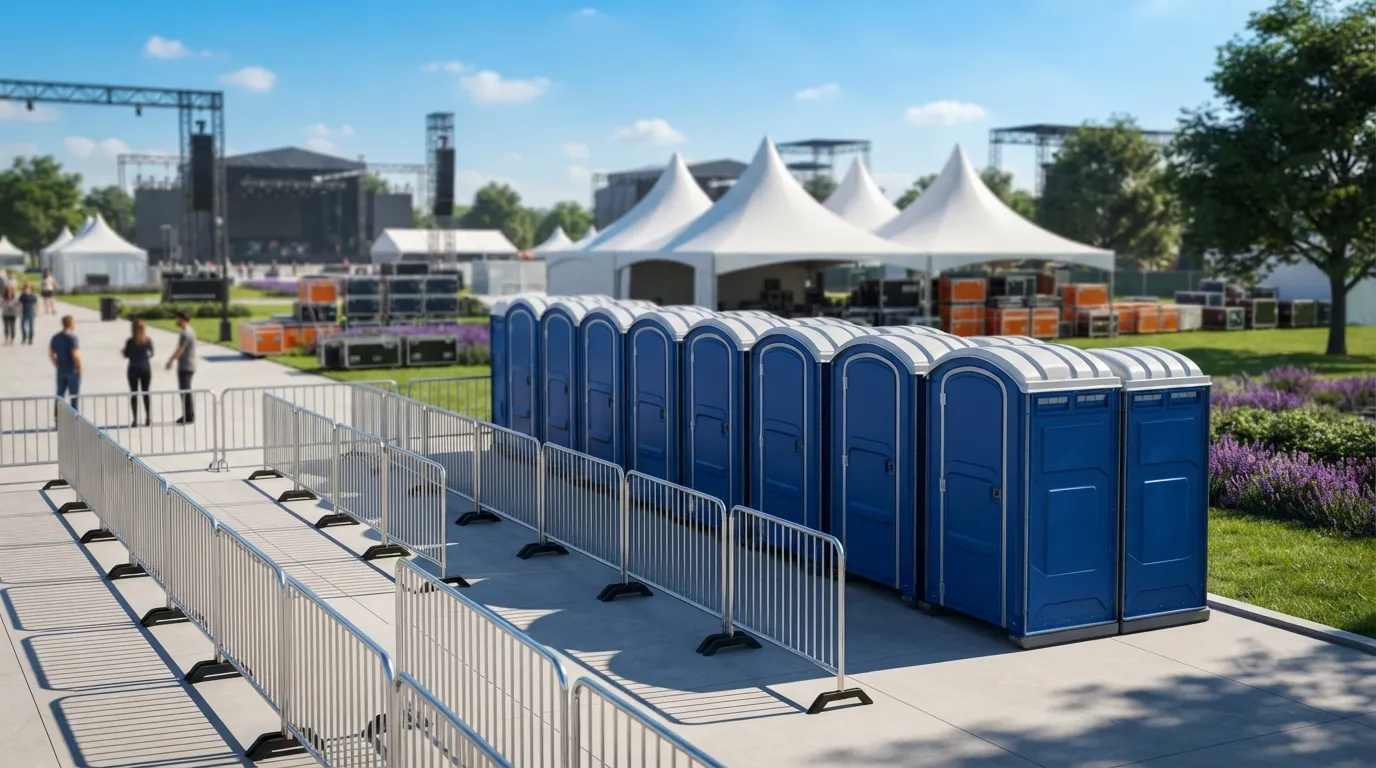
Race restroom pricing in Philadelphia
Typical market ranges, reviewed July 2026. Ranges rather than quotes, and volume orders price differently from single units.
| Item | Typical range | Basis |
|---|---|---|
| Standard unit | $200 to $400 | event day |
| ADA accessible unit | $199 to $400 | event day |
| Deluxe flushable | $250 to $500 | event day |
| Handwash station | $75 to $175 | per unit |
| 2 stall trailer, VIP or medical | $900 to $1,500 | event day |
| Delivery | $50 to $150 | per movement |
| Post-race service | $30 to $60 | per unit |
A race spread across a long course usually pays more than one delivery charge, because banks at mile 4 and mile 18 are two different truck movements. Say the course out loud when you get the quote. Full detail sits on what porta potty rental costs.
Course logistics in Philadelphia
Races here run the river drives through Fairmount Park, out along the Schuylkill, and back through Center City to a finish near the river or on the Parkway. That layout creates one specific problem: the course closes to traffic before the race, and once it closes nothing on wheels gets in or out.
Which means:
- Every unit on a closed section has to be in place the night before, without exception
- Collection cannot start until the road reopens, which is often mid-afternoon
- Overnight units need a placement that will not be tipped, so out of sight of open bars
- Path-side placements in Fairmount Park have to keep 36 inches of clear route width under ADA 403.5.1, because the path is also the accessible route
- Firm ground under ADA 302.1 is not guaranteed on grass verges after autumn rain
We build race orders around the road closure schedule rather than around our own. Send it with the site plan. The placement guide covers the ground rules.
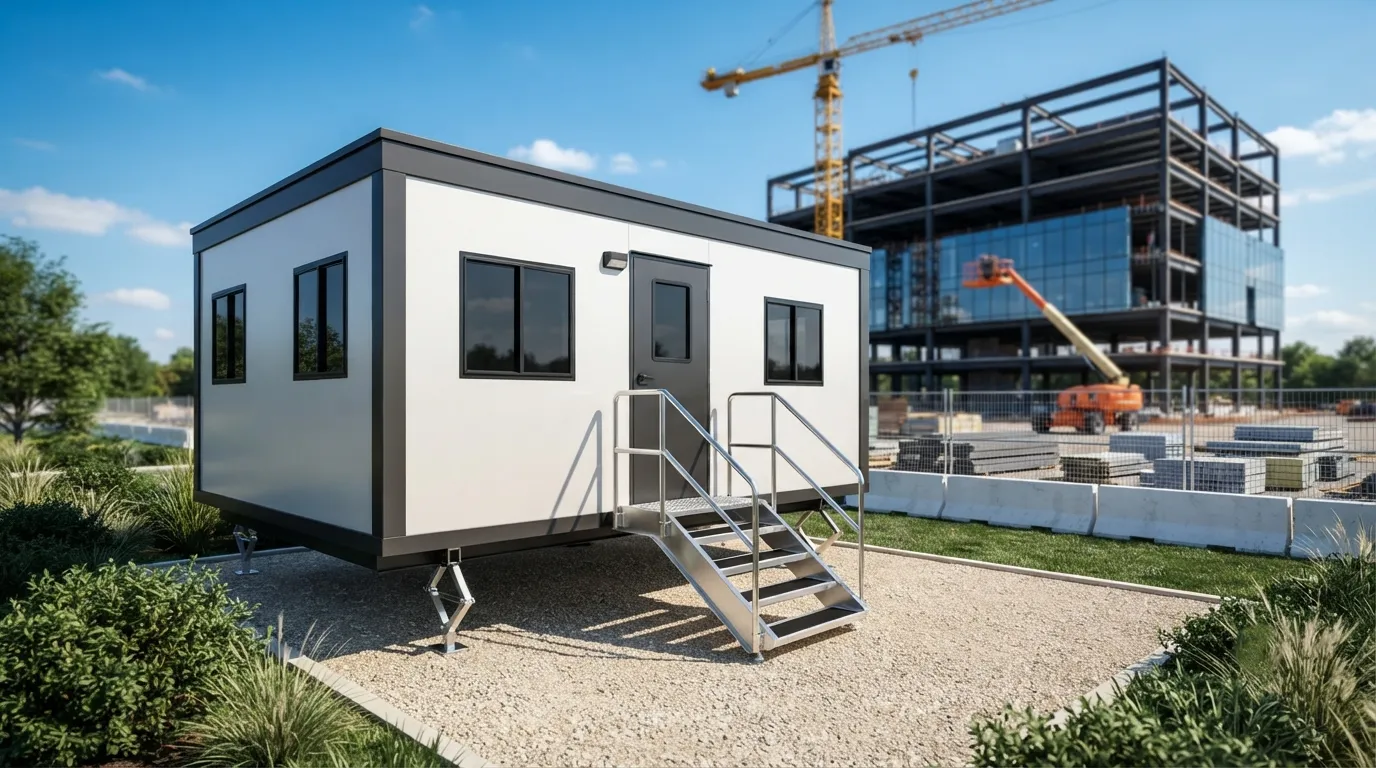
What about servicing on race day?
There is none once the course closes, so everything happens the night before or at dawn. ANSI/PSAI Z4.3 sets the baseline service interval at once a week for a unit taking about 10 users a day, which a start line unit passes in the first five minutes. The standard is not the plan here.
The practical sequence:
- Delivery and full stock the evening before
- A dawn top-up on the start line bank, which is the one that runs out of paper
- Nothing during the race
- Pump and collect once the roads reopen
Because the tank on a standard cabin holds only 60 to 70 gallons, the start line count has to be right first time. A short order cannot be rescued by servicing. That is the difference between a race and almost every other event we supply.
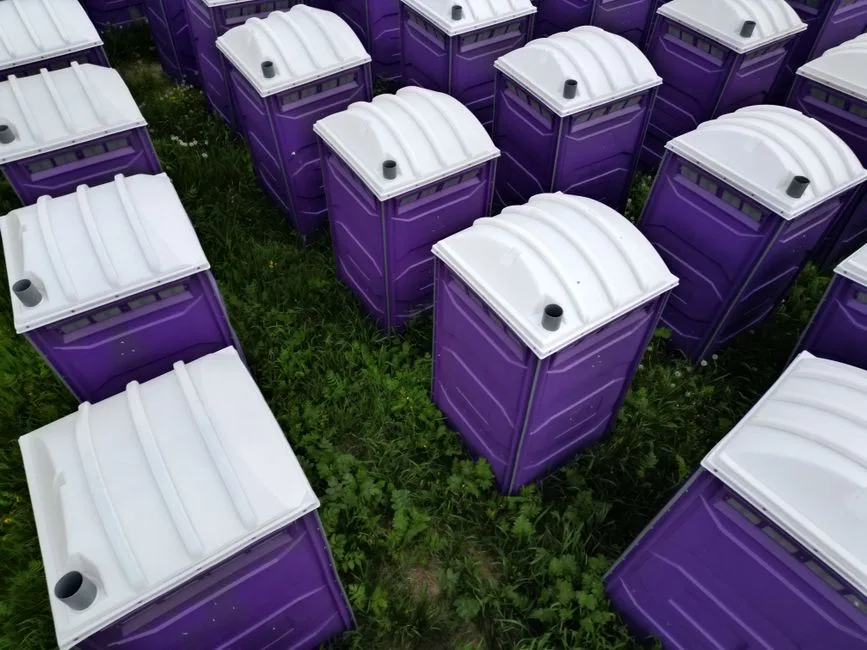
Do races need a portable toilet permit in Philadelphia?
Yes, wherever units sit on public ground, and the route surprises people. Philadelphia issues portable toilet permits through the City of Philadelphia Department of Public Health, under its infectious waste program, on the application that also covers holding tanks. Not through a streets or transportation department, which is where race directors from other cities look first.
Because a course crosses a great deal of public ground, race permissions tend to be handled as one package with the road closures. Check who is filing the Public Health application, since it is easy for it to fall between the race director and the vendor. Permit requirements has the detail and the booking checklist lists what to have ready.
Race restroom questions
How far ahead should a race book?Eight to twelve weeks for anything over 1,000 runners. Autumn Saturdays and Sundays are the tightest dates in this market.
Can you deliver overnight?Yes, and on a closed course it is the only workable option. Tell us the closure time when you book.
Do you supply handwashing at the finish?Yes. Handwashing stations and hand sanitizer stands both work, and finish areas usually want both.
What about the medical tent?A 2 stall trailer with running water is the normal answer, and it needs a 110 volt 20 amp circuit on manufacturer specs.
Do you cover races outside the city?Yes. Conshohocken is 13.5 miles out and Norristown is 18.8. See service areas.
Can you take the waste containers as well?Yes. Roll off dumpsters for the finish festival come off the same order.
Book race restrooms
How often are they serviced during a run?
ANSI/PSAI Z4.3 sets the weekly baseline. Multi-day events get serviced nightly.
Does the finish line need temporary power?
Often. If you need to know how to brace a temporary power pole for it, ask before race week.
Give us the field size, the course map and the road closure window. We plan the start line first and work outward. Request a quote or contact us. Related: event restroom rental, festivals, ADA accessible units, porta potty rental in Philadelphia, the FAQ, or the home page.
Next step
Get a delivery date
Tell us the address, the dates and the headcount. We size the order and confirm the route.