
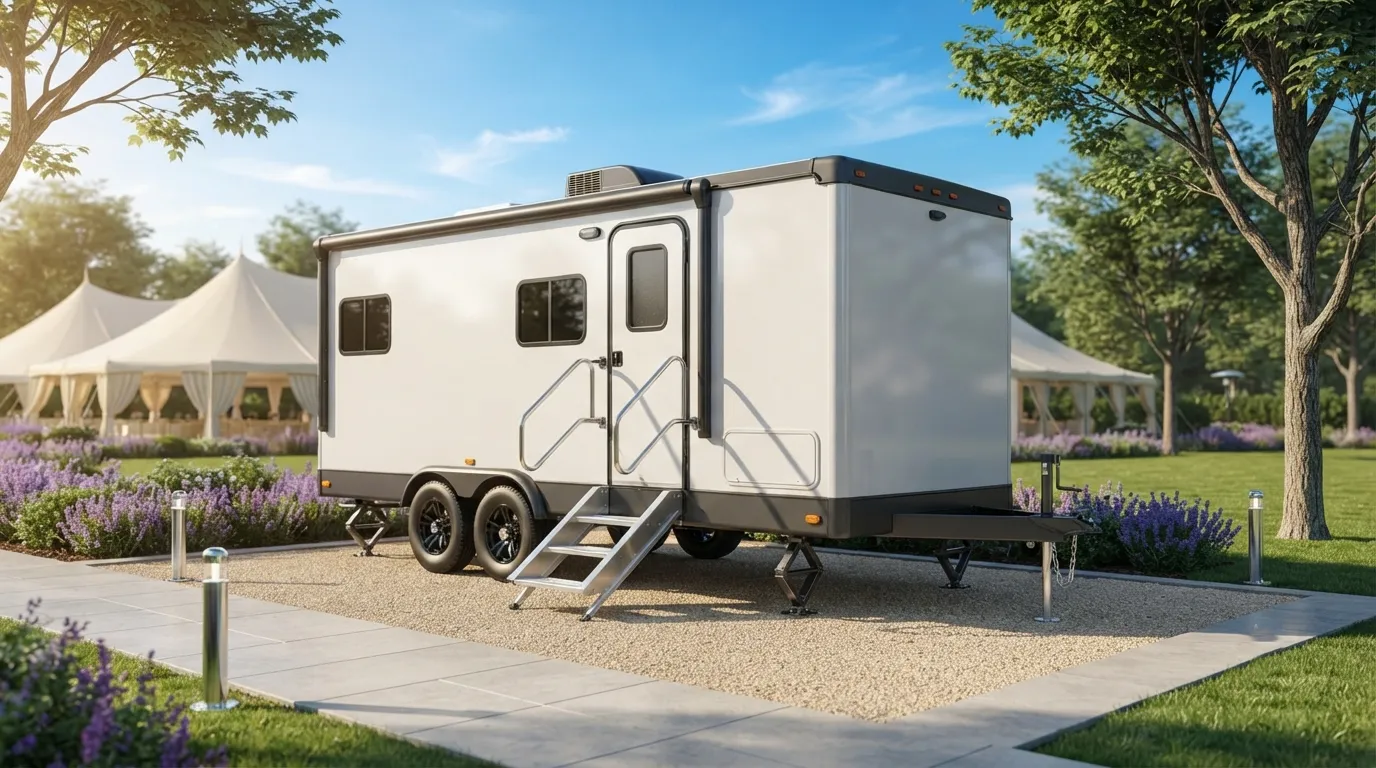
What is a restroom trailer?
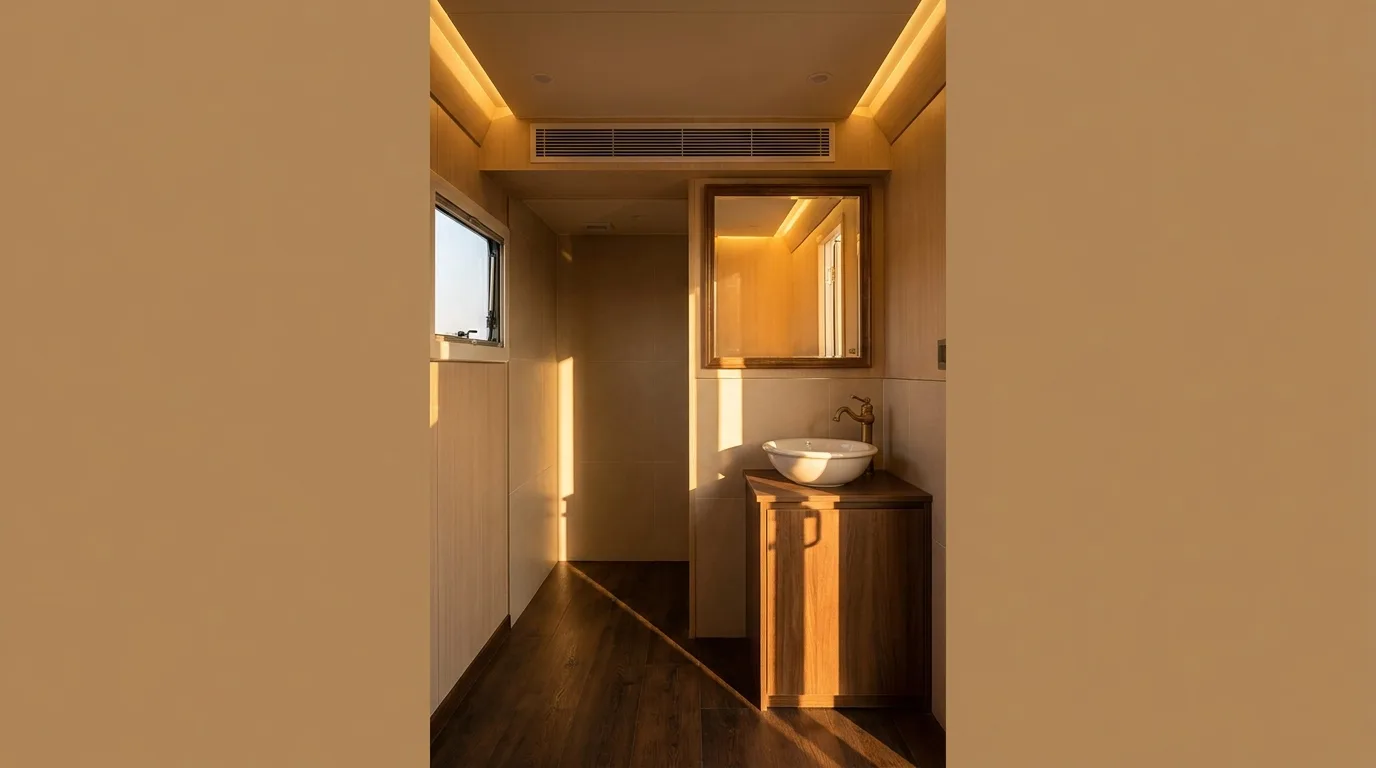
A restroom trailer is a towable unit with flushing toilets, sinks with running water, interior lights and climate control, used where a standard portable toilet would not be good enough. Each stall is a private room with its own door and lock, and the men's side of most builds carries a urinal as well as a toilet.
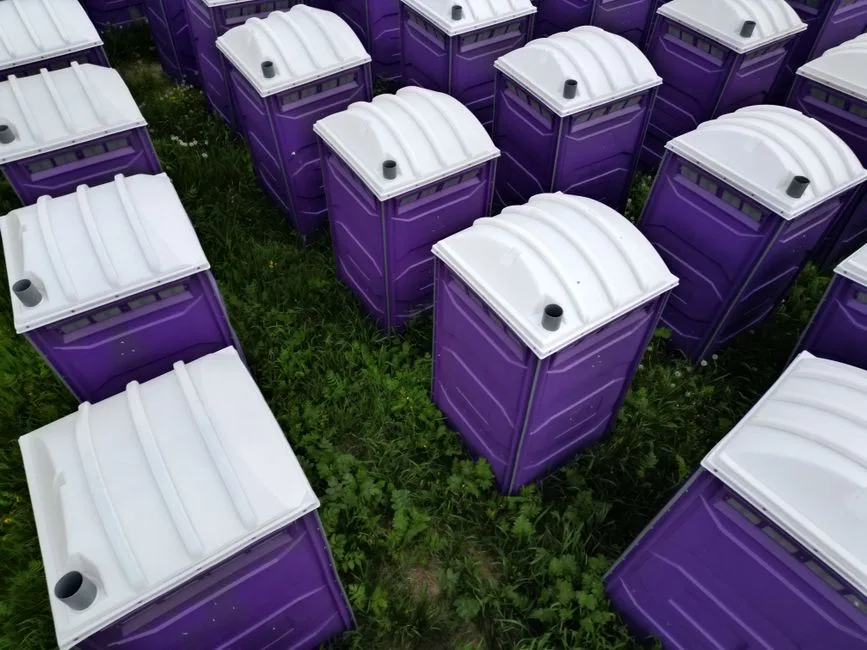
The mechanical difference is tank separation. A standard portable toilet holds waste in a 60 to 70 gallon tank directly under the seat, which is why it eventually announces itself. A trailer keeps fresh water in one tank and waste in another, from about 200 gallons on a two-station build up to 1,250 gallons on the big eight-station units, and the flush water sits between you and the waste. That is the whole reason people book one for a wedding instead of a row of deluxe flushable units. If you are still weighing the two, the portable restroom rental page lays out the fleet side by side.
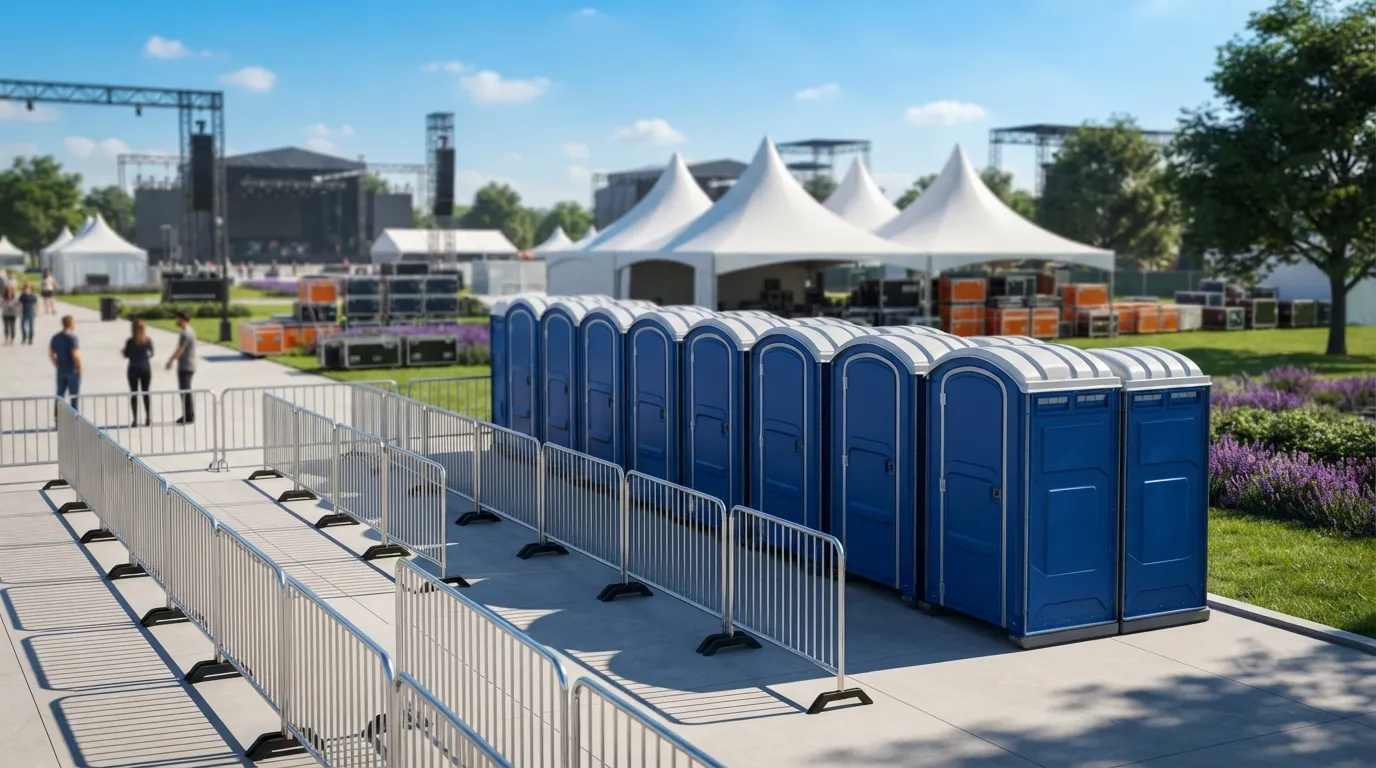
Restroom trailer sizes we deliver across Philadelphia
The table below shows typical manufacturer specification ranges by station count, with the weekend price band we see in the Philadelphia market. Guest figures assume a four-hour event.
| Stations | Body length | Waste tank | Fresh water | Guests, 4 hr | Typical weekend |
|---|---|---|---|---|---|
| 2 | 14 to 16 ft | 200 to 300 gal | 40 to 100 gal | about 100 | $700 to $1,250 |
| 3 to 4 | 16 to 20 ft | 300 to 650 gal | 100 to 200 gal | about 200 | $1,100 to $1,900 |
| 8 | 24 to 32 ft | 800 to 1,250 gal | 200 to 400 gal | about 400 | $2,000 to $3,000 |
Market ranges reviewed July 2026. Not a quote.
Each size has its own page with the full spec sheet: the 2 station trailer for tight blocks and small weddings, the 4 station trailer for the average backyard reception, and the 8 station trailer for festivals and long jobsites. Higher-finish builds sit on luxury restroom trailers, and if people need to wash rather than just use a sink, that is a shower trailer.
What does a restroom trailer cost in Philadelphia?
A restroom trailer in Philadelphia typically costs $700 to $1,250 for a weekend at two stations, $1,100 to $1,900 at four, and $2,000 to $3,000 at eight. Weekly rates on a standing unit run roughly $850 to $4,000 depending on size, and monthly jobsite contracts price lower per day than any event booking.
Three line items decide whether a quote is fair. Delivery in a weekly context typically adds $50 to $150. Each additional service visit runs $30 to $220 depending on tank size and how far the truck has to travel from the yard. Pickup should already be in the number, and if it is not, ask why. The restroom trailer cost breakdown itemises all of it, and porta potty rental cost is the comparison most people want before they commit, since a bank of standard units covers the same headcount for a fraction of the money.
The real constraint in Philadelphia is the block, not the paperwork
Most cities make you fight the permit office. Philadelphia makes you fight the parking. An eight-station trailer is 24 to 32 feet of body, and with a tow vehicle in front of it the driver needs roughly 50 feet of straight, clear approach plus somewhere to swing. On a South Philly street with cars parked both sides, that space does not exist on a Saturday morning.
What we check before quoting a trailer for a rowhouse block:
- Whether the street is one-way, and which direction the truck has to come from
- Whether there is a driveway, a rear alley or a shared court behind the house
- How much of the curb you can hold clear, and for how long
- Grade, because Manayunk and Roxborough streets are steep enough that a trailer needs blocking and leveling before the tanks will drain properly
- Surface, since Old City and parts of Society Hill are Belgian block and a trailer jack sinks or slides on uneven stone
For a lot of narrow-street jobs the honest answer is that a trailer will not fit and a pair of standard units placed tight against the house is the working solution. The placement guide covers what the driver looks at on arrival, and the home renovation setup page deals specifically with gut jobs on rowhouse blocks.
Power, water and waste: what a trailer needs from your site
A restroom trailer needs one 120 volt, 20 amp circuit at minimum, a water source within hose reach, and a level pad. Under NFPA 70, the National Electrical Code, a 20 amp branch circuit delivers about 2,400 watts, which covers lights, the water pump and a small heater but not a heater and an air conditioner at once. Article 590.6 of the same code requires GFCI protection on temporary receptacles, so the outlet you plan to use has to be a modern one.
Bigger units want more. An eight-station trailer commonly asks for two or three separate 20 amp circuits, or a generator, because the load is spread across two air conditioning units. If your site has no usable power, we plan for it up front rather than discovering it at 6 a.m. on the day. A temporary power pole solves it on a jobsite, and light tower rental covers the other half of the problem at night events in Fairmount Park where there is no lighting near the pad.
Water weighs 8.34 pounds per gallon, so a full 1,250 gallon waste tank adds more than 10,400 pounds to the trailer. That is the number that decides whether the unit can be moved mid-event or has to be pumped in place. Where there is no sewer connection available, waste goes out by vacuum truck the same way a holding tank or a septic pump-out does, and the Pennsylvania Department of Environmental Protection requires that it be discharged at a permitted treatment facility rather than anywhere convenient.
Do you need a permit for a restroom trailer in Philadelphia?
If your trailer sits on private property, no permit is needed. If it serves a public event, Philadelphia routes the application through the Department of Public Health under its infectious waste program, on the city's portable toilet and holding tank application. That surprises almost every contractor who calls us, because in most cities the request goes to a streets or transportation department.
Two practical consequences. First, allow lead time, because a health department review is not a same-day counter transaction. Second, the application covers holding tanks as well as toilets, so a trailer with an onboard waste tank falls squarely inside it. Full detail sits on porta potty permit requirements. If the trailer will also occupy a travel lane or a sidewalk, that is a separate street occupancy question and it belongs to a different office entirely.
Weddings, galas and the Sports Complex lots
Restroom trailers earn their money in Philadelphia at two kinds of event: a private one where the guests are dressed up, and a big one on flat asphalt where nothing else has the throughput.
The dressed-up version is a backyard or garden reception in Chestnut Hill, a tented dinner on a Fairmount Park lawn, or a waterfront party near Penn's Landing where the wind comes straight off the Delaware and an open-topped unit is miserable by 9 p.m. The wedding restroom setup page covers layout, lighting and where to park the trailer so the generator noise does not land in the ceremony.
The big version is the lots around Lincoln Financial Field, Citizens Bank Park and the Wells Fargo Center, which are the easiest trailer placements in the entire city: flat, paved, and wide enough that a 32 foot unit turns without a spotter. Tailgates, sponsor activations and race staging all work there. See event restroom rental for the planning sequence, plus festival restrooms, concert restroom rental, marathon and road race restrooms, golf tournament restrooms, county fair restrooms and film set restroom rental for the specific formats.
Construction, hospital and campus jobsites
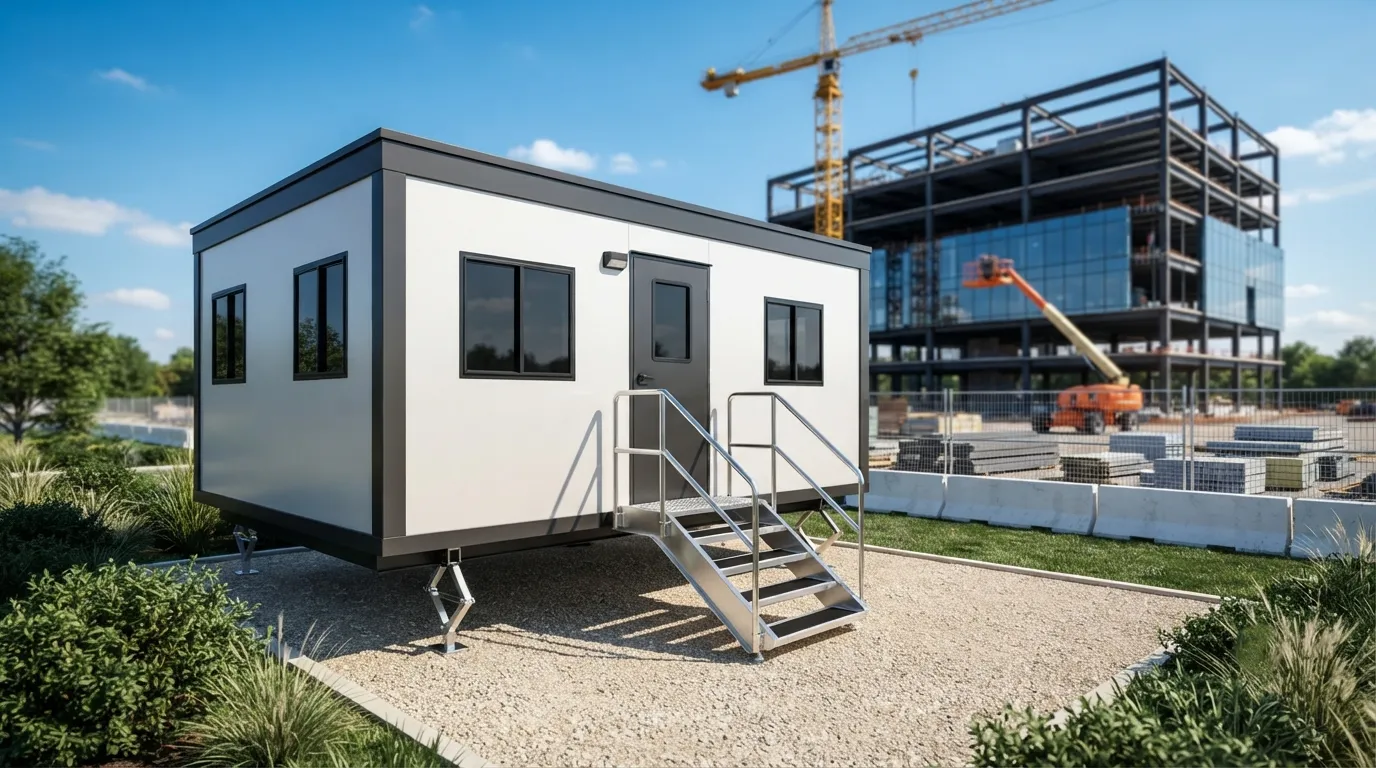
On a construction site, a restroom trailer is a retention tool rather than a luxury. Philadelphia's steady run of hospital and university work in University City puts long-duration crews on sites where a trailer is standard for supervisors, inspectors and clinical staff walking over from the main building.
OSHA 1926.51(c)(1) sets the floor: one toilet for 20 or fewer workers, and one toilet seat plus one urinal per 40 workers once the crew passes 20. A trailer counts toward that, and a four-station unit covers a crew of about 80 on paper. OSHA 1926.51(f) separately requires washing facilities where workers handle harmful substances, which is why a portable sink or a handwashing station usually goes in alongside. The construction site services page bundles the rest of what a Philadelphia jobsite orders at the same time, including a construction dumpster or a roll-off dumpster, temporary fence, a mobile office trailer and a storage container. Long jobs price better on monthly rental than on repeated short bookings.
How many stations does your event need?
Portable Sanitation Association International event guidance puts one restroom per 50 to 100 guests for a four-hour event, and advises adding 15 to 20 percent when alcohol is served. A four-station trailer therefore covers roughly 200 guests dry, or about 165 once a bar is open.
Two things skew that in practice. Weddings concentrate demand into two short windows, right after the ceremony and right after dinner, so peak load matters more than the average. And a single vanity per side is usually the bottleneck, not the toilets, which is why a freestanding sink or a hand sanitizer station outside the door moves the queue faster than adding a stall. Run your own headcount on how many porta potties do I need, and the OSHA portable toilet requirements page has the worksite version of the same maths.
Accessible stalls, ramps and what actually works
Most restroom trailers are not accessible as delivered, and the reason is geometry. The 2010 ADA Standards cap ramp slope at 1:12 in section 405.2, so a trailer floor 36 inches off the ground needs 36 feet of ramp run plus landings. On a Philadelphia sidewalk or a park path, that ramp does not fit.
There are two honest answers. Rent an ADA-configured trailer with a lift, which we can source for events where the budget carries it. Or set a ground-level ADA accessible unit beside the trailer, which is what most Philadelphia events do. Either way the route to the door has to hold a 36 inch clear width under section 403.5.1, and an accessible stall needs the 60 inch turning clearance in section 604.3.1. The ADA restroom requirements page covers the full spec and the counts.
Trailers through a Philadelphia winter
A restroom trailer used between December and March has to be winterised or the plumbing splits. Philadelphia gets hard freezes, and the vulnerable parts are the fresh water lines, the pump and the waste valve, not the tanks themselves. A winterised trailer runs its onboard heat continuously, which means the power has to stay on overnight, not just during the event.
That last point catches people out on jobsites where the temporary power gets switched off at the end of the shift. If the site cannot hold power overnight, we run the unit dry with antifreeze in the traps and treat it as a non-flush setup for the duration. The porta potty in winter page explains the same problem for standard units, and do porta potties smell covers why cold weather actually helps on that front.
Service, pumping and keeping a trailer decent
Servicing a restroom trailer means pumping the waste tank, refilling fresh water, restocking paper, soap and towels, wiping the vanities and checking the flush pumps. ANSI/PSAI Z4.3, the American National Standard covering nonsewered waste-disposal systems, sets weekly service as the baseline for a standing unit.
Events are different. A trailer at a 400 person Saturday event often needs a mid-event service around hour five rather than a weekly visit, and that gets scheduled when the booking is made, not improvised. On long jobsites we set the frequency to the crew size and revisit it after the first month. The cleaning schedule page has the detail, and how porta potties work explains the chemistry underneath all of it.
What happens on delivery day
- We confirm the drop location, the approach direction and the power source with you 24 to 48 hours out.
- The driver arrives inside the agreed window, walks the approach, and stops if a parked car has taken
the space, which is the single most common delay in this city.
- The trailer is positioned, leveled and blocked, then the jacks go down and the tongue comes off the
hitch.
- Fresh water is filled, the pump is primed, and every toilet is flushed and checked in front of you.
- Power is connected, the heat or air conditioning is switched on, and steps or a ramp are set at the door.
- You get the service schedule and a direct number for problems during the rental.
How do you book a restroom trailer in Philadelphia?
Call or send the quote form with five things: the exact address with cross streets, the date and hours, the expected headcount, whether there is a 20 amp outlet and a hose bib within about 100 feet, and whether the trailer lands on private property or public right of way. That is enough for a real number rather than a placeholder.
The rental checklist lists everything else worth deciding before the truck is loaded, and the contact page has the direct line. Same-day situations go through emergency porta potty rental, and disaster and utility response work is handled on disaster relief sanitation.
Is restroom trailer rental near me available midweek?
Usually. Philadelphia weekends in season go first.
Is mobile restroom trailer rental the same thing?
Same product. Portable restroom trailer rental is a third way to say it.
What is a 2 stall restroom trailer?
Two private rooms on one frame. A 4 stall restroom trailer adds two more and a wider tongue.
We deliver trailers across the city and into the suburbs, including King of Prussia, Lower Merion, Conshohocken, Doylestown, Cherry Hill and Camden. The full list is on areas we serve around Philadelphia. More about how we work is on the about page, common questions are answered on the FAQ, and the home page is the shortest route to everything else we rent.
Next step
Get a delivery date
Tell us the address, the dates and the headcount. We size the order and confirm the route.