
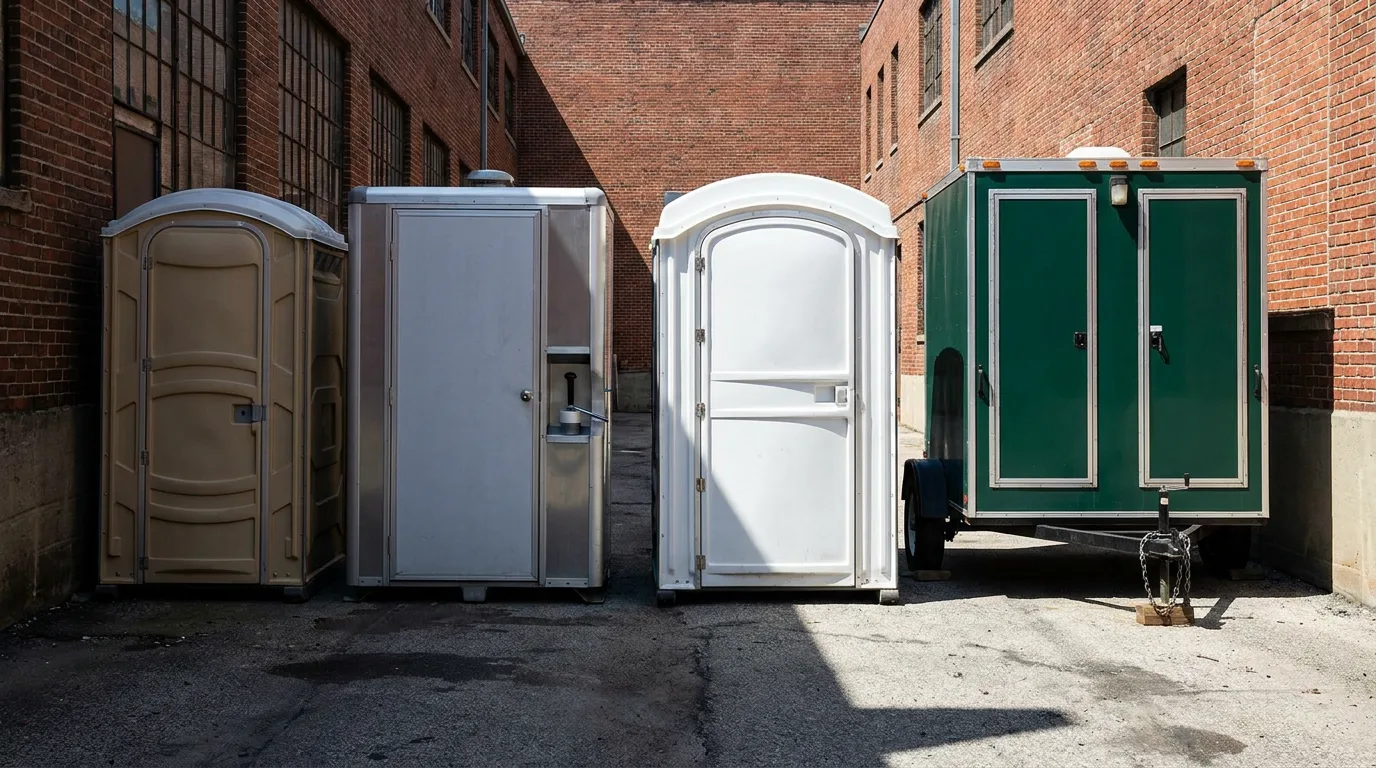
That is the whole ratio. What follows is the part contractors get cited for: washing facilities, privacy, distance from the work, and keeping the units serviced once they are on site.
What does OSHA require on a construction site?
OSHA 1926.51 is the sanitation standard for construction, and paragraph (c) is the toilet section. The count is set by a table, not a percentage:
| Workers | Required under 1926.51(c)(1) |
|---|---|
| 20 or fewer | 1 toilet facility |
| 20 or more | 1 toilet seat and 1 urinal per 40 workers |
| 200 or more | 1 toilet seat and 1 urinal per 50 workers |
Three related paragraphs matter as much as the table. 1926.51(c)(2) says that under temporary field conditions, provision has to be made so that at least one toilet facility is available. 1926.51(c)(3) requires chemical toilets, recirculating toilets or combustion toilets where a sanitary sewer is not available. And 1926.51(c)(4) exempts mobile crews that have transportation readily available to nearby toilet facilities, which is the one clause people over-read.
A crew with a van and a coffee shop two blocks away is not automatically exempt. The test is whether the facility is genuinely available to every worker during the shift, and a locked customer restroom fails it. Our construction site services page covers what a full site package includes.
How many units does that work out to?
For most Philadelphia jobs the answer is one unit per 20 workers, rounded up, plus a wash station. Worked through:
- 12 workers on a rowhouse gut, 1 standard unit
- 35 workers on a mid rise fit-out, 1 toilet seat plus a urinal, practically 2 units
- 78 workers on a hospital expansion, 2 seats and 2 urinals, practically 3 to 4 units
- 220 workers on a stadium or campus project, 5 seats and 5 urinals under the 200 plus bracket
The unit calculator runs the same numbers for events, where the governing ratio is guests and hours rather than an OSHA table.
Does OSHA set a distance requirement?
Not in construction. OSHA 1926.51 contains no maximum walking distance, which surprises people who have heard otherwise. The nearest thing to a hard number is in agriculture, where 1928.110(c)(2)(i) requires toilet and handwashing facilities within a quarter mile walk of each hand laborer's place of work.
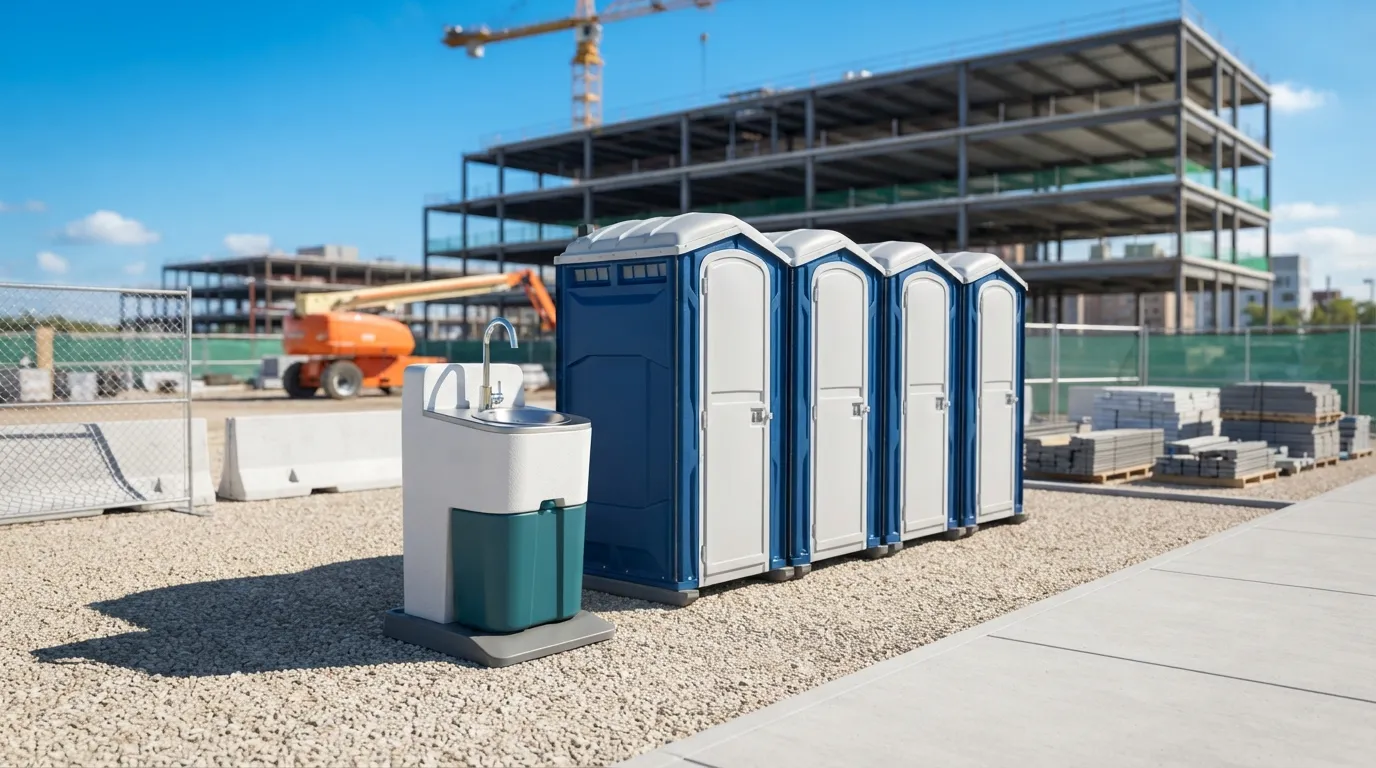
What OSHA does require in construction is that the facilities be available. Compliance officers read availability practically: a unit on the far side of a fenced site, up four flights with no lift, or behind a locked gate is not available even though it exists. On a tall Philadelphia project the usual answer is one unit at grade and one on an upper working deck, moved as the work moves.
Site geometry is the real driver in this city. Rowhouse infill jobs have no lay-down area at all, so the unit goes on the street frontage next to the dumpster, and the two compete for the same 22 feet of kerb.
Are handwashing facilities required?
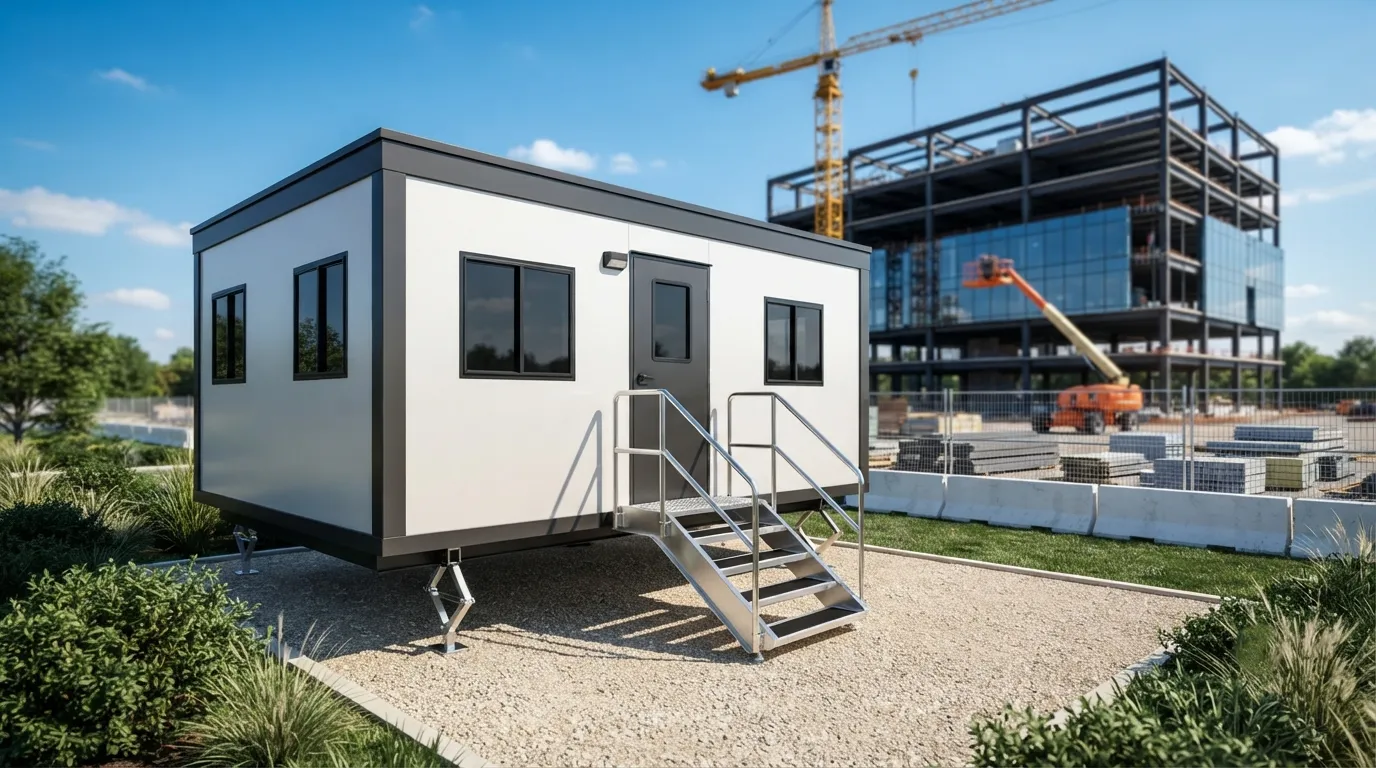
Yes, under conditions that cover most trades. OSHA 1926.51(f)(1) requires washing facilities where employees are engaged in the application of paints, coatings, herbicides or insecticides, or in other operations where contaminants may be harmful. Painters, drywall finishers, roofers running hot work and anyone handling adhesives are squarely inside that.
Separately, 1926.51(a) requires an adequate supply of potable water on every site, and drinking cups have to be single use with a covered receptacle for disposal.
A portable sink with fresh water beats a sanitizer stand for this, because sanitizer does not remove the contaminants the standard is written about. The handwashing requirements page goes through the detail, and handwashing station rental covers the equipment.
What about privacy, doors and locks?
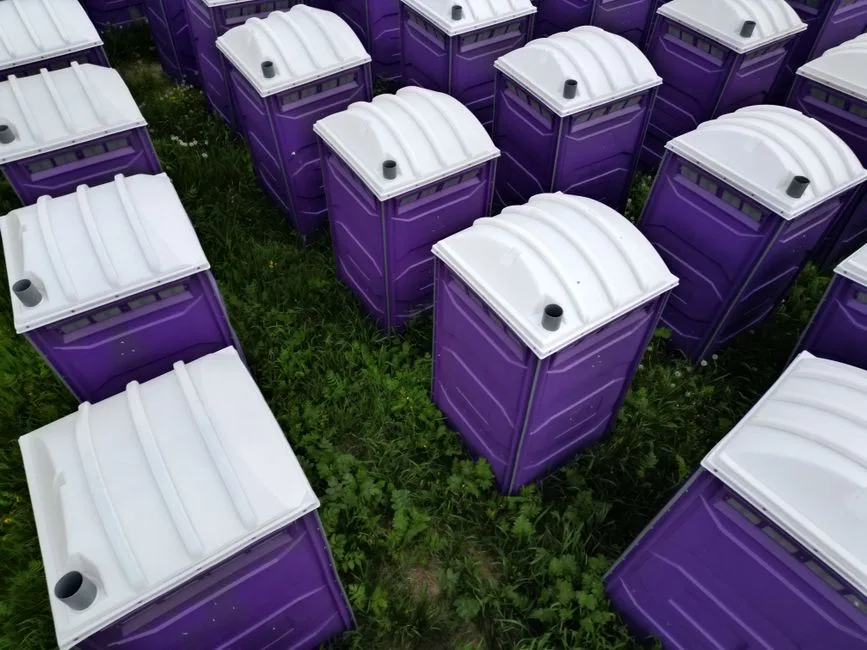
OSHA 1926.51(c)(3) requires that toilet rooms be constructed so that occupants are not exposed to view, and
1910.141(c)(2)(i) for general industry requires each water closet to occupy a separate compartment with a door and walls or partitions high enough for privacy. Any standard rental unit meets this out of the box, provided the door latch works.
That last part is the one that fails in the field. A latch broken by a slammed door on a windy Friday is a privacy defect by Monday, and it is the kind of thing an inspector notices immediately. Report it and we swap the unit rather than repair it on site.
Do the same rules apply outside construction?
No, general industry uses a different table. OSHA 1910.141(c)(1)(i) sets the count for non construction workplaces:
| Employees | Minimum toilets |
|---|---|
| 1 to 15 | 1 |
| 16 to 35 | 2 |
| 36 to 55 | 3 |
| 56 to 80 | 4 |
| 81 to 110 | 5 |
| 111 to 150 | 6 |
| Over 150 | 6 plus 1 per additional 40 |
This matters for warehouse, film and event production work in the city where a site is not a construction site in OSHA's sense. Film set restroom rental is the common case, and disaster relief sanitation is the other.
For readers searching Cal/OSHA rules: California's construction toilet standard sits at Title 8 section 1526 and it is a state standard with no application in Pennsylvania. Philadelphia sites follow the federal
1926.51 text.
Who enforces this in Philadelphia?
Federal OSHA does, directly. Pennsylvania is one of the states without an approved OSHA state plan covering private sector employers, so there is no state agency writing a stricter local toilet rule. OSHA's Region 3 is headquartered in Philadelphia, which in practice means inspection response times in the city are short.
Public sector employees in Pennsylvania are not covered by OSHA at all, which is a genuine gap rather than a loophole worth using. City and school district projects usually write the same sanitation requirements into the contract instead.
Note that permits are a separate track. Placing units on public ground in Philadelphia goes through the Department of Public Health under its infectious waste program, on the application covering portable toilets and holding tanks, not through a streets office. See porta potty permit requirements, and dumpster permit requirements if a container is going out front too.
How often do the units have to be serviced?
OSHA does not set a frequency. 1926.51(c) requires that facilities be maintained in a sanitary condition, and the enforceable question is condition, not calendar. Industry practice under ANSI/PSAI Z4.3 is weekly service for a standard jobsite unit, which is what we schedule by default.
Move to twice weekly when the crew passes about 15 people per unit, in July and August when Philadelphia humidity sits high for weeks at a time, or on any job where the unit is inside an occupied building's sightline. How often units get cleaned explains what a service visit involves, and do porta potties smell covers what happens when the interval slips.
Getting a compliant site set up
What are the osha portable toilet requirements construction sites must meet?
OSHA 1926.51(c): one toilet for 20 or fewer workers, then one seat and one urinal per 40.
Are there osha portable toilet distance requirements?
OSHA does not set a fixed distance. It requires facilities be readily accessible on the site.
How many porta potties do i need osha compliance for?
Count the crew, then apply 1926.51(c). Round up, never down.
Tell us the crew size, the trades on site and the duration and we will spec the count against
1926.51(c)(1) rather than guessing high. Request a quote or contact us. Related pages: monthly rentals, porta potty rental in Philadelphia, ADA units, placement, winter servicing, the rental checklist, roll-off dumpsters, temporary fencing, light towers, service areas, the FAQ and the home page.
Next step
Get a delivery date
Tell us the address, the dates and the headcount. We size the order and confirm the route.