
So the honest answer is that porta potties smell when they are neglected, and the neglect is usually a service interval that was set to hit a price rather than to match the job.
What actually causes the smell?
Bacteria in the holding tank break down waste and release hydrogen sulphide and ammonia as they go. Those two compounds are the smell. Everything a rental company does about odour is aimed at slowing that reaction or venting the result.
Three variables drive it:
- Temperature. Bacterial activity roughly doubles with each 18 degree rise. A unit sitting in full sun on asphalt runs well above air temperature.
- Time. The tank gets worse on a curve, not a line. Days 1 to 4 are unremarkable, day 8 is not.
- Concentration. More uses in the same 60 to 70 gallon tank, which is where manufacturer specs put a standard unit, means less dilution.
The service page covers what a visit involves. The short version is that emptying the tank resets all three at once.
How does the blue liquid work?
The blue liquid is a deodorizer charge, a mix of dye, fragrance, surfactant and a biocide that suppresses the bacteria producing the odour. It goes in with several gallons of fresh water after the tank is vacuumed, and it is dosed to the chemical manufacturer's rate rather than poured by eye.
It is not a cleaner. It works inside the tank and does nothing for the seat, the floor or the door handle, which is why ANSI/PSAI Z4.3 treats interior washing and restocking as part of service rather than optional extras. A unit that has been pumped but not washed will smell fine from three feet away and be unpleasant to use.
Modern deodorizer packages are generally formaldehyde free, which matters if the waste is going to a municipal treatment plant. Philadelphia routes portable toilet waste through the Department of Public Health's infectious waste program, and the same program handles the portable toilet and holding tank application for units placed on public ground.
Why does the vent stack matter?
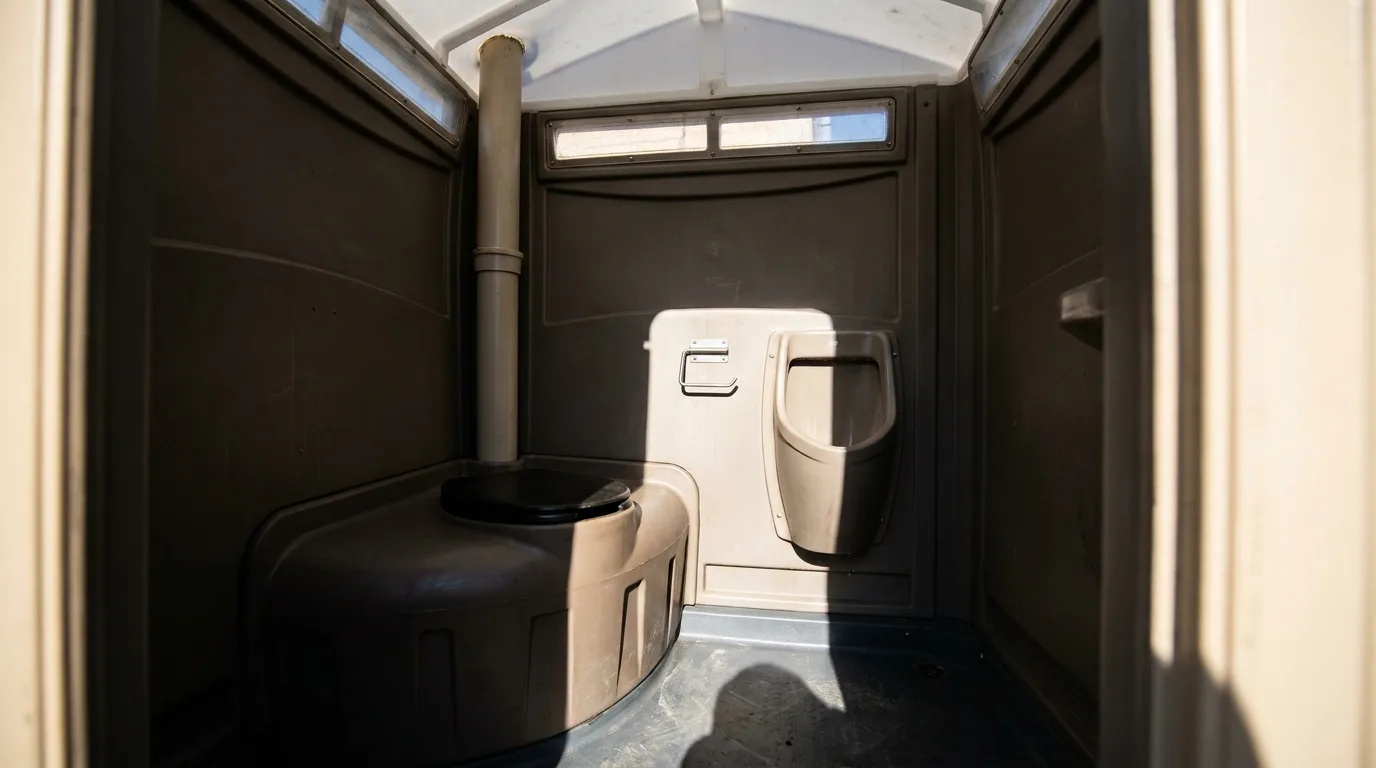
Every standard unit has a vent pipe running from the holding tank up through the roof, typically 3 to 4 inches across on manufacturer drawings, and it is doing more work than anything else on the unit. Wind passing the top of the stack draws air out of the tank, which pulls fresh air down through the seat opening and stops tank air rising into the cabin.
That system fails in two ways, both common:
- The stack gets blocked, usually by a wasp nest or debris. Check it when the unit arrives.
- The unit is placed in dead air, tight against a rowhouse wall or in a corner between two buildings, so
there is no wind across the stack at all.
Philadelphia's prevailing wind runs broadly from the west and southwest. Set the unit so the door faces away from where people gather and the stack has open air on at least two sides. The placement guide covers the rest of the siting rules, and how porta potties work explains the tank and vent design in full.
Is it worse in a Philadelphia summer?
Yes, and by a wide margin. The National Weather Service 1991 to 2020 normals put the average July high at Philadelphia International near 88 degrees, and the humidity here keeps overnight temperatures from dropping much. A tank that never cools overnight starts the next day already active.
Practical July and August adjustments:
| Condition | Adjustment |
|---|---|
| Unit on asphalt in full sun | Move to shade or add a second weekly service |
| More than 10 users a day | Twice weekly service |
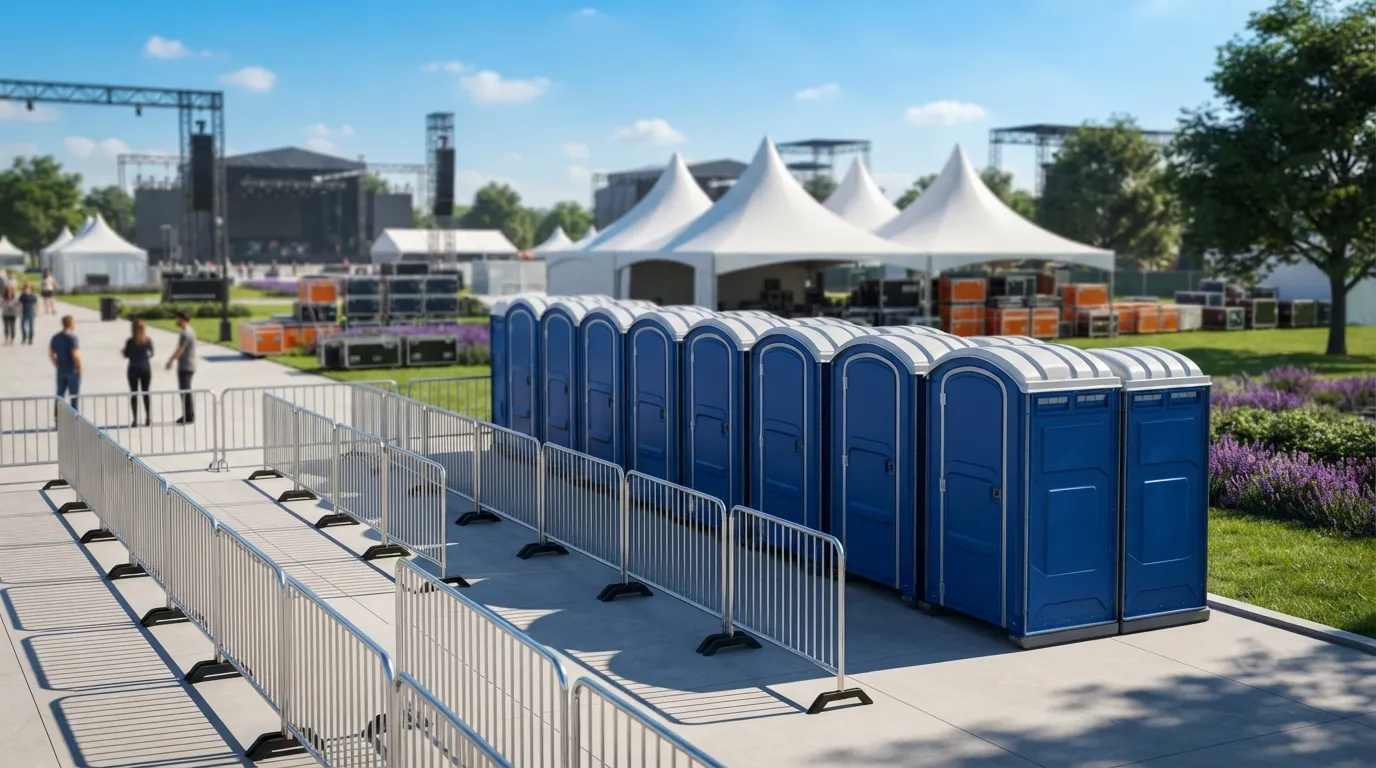
| Event over 8 hours | Mid event service visit |
| Unit against a south facing brick wall | Reposition, brick radiates heat well into the evening |
On a jobsite this is a compliance question as well as a comfort one. OSHA 1926.51(c) requires toilet facilities to be maintained in a sanitary condition, and it sets no service frequency, so a unit that has gone sour in August is a finding regardless of what the schedule said.
Rowhouse blocks are the hard case. South Philadelphia streets running east to west get sun on the pavement most of the day and there is often nowhere shaded to put a unit. On those jobs we would rather sell you the second service than argue about the smell in week three. Pricing sits on the cost page.
Which units smell least?
Ranked honestly, from most to least noticeable:
- Standard unit on a stretched service interval. The worst case, and it is entirely avoidable.
- Standard unit serviced weekly. Fine for jobsites and most events.
- Deluxe flushable unit. A foot pump flush and a separate freshwater
reservoir mean the bowl is rinsed after each use.
- Restroom trailer. A towable unit with flushing china, running water and
climate control. Effectively a small restroom, and the closest thing to no smell at all.
For a wedding or anything where guests are dressed up, the trailer is the answer and the price difference buys exactly this. Compare 2 stall and 4 stall sizes, or read wedding restroom rental.
What can I do on site to keep it down?
More than you would think, and none of it costs anything:
- Keep the door closed. An open door in sun heats the cabin and the tank under it.
- Do not prop the vent or the roof panel open. It defeats the stack.
- Nothing in the tank except waste and paper. Food, drink cups and rags all rot.
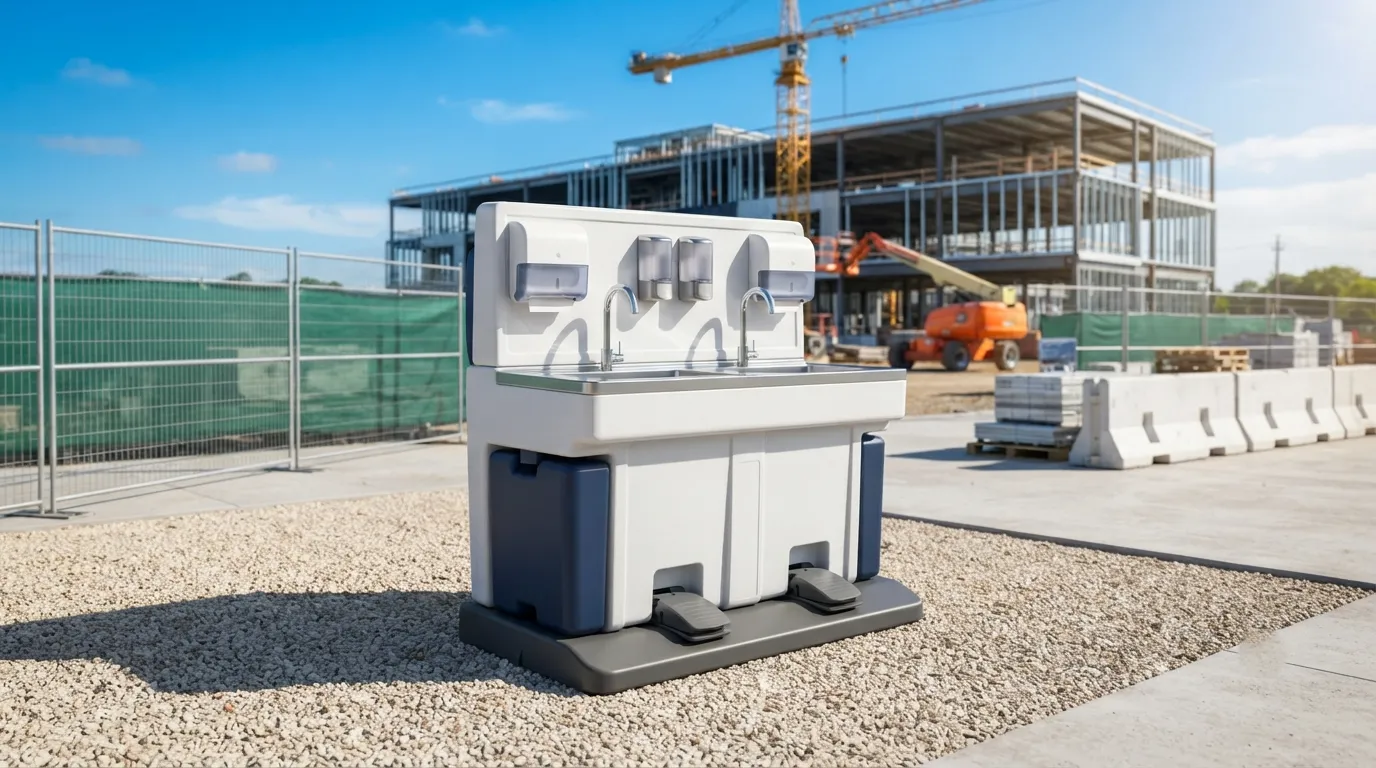
- Put a handwashing station beside the unit rather than inside it.
- Tell us immediately if the tank is at or near the seat level. That unit is past due, not nearly due.
On home renovation jobs the neighbours are two feet away on both sides, so these small habits matter more here than on an open site.
Will the neighbours complain?
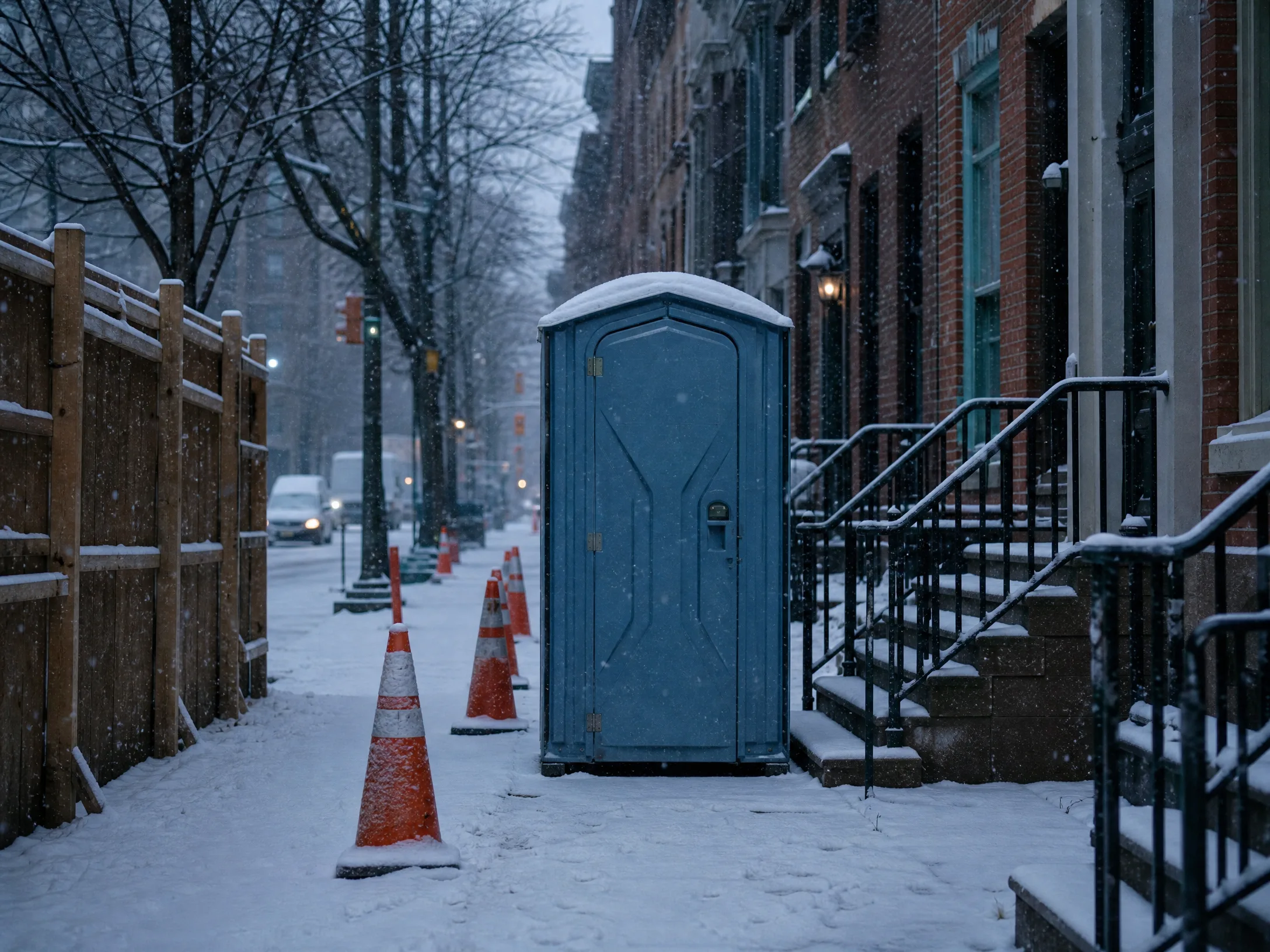
Sometimes, and usually about the look before the smell. A unit on a rowhouse block is visible from six front windows, so it is worth telling the two houses either side before it arrives rather than after.
Real odour complaints almost always trace to one of three things: a missed service, a blocked vent, or a unit sited in a corner with no airflow. All three are fixable within a day. If a complaint does reach the city, the relevant office is the Department of Public Health rather than a streets department, which is the same routing described on permit requirements.
Set the service interval right the first time
Tell us the headcount and how long the unit is staying and we will set the frequency to match the job rather than the invoice. Request a quote or contact us. Related pages: monthly rentals, how many units you need, OSHA requirements, winter units, the rental checklist, event restrooms, porta potty rental in Philadelphia, service areas, the FAQ and the home page.
Next step
Get a delivery date
Tell us the address, the dates and the headcount. We size the order and confirm the route.