
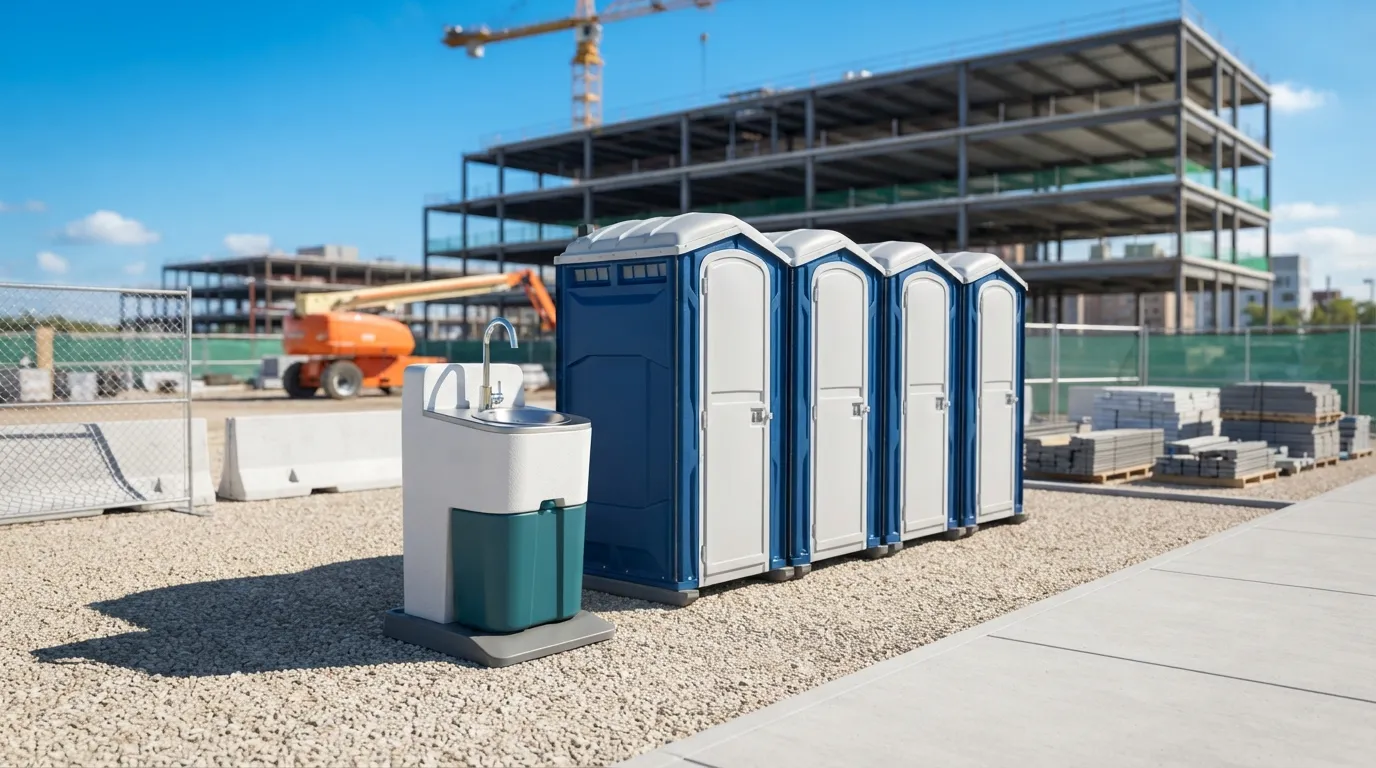
Does OSHA require handwashing on a construction site?
Yes, under defined conditions rather than universally. OSHA 1926.51(f)(1) requires the employer to provide adequate washing facilities for employees engaged in the application of paints, coatings, herbicides or insecticides, or in other operations where harmful contaminants may be present, and the rule says those facilities must be in near proximity to the worksite.
On a normal Philadelphia rehab that condition is met most days. Cutting concrete, mixing mortar, spraying adhesives, handling treated lumber and demolition dust all put contaminants on hands. The practical reading most contractors settle on is that if you need toilets, you need washing, and OSHA 1926.51(c)(1) puts the toilet trigger at one unit for 20 or fewer workers.
Read alongside OSHA portable toilet requirements for the toilet ratio table, and handwashing station rental for what the equipment actually is.
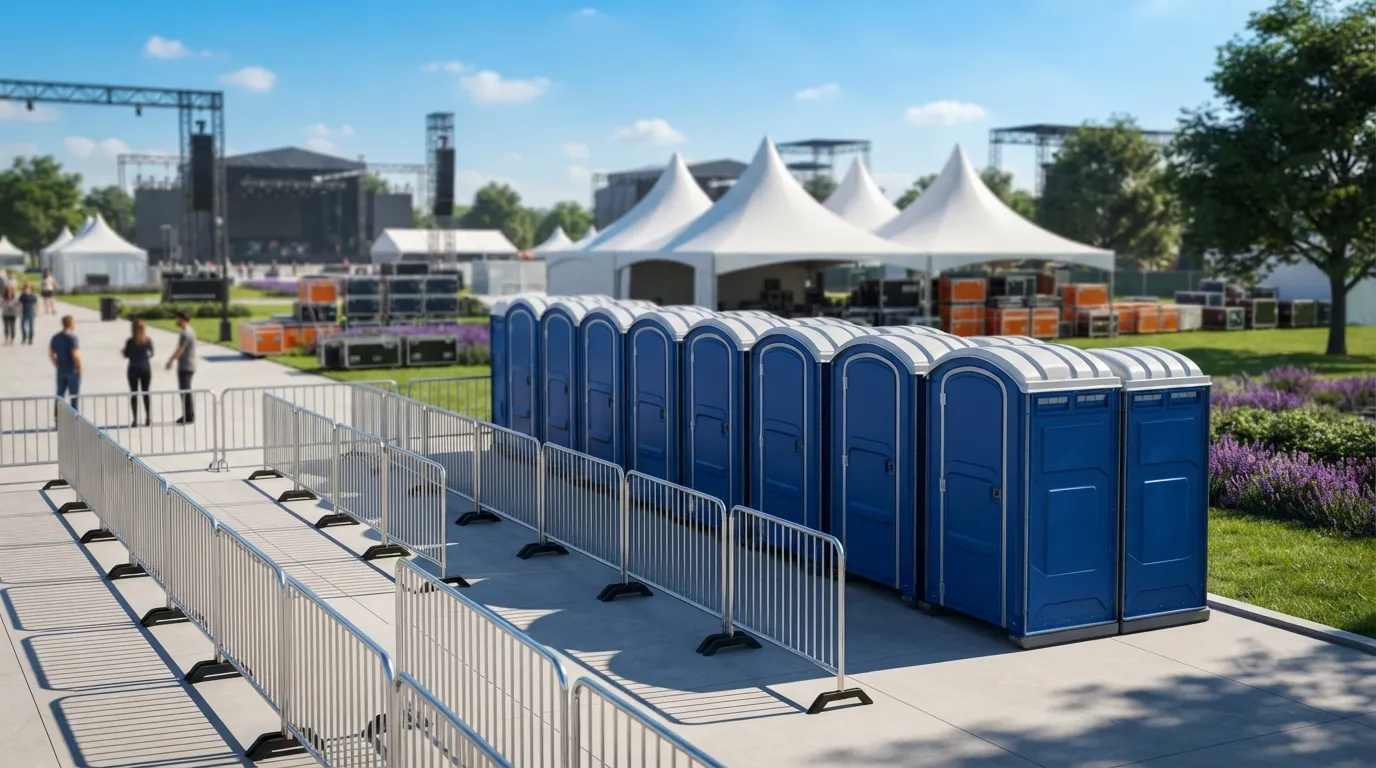
How many handwashing stations do I need?
In a fixed workplace the number is written down. OSHA 1910.141(d)(2)(ii) and its Table J-1 set one lavatory for every 10 employees where there are 1 to 100 people, and one for every 15 above that. Construction is governed by the adequacy language instead, so the count is a judgement rather than a table.
The working ratios contractors and event planners in this city use:
| Setting | Toilets | Handwash stations |
|---|---|---|
| Jobsite, 20 workers | 1 | 1 |
| Jobsite, 40 workers | 2 | 1 |
| Jobsite, 100 workers | 5 | 2 to 3 |
| Event, 150 guests, no food | 2 | 1 |
| Event, 500 guests with food vendors | 5 to 6 | 3 |
| Food vendor row, any size | Per guest count | 1 per vendor cluster |
Those are planning figures, not a regulation. The sizing calculator handles the toilet side properly for guest counts and hours, and the wash stations get added on top.
What an adequate washing facility has to include
OSHA 1910.141(d)(2) is the clearest description in the rulebook. It calls for lavatories with hot and cold running water, or tepid running water, hand soap or a similar cleansing agent, and individual hand towels, clean sections of continuous cloth toweling, or a warm air blower.
Translated to rented equipment, that means the station has to arrive with all four things working:
- Water that flows when the pump is pressed, not a dry tank
- Soap in the dispenser and a way to refill it
- Towels or a drying method
- A greywater tank that is not already full
A dispenser of gel does not satisfy this. The CDC is explicit that alcohol based sanitizer does not remove all germ types and works poorly on visibly dirty or greasy hands, which is the state of most hands on a site. Sanitizer supplements the station, it does not replace it. See hand sanitizer station rental.
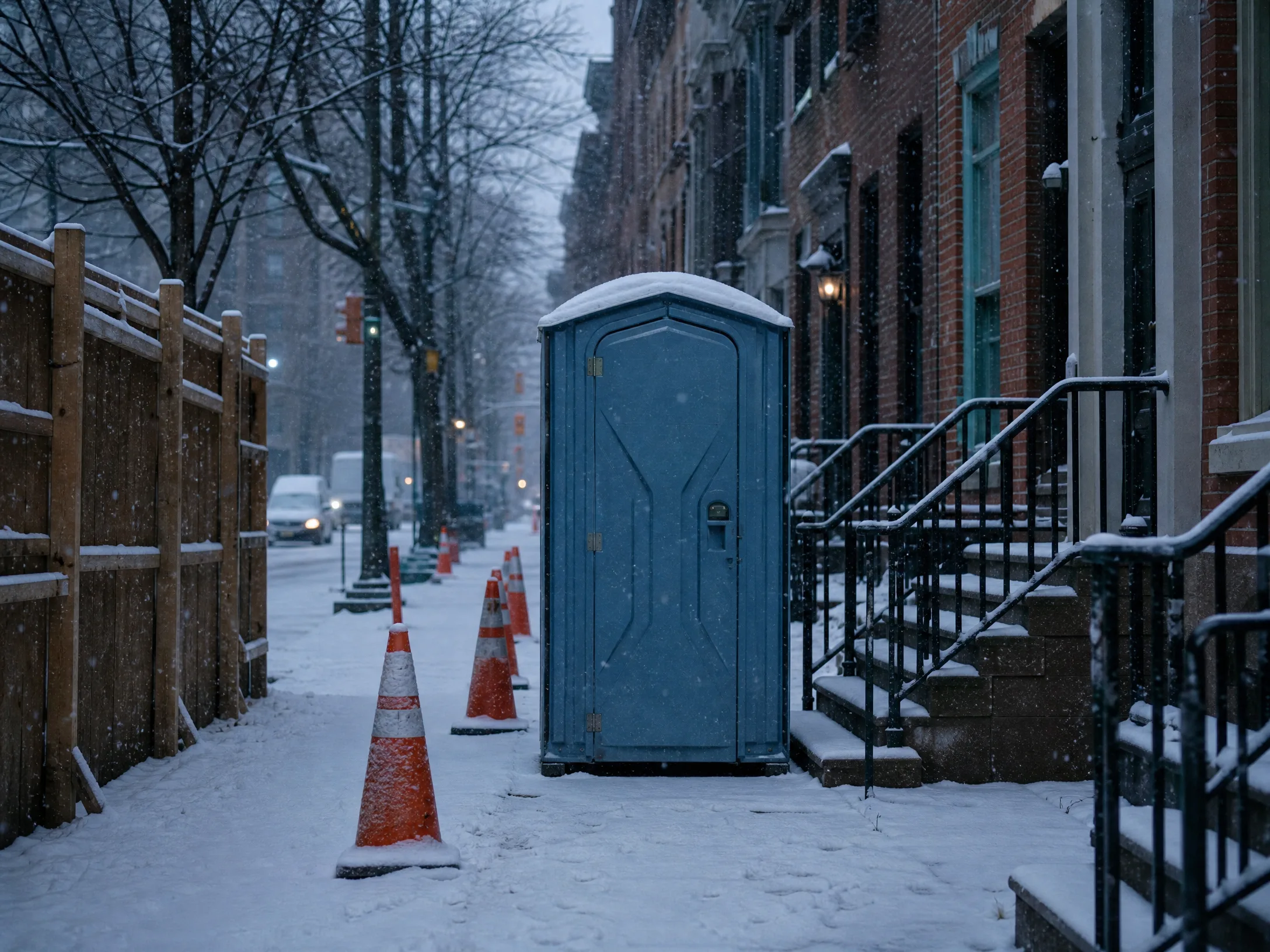
What are the requirements for food events in Philadelphia?
Stricter, and they hinge on temperature. The FDA Food Code, adopted in Pennsylvania, requires a handwashing sink to deliver water at a temperature of at least 100 degrees Fahrenheit through a mixing valve or combination faucet. An ambient gravity unit does not meet that no matter how new it is.
Philadelphia runs its own food safety program through the Department of Public Health rather than deferring to the state, so a temporary vendor at a Penn's Landing festival or a Fairmount Park event is inspected by city staff. Two things follow from that:
- Book heated units, and book them early, since there are far fewer in the yard
- Put a station at every vendor cluster, not one at the end of the row
Manual warewashing is a separate requirement again, with the Food Code setting a three compartment sink as the standard for washing, rinsing and sanitizing equipment by hand. A handwash station is not a warewashing sink. If you need both, a heated portable sink covers the hand side and the warewashing gear is your vendor's responsibility.
Field sanitation rules for outdoor and agricultural crews
They do, and the agricultural standard is the most specific one OSHA has written. OSHA 1928.110 requires employers covered by field sanitation to provide one toilet and one handwashing facility for every 20 employees, located within a quarter mile walk of each hand labourer or at the closest point of vehicular access.
That quarter mile figure is the useful part, because it settles arguments about placement on a large site before they start. Nobody walks half a mile to wash their hands, and a station that far away is a station nobody uses. Relevant to farm and agricultural restrooms and to spread out work like disaster relief sanitation.
What do the ADA standards require of a washing station?
Reach and force, mainly. The 2010 ADA Standards for Accessible Design cap the unobstructed forward reach at 48 inches above the floor in section 308.2.1, hold a lavatory rim or counter surface at no higher than 34 inches in section 606.3, and limit the force needed to operate a control to 5 pounds in section 309.4.
Most standard gravity handwash units miss on at least one of those, which is why the low basin version exists. Placement does the rest of the work: firm level ground, a clear approach, and the station beside the ADA accessible unit rather than across a gravel run. Our ADA restroom requirements page covers the unit side in full and the placement guide covers the ground.
Do I need a permit for handwashing stations in Philadelphia?
Not for the sink on its own. The permit question in this city attaches to the portable toilets, and the routing is the part that surprises people. Philadelphia issues portable toilet and holding tank approvals through the Department of Public Health under its infectious waste program rather than through a streets or transportation department, on one application.
Contractors who go hunting for a streets process do not find one, and then lose a week. Start at the health department. The full route is on porta potty permit requirements, and dumpster permits run on a different track again.
Service intervals under ANSI/PSAI Z4.3
ANSI/PSAI Z4.3, the industry standard covering non sewered waste disposal systems, treats weekly service as the baseline under ordinary use. A jobsite station on a crew of 10 fits that comfortably. A food event station does not, and a busy vendor row can need a refill twice in a day.
A proper service visit is: pump the greywater, rinse the catchment, refill fresh, top up soap, restock towels, test both pumps. The CDC advice to scrub for at least 20 seconds is only achievable if the soap and the water are both actually there on day four, which is the entire argument for booking service rather than a drop and leave. See how often units are cleaned.
Requirements by job type, at a glance
| Job | Governing rule | Water temperature | Practical answer |
|---|---|---|---|
| Construction, contaminants present | OSHA 1926.51(f)(1) | Not specified | Gravity station beside the units |
| Fixed workplace | OSHA 1910.141(d)(2) | Hot and cold, or tepid | Plumbed or heated station |
| Field and agricultural labour | OSHA 1928.110 | Not specified | 1 per 20, within a quarter mile |
| Food service and catering | FDA Food Code | At least 100 F | Heated unit, mixing valve |
| Public event, mixed access | 2010 ADA Standards | Not specified | Low basin unit on level ground |
Weekly service under ANSI/PSAI Z4.3 applies across all of them unless the traffic says otherwise.
Getting this right on a Philadelphia site
Access decides more of this than the rulebook does. On the narrow rowhouse streets across South Philadelphia, Fishtown and Kensington, the constraint is whether the truck can reach the drop point, and one parked car will end the delivery. Tell us the block and the side of the street when you book.
Tell us the job type too, because the answer changes. Renovation work is on home renovation porta potty, long running sites on construction site services and monthly rental, and event work on event restroom rental, festival restrooms and wedding restroom rental. Costs are set out on porta potty rental cost, coverage on service areas.
Ready to book? Request a quote or contact us. Also useful: portable toilet rental, the rental checklist, porta potty rental in Philadelphia, the FAQ and the home page.
Next step
Get a delivery date
Tell us the address, the dates and the headcount. We size the order and confirm the route.