

What are the warning signs of a full septic tank?
A full septic tank is one where accumulated sludge and scum have reduced the working liquid volume to the point that solids reach the outlet. The symptoms show up inside the house and outside it, and the outside ones are the serious ones.
Inside:
- Drains slowing across the whole house at once, rather than one fixture
- Gurgling from a tub or a sink when a different fixture is used
- A toilet that empties slowly and refills normally
- Sewage odour rising from a floor drain or a rarely used shower trap
Outside:
- Standing water or soft ground over the drainfield in dry weather
- Grass over the field noticeably greener and taller than the rest of the lawn
- Smell around the tank lids, strongest after rain
- Effluent surfacing anywhere on the lot, which is the one that ends the debate
One fixture behaving badly is a fixture problem. Everything behaving badly at the same time is a system problem. That distinction saves people from paying a drain company to snake a line that is backing up because the tank is full. The scheduled fix is on septic pumping service.

Which sign means stop and call now?
Sewage surfacing on the ground, or backing up into the house. Both are health hazards rather than inconveniences, and both mean the system has stopped functioning rather than started struggling.
Untreated effluent on a lawn carries pathogens, which is exactly why Pennsylvania regulates onlot systems at all under the Sewage Facilities Act, Act 537 of 1966, and why 25 Pa. Code Chapter 73 sets the Department of Environmental Protection standards for how these systems are built. Keep people and animals off it, stop using water in the house, and call. Detail on response is on emergency septic service. If the property has to keep operating while the system is down, emergency porta potty rental is the bridge.

Is it the tank or the drainfield?
The tank is a container. The drainfield is where treated liquid goes into the soil. Pumping fixes a full tank and does almost nothing for a failed field, which is why the honest answer to a surfacing drainfield is not another pump out.
The tell is the liquid level when the lids come off. Liquid sitting at the outlet invert is normal. Liquid standing above it means the field is not accepting flow, and emptying the tank buys days or weeks before the same thing happens again. That single observation is worth the visit on its own, and it is covered in what a full clean out includes.
Fields fail for three broad reasons. Years of solids carried over from an unpumped tank. Hydraulic overload from more water than the soil can take. And saturated ground, which around here is a spring problem, since Philadelphia averages roughly 41 inches of precipitation a year on NOAA's normals.
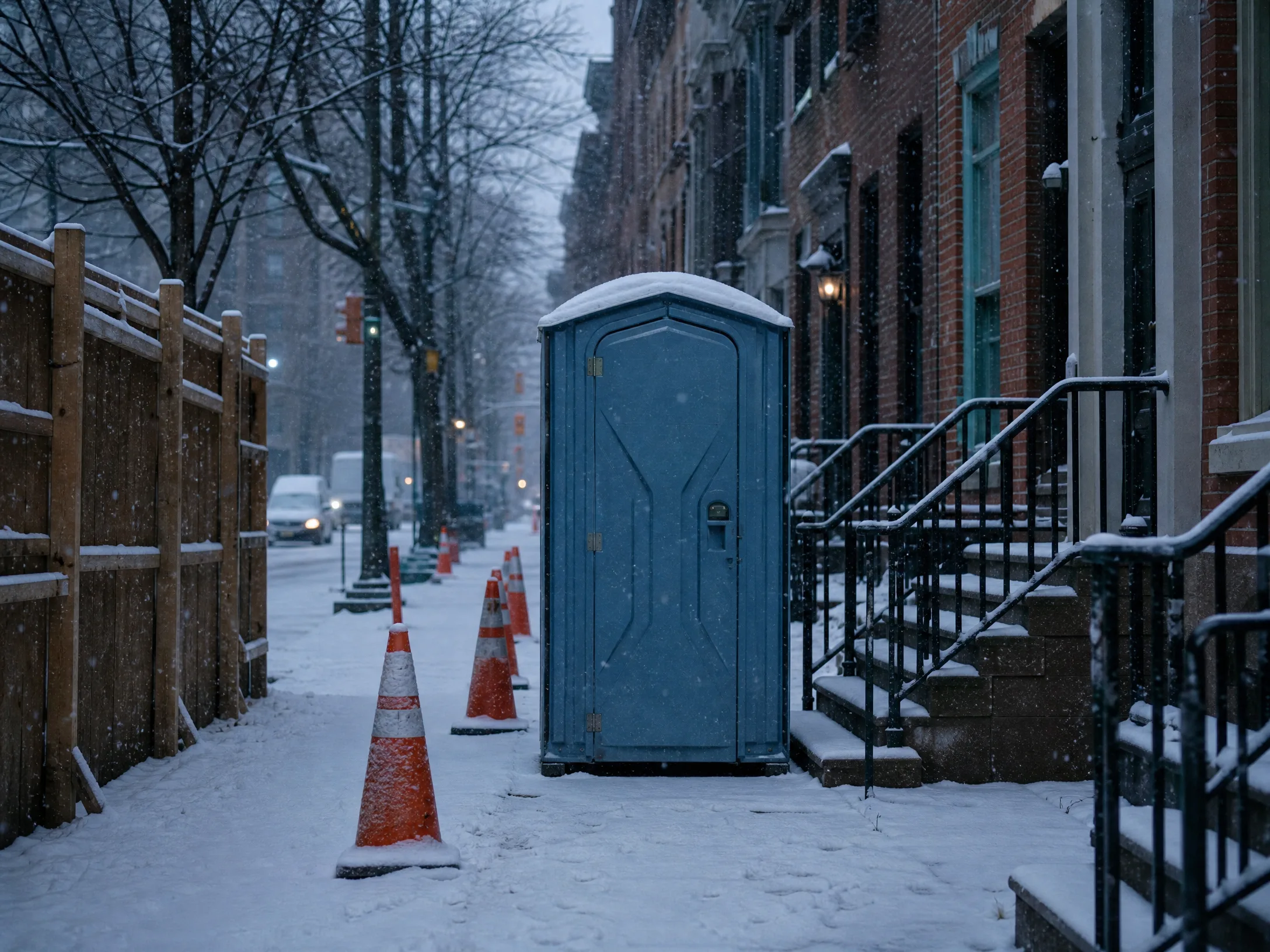
A rowhouse basement backup is usually not a septic tank
This is where the city differs from the counties around it, and it saves a lot of wasted calls. Philadelphia proper is on public sewer. The Philadelphia Water Department serves the city, and roughly 60 percent of it drains through a combined sewer system carrying stormwater and sanitary flow in the same pipe, which the Green City, Clean Waters program has been working on since 2011.
A rowhouse basement floor drain that backs up during a heavy storm is almost always the lateral or the sewer, not a septic tank, because there is no septic tank. What city properties do sometimes have is a sealed holding tank, and a holding tank gives no warning at all beyond filling up. See holding tank rental and service.
Genuine septic warning signs in this market come from the ring: Bucks, Montgomery, Delaware and Chester counties, plus the New Jersey side. If you are in Doylestown at 26.2 miles or Bensalem at 14.8, you likely have a tank. If you are in Upper Darby at 11.5 miles or Lower Merion at 11.4, it depends on the block. The same is true across Abington at 8.6 miles, Norristown at 18.8, King of Prussia at 17.3 and Chester at 22.6. The full ring is on service areas, and the Philadelphia page covers the city itself.
Signs that point at the effluent filter
An effluent filter is a cartridge in the outlet tee that catches suspended solids before they reach the drainfield. When it blinds over, the house slows down while everything outside looks completely normal.
That combination is diagnostic. Slow drains, no wet ground, no smell outdoors, no green stripe. It reads like a plumbing problem and it is not. Rinsing the filter back into the tank takes minutes on a scheduled visit and is one of the standard steps described on septic tank cleaning. Not every system has one, since filters were not standard on older permits.
What makes these signs appear sooner?
Load, mostly. The Penn State Extension frequency table puts a 1,000 gallon tank serving four people at about 2.6 years between pump outs, and anything that adds solids or water compresses that.
- A garbage disposal, which sends food solids to a tank built for settling
- An extra occupant, since the table is per person
- Wipes, including the ones sold as flushable, and kitchen grease down the sink
- A water softener discharging into the system
- A tank that was only half pumped last time, because only the inlet compartment was done
Frequency by tank size and household is set out on how often a septic tank needs pumping, and the cost of acting early against acting late is on septic tank pumping cost.
What not to do when you see these signs
Do not pour additives in. The EPA is direct in its SepticSmart material that nothing poured down a drain removes the inorganic solids on the floor of a tank.
Do not open a tank lid yourself. Septic tanks generate hydrogen sulphide and methane, the atmosphere in one is oxygen deficient, and steel lids on mid-century tanks corrode from the top down until they will not carry a person's weight. Do not run a hose into the field to flush it. And do not schedule the pump out for next month if effluent is already on the surface.
Questions about septic warning signs
How long between the first slow drain and a real problem?Days to months, depending on how much water goes through. It never gets better on its own.
Is smell always the tank?No. A dry trap in a basement fixture or a failed vent can smell identical. Check the traps first, then call.
Can a tank be full without any symptoms?Yes, right up until it is not. That is what the three year inspection cycle in the EPA guidance exists to catch.
Do these signs mean I need a new system?Usually not. Most of them resolve with a proper pump out. A surfacing field is the exception, and that starts with your township sewage enforcement officer, since permitting sits at municipal level under Act 537.
Can you come out and look?Yes. Request a quote or contact us, and read what the visit covers, the grease trap page if it is a commercial kitchen, the FAQ, about us or the home page.
The house is being renovated while this is happening. Common, and it changes what you need on site. A gut job with a crew in the house wants home renovation rentals and usually a roll off dumpster as well, and larger jobs run through construction site services. Crew numbers follow OSHA 1926.51(c)(1), one toilet for 20 or fewer workers, with washing facilities separately required under OSHA 1926.51(f), which a handwashing station covers.
How often should a tank be pumped?
Every 3 to 5 years under US EPA SepticSmart, sooner on a 750 gallon tank with a full house.
Who permits septic work locally?
The county Health Department. Haulers are licensed separately and manifests are checked.
What triggers a pump out?
Sludge at about one third of tank depth. On a 750 gallon tank that arrives faster than people expect.
Next step
Get a delivery date
Tell us the address, the dates and the headcount. We size the order and confirm the route.