
What does disaster relief sanitation cover?
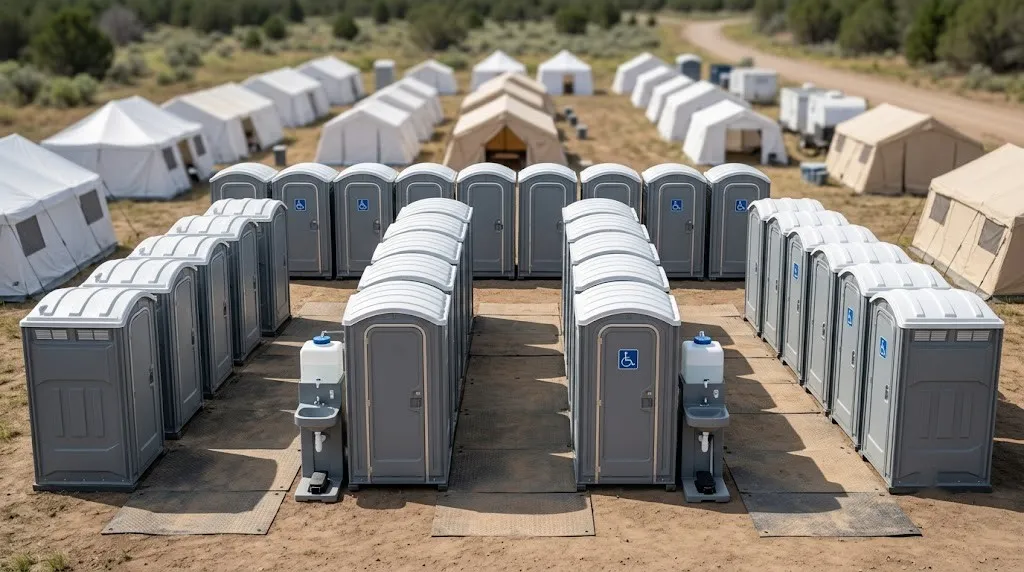
Disaster relief sanitation is the temporary provision of toilets, handwashing and waste removal at a site where the permanent systems have failed or become unreachable. It is the same equipment as any other rental, deployed on a different clock.
In this region that usually means one of five situations:
- Flooding along the Schuylkill or Delaware after a heavy storm system
- A water main break that takes a block or a building off supply
- Fire damage that makes a building unusable while people stay nearby
- Sewer failure or a backup that closes the plumbing in an occupied property
- A staging area for utility, restoration or municipal crews working extended shifts
Each needs a different mix. A staging area needs toilets and handwashing for a crew. A block off water needs units close to homes and a service schedule that does not slip. Emergency porta potty rental covers the fastest of these, and emergency septic service covers the tank side.
How fast can units arrive?
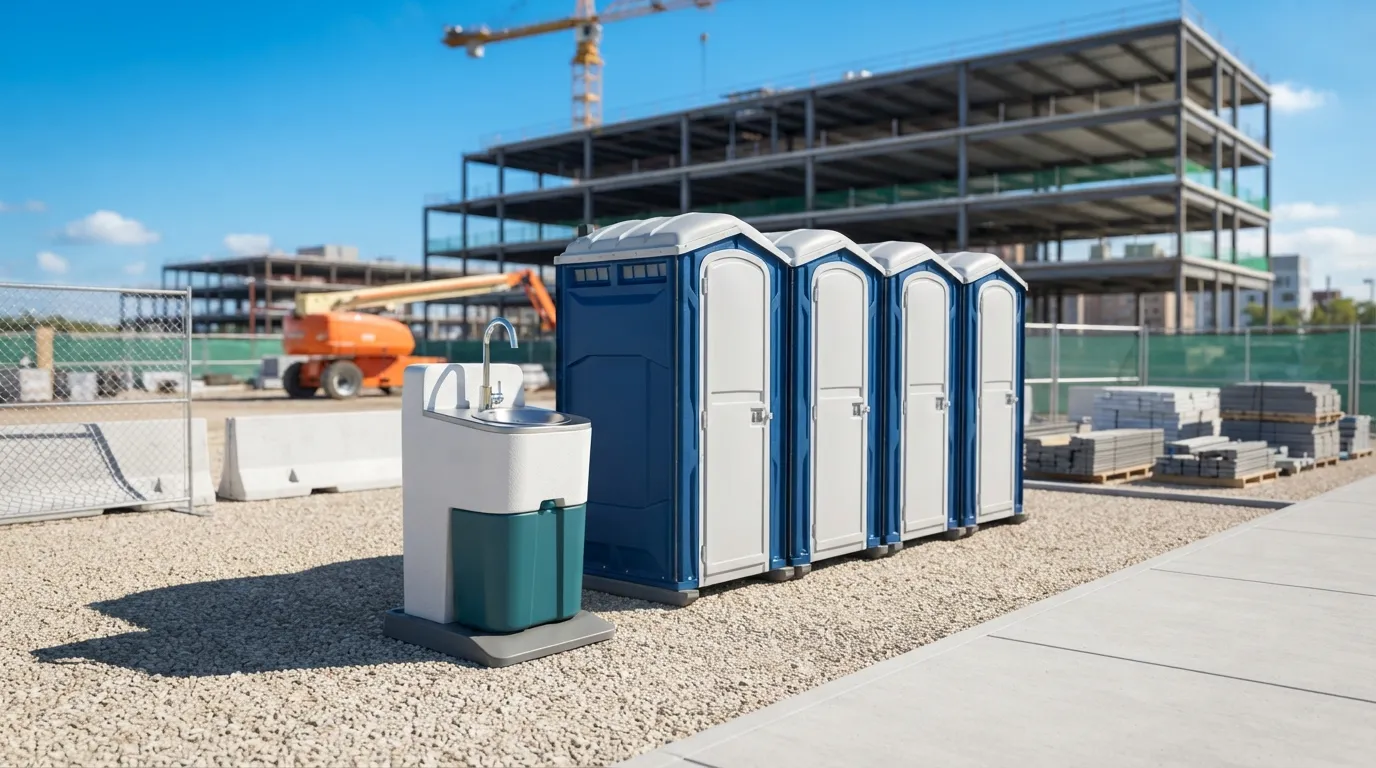
Same day across most of Philadelphia on standard units, and next day at the outer edge of the ring, subject to what is in the yard. The honest limit is not our dispatch, it is access. If the street is flooded or closed the truck waits with everyone else.
What speeds it up:
- A single named contact with a phone that is answered
- An address plus a description of where the truck can stop
- The number of people, not the number of units, so we size it rather than guess
- Whether power and light exist on site after dark
- Whether the placement is on private ground or public right of way
Call rather than email for anything urgent. Written requests queue behind whatever is already in the diary. Contact us or request a quote.
How many units does an emergency site need?
Two different ratios apply and it matters which one you are sizing to.
| Situation | Ratio | Handwashing |
|---|---|---|
| Crew staging area | 1 unit per 20 workers | 1 per unit |
| Residential block off water | 1 unit per 10 households | 1 per 2 units |
| Shelter or muster point | 1 unit per 25 people | 1 per 2 units |
| Long shift utility crew | 1 unit per 20, plus 1 spare | 1 per unit |
The crew figure comes from OSHA 1926.51(c)(1), which requires one toilet for 20 or fewer workers on a construction site, and restoration work sits squarely inside that. Handwashing is separately required under OSHA 1926.51(f)(1), and it is the part that gets skipped in a hurry. A common two-station handwash unit carries around 22 gallons of fresh water, which is roughly 150 to 200 washes before a refill, so plan the refill visit at the same time as the delivery.
Accessible units are not optional in a response either. The 2010 ADA Standards at section 213.2 Exception 4 require 5 percent of the single-user units in each cluster, and never fewer than one, to comply with section 603, and a shelter or muster point is a cluster. Handwashing stations and hand sanitizer stands both deploy in the same movement as the toilets.
Flooding and Philadelphia's rivers
Philadelphia sits between the Schuylkill and the Delaware, and a serious storm system moving up the coast puts low-lying ground near both under water. Manayunk, East Falls, Eastwick and the low sections along the Delaware are the ones that see it, and the Vine Street Expressway flooding in September 2021 is what most people in this city picture when they hear the word.
For sanitation, flooding creates a specific problem. The properties that lose plumbing are exactly the ones the truck cannot reach until the water drops, so the useful placement is often a block back on higher ground rather than at the affected address. We would rather put four units at a reachable corner on the first day than promise a doorstep delivery on the third. Holding tank rental covers properties whose own system is compromised.
Water main breaks and building outages
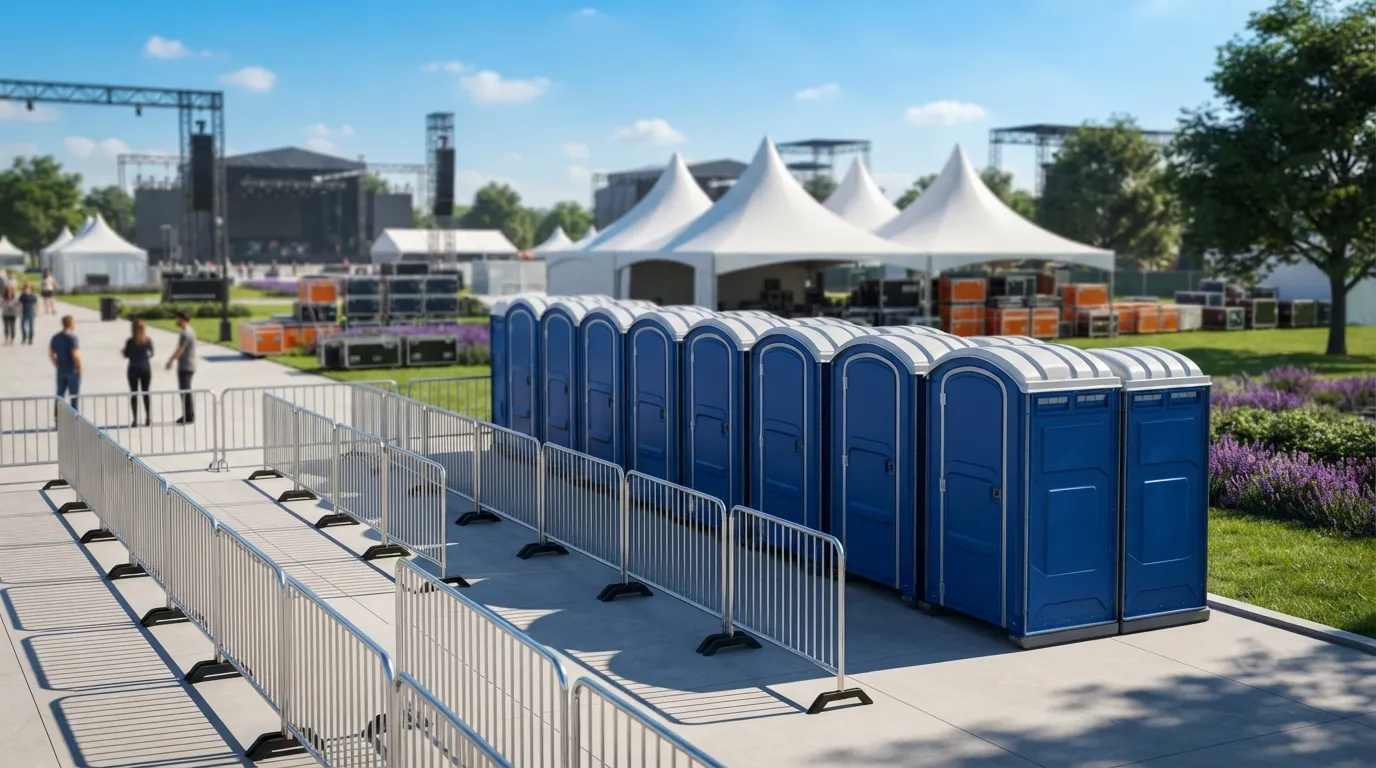
A break that takes a building off supply does not damage anything and still empties the building of working toilets. That is the most common call we take in this category, and it is usually resolved within a day or two, which means a weekly rental rather than a monthly one.
An older building with an interior placement problem often needs the unit on the footway, and that is a permit question even in an emergency. Philadelphia issues portable toilet permits through the City of Philadelphia Department of Public Health under its infectious waste program, on the application that also covers holding tanks, rather than through a streets or transportation department. Property managers who expect a streets process lose time looking for one. See permit requirements.
Emergency sanitation pricing
Typical market ranges, reviewed July 2026. Ranges rather than quotes, and out of hours movements cost more than scheduled ones because they are a separate truck run.
| Item | Typical range | Basis |
|---|---|---|
| Standard unit | $100 to $350 | per day |
| Standard unit | $130 to $500 | per week |
| Standard unit | $125 to $325 | per month |
| ADA accessible | $199 to $400 | per day |
| Handwash station | $75 to $175 | per unit |
| Roll off dumpster | $426 to $778 | per week |
| Septic pumping | $150 to $300 | per job |
| Delivery | $100 to $500 | urgent movement |
Longer deployments should move onto weekly or monthly rates as soon as the timeline is clear. See what porta potty rental costs for the full picture and dumpster pricing for the debris side.
Servicing under pressure
ANSI/PSAI Z4.3 puts the baseline service interval at once a week for a unit taking about 10 users a day. An emergency unit serving a block or a crew will exceed that, and the tank on a standard cabin holds only 60 to 70 gallons, so twice-weekly is the realistic floor and daily is normal on a busy staging area.
Book the service schedule at the same time as the delivery. In a live response the servicing is the item that gets forgotten, and a unit that fails on day four undoes the reason it was brought in on day one. How often units are cleaned covers the standard schedule.
Disaster response questions
Do you supply showers?Yes. Shower trailers are the usual answer for extended crew deployments and displaced households.
What about debris removal?Roll off dumpsters in 20 and 30 yard sizes. Check what cannot go in a dumpster before loading damaged material.
Can you deliver at night?Yes, on urgent calls. Site lighting matters, and a light tower usually goes with it.
Do you handle sewage backups?Septic pumping and grease trap work run off the same trucks. Warning signs covers what precedes a failure.
Do you cover the suburbs and New Jersey?Yes. Camden is 7.3 miles and Chester is 22.6. See service areas.
Can we set up an account before something happens?Yes, and it is worth doing. A site plan on file turns a two hour conversation into a ten minute one.
Get emergency sanitation on site
Call with the address, the headcount and where a truck can stop. We will tell you what we can get there today rather than what we would like to. Contact us or request a quote. Related: emergency porta potty rental, construction site services, porta potty rental in Philadelphia, the FAQ, or the home page.
Next step
Get a delivery date
Tell us the address, the dates and the headcount. We size the order and confirm the route.