
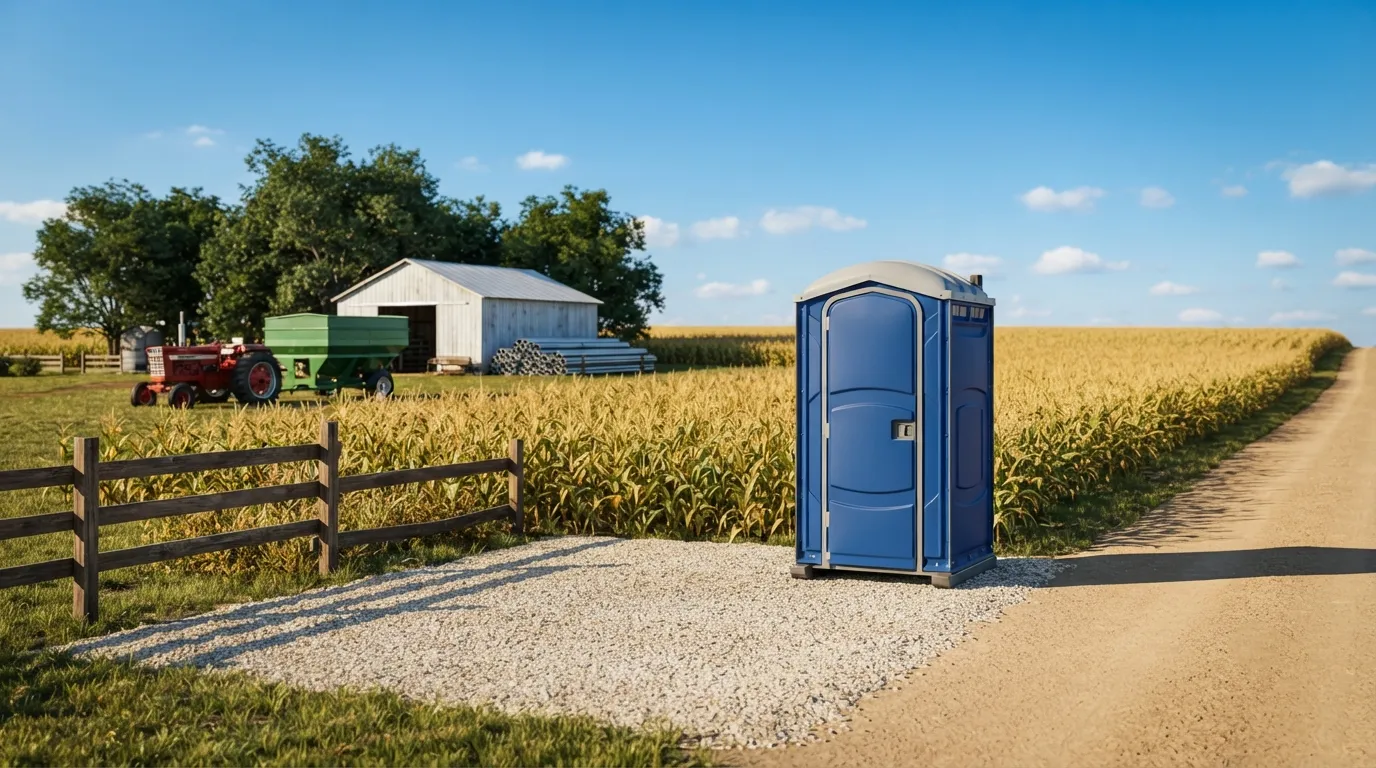
What does OSHA require on a farm?
OSHA's field sanitation standard, 1928.110, is a separate rule from the construction standard and it catches employers out because the trigger is low. It applies to any agricultural establishment where 11 or more employees are engaged in hand-labor operations on any day in the past 12 months.
Where it applies, the employer has to provide:
- One toilet and one handwashing facility for each 20 employees, or fraction of 20
- Both located within a quarter-mile walk of each employee's place of work
- Or, where terrain makes that impractical, at the closest point of vehicular access
- Potable drinking water, cool and suitably placed
- Reasonable opportunity during the workday to use all of it
That quarter-mile rule is the one that drives orders. A single unit at the barn does not cover a crew working the far end of a 40 acre block, and the fix is usually a second unit rather than an argument. The OSHA requirements page sets the farm rule against the construction one, since they are frequently confused.
Are field sanitation and construction rules the same?
No, and farms with construction happening on them fall under both, which surprises people mid-project.
| Field sanitation, 1928.110 | Construction, 1926.51(c) | |
|---|---|---|
| Trigger | 11 or more hand-labor employees | Any construction site |
| Ratio | 1 toilet per 20 employees | 1 toilet for 20 or fewer workers |
| Handwashing | Required alongside the toilet | Required under 1926.51(f) |
| Distance rule | Quarter-mile walk | Not specified |
| Applies to | Hand-labor field work | Construction and alteration |
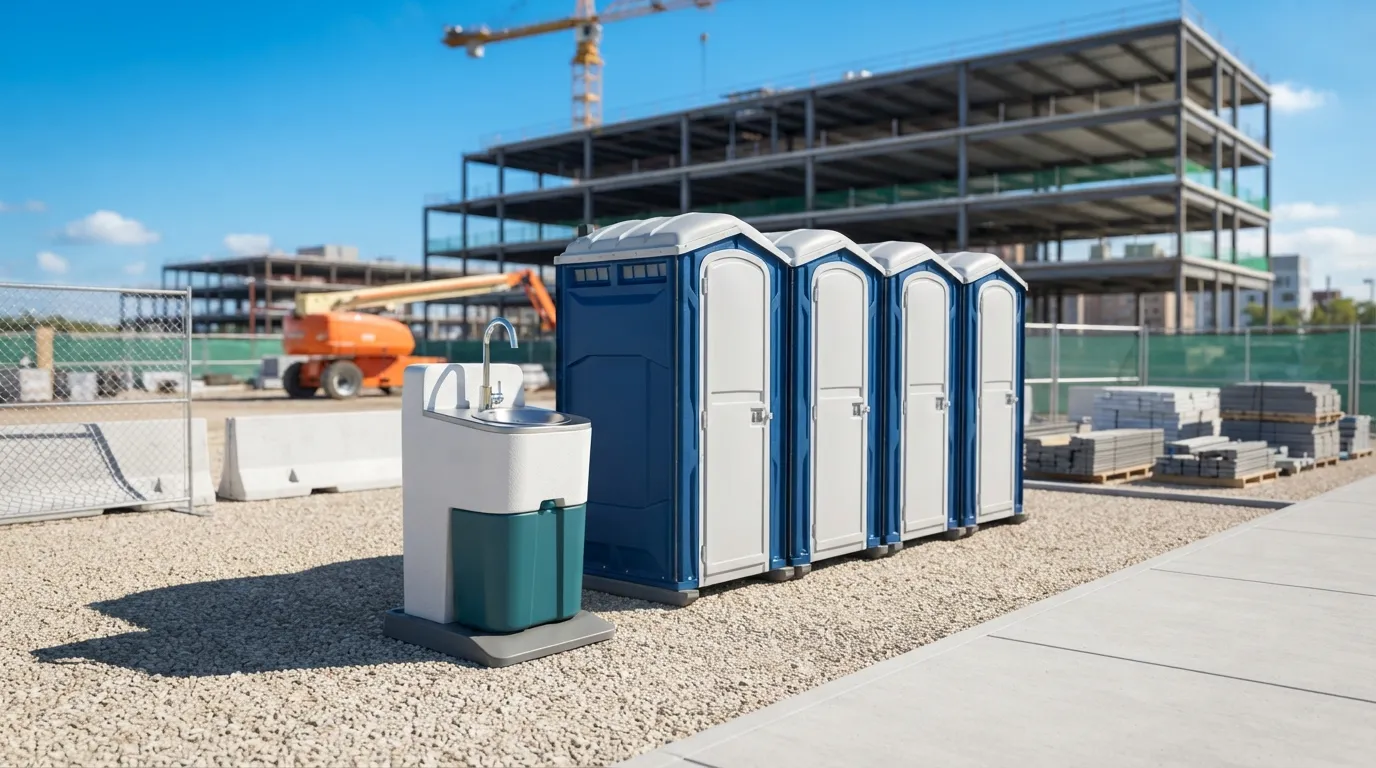
Building a barn, a packing shed or a farm stand puts the construction standard on the same property as the field standard, and the counts are calculated separately. See construction site services for how the jobsite side is packaged.
Urban farms inside Philadelphia
Philadelphia has a real growing sector inside its own borders. Community gardens and market farms sit on former vacant lots across North Philadelphia, Kensington and West Philadelphia, often a fraction of an acre, frequently run with volunteer crews and a summer market schedule.
Those sites have the same delivery constraint as everything else in this city. The lot may be open ground but the approach is a rowhouse street with cars both sides, and the truck needs a clear run. A standard cabin measures roughly 44 by 48 inches and stands about 90 inches tall, so it goes anywhere. Getting the service truck to it on a Tuesday morning is the actual problem. Practical notes:
- Tell us which end of the block the truck can reach and on which day
- A placement inside the lot fence stops the unit being used by the whole street
- Gates need to be at least as wide as the unit plus working room, not exactly as wide
- Volunteer-run sites should nominate one person we can call, not a group inbox
More on access in the placement guide.
Farm restroom pricing
Typical market ranges, reviewed July 2026. Ranges rather than quotes. Seasonal farm work is a monthly rental, not an event rental, and it should be priced that way.
| Item | Typical range | Basis |
|---|---|---|
| Standard unit | $125 to $325 | per month |
| Standard unit | $130 to $500 | per week |
| ADA accessible | $250 to $500 | per month |
| Handwash station | $100 to $175 | per month |
| Portable sink with tank | $100 to $200 | per month |
| Monthly servicing | $100 to $300 | per unit |
| Weekly servicing | $30 to $60 | per unit |
| Delivery | $50 to $150 | per movement |
A harvest season is four to five months, and a monthly rate across that beats weekly by a wide margin. Monthly rental and what porta potty rental costs have the detail.
Do farms need handwashing stations as well?
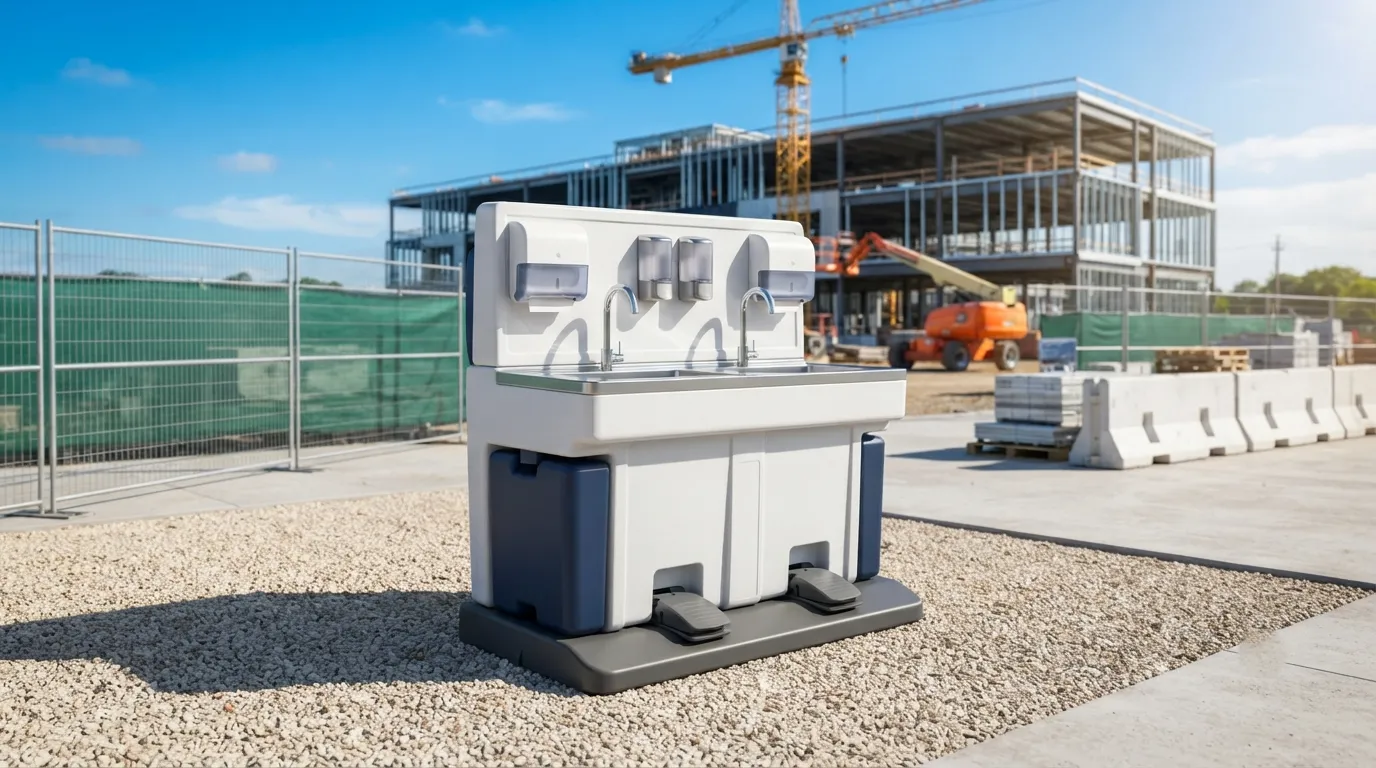
Yes, and it is the half people skip. OSHA 1928.110 pairs the toilet with a handwashing facility. Not sanitizer, a handwashing facility with water and soap. On produce operations that is also a food safety matter, and it is the item most often missing when someone calls us after an inspection rather than before one.
A handwashing station is a self-contained unit with a foot-pump or push-tap, a freshwater tank and a greywater tank, typically holding around 22 gallons of fresh water on common two-station models. A portable sink is the same idea with a larger tank for packing and washing areas. Hand sanitizer stands supplement, they do not replace.
Where the farms actually are
Almost all commercial agriculture near Philadelphia sits outside the city line, in Bucks, Montgomery, Chester and Delaware counties, and across the river in Camden, Burlington and Gloucester counties. Our delivery ring runs to about 26 miles, which reaches most of the near ones. Doylestown is 26.2 miles at 48 minutes. Bensalem is 14.8. Norristown is
18.8. Full list on service areas.
Township rules on temporary sanitation vary across that ring, and there is no single county rule to point at. On private farmland a portable toilet generally needs no permit. Inside Philadelphia, any placement on public ground goes through the City of Philadelphia Department of Public Health under its infectious waste program, on the same application that covers holding tanks, rather than a streets department. See permit requirements.
Farm restroom questions
Do I need a unit for a family farm with no employees?OSHA 1928.110 exempts employers with 10 or fewer hand-labor employees, and family members are handled separately. If you want one anyway, it is a straightforward monthly rental.
How often does a farm unit get serviced?Weekly on ANSI/PSAI Z4.3's baseline, which assumes roughly 10 users a day. Small crews often run fine on weekly. A 20 person harvest crew does not.
Can a unit move between fields?Yes, and we do it on request. Each move is a truck movement and is charged as one, so plan the rotation rather than calling weekly.
What about septic on the farmhouse?Separate service, same trucks. Septic pumping, tank cleaning and warning signs cover it.
Do you do farm event work?Yes. Barn weddings, farm stands and agritourism run as event orders. See event restroom rental and county fair restrooms.
Will the unit freeze in winter?It can. We use a winter additive and hold the service interval. See porta potty in winter.
Book farm restrooms
What does OSHA require on a jobsite?
OSHA 1926.51(c): one toilet for 20 or fewer workers, then a seat and a urinal per 40.
Who permits work in the road?
The city right-of-way office under the local ordinance. DOT rules apply on state routes.
Tell us the crew size, the acreage and how far the far field is from the barn. We size to OSHA 1928.110 rather than to guesswork. Request a quote or contact us. Related: standard porta potty rental, holding tank rental, porta potty rental in Philadelphia, the FAQ, or the home page.
Next step
Get a delivery date
Tell us the address, the dates and the headcount. We size the order and confirm the route.