
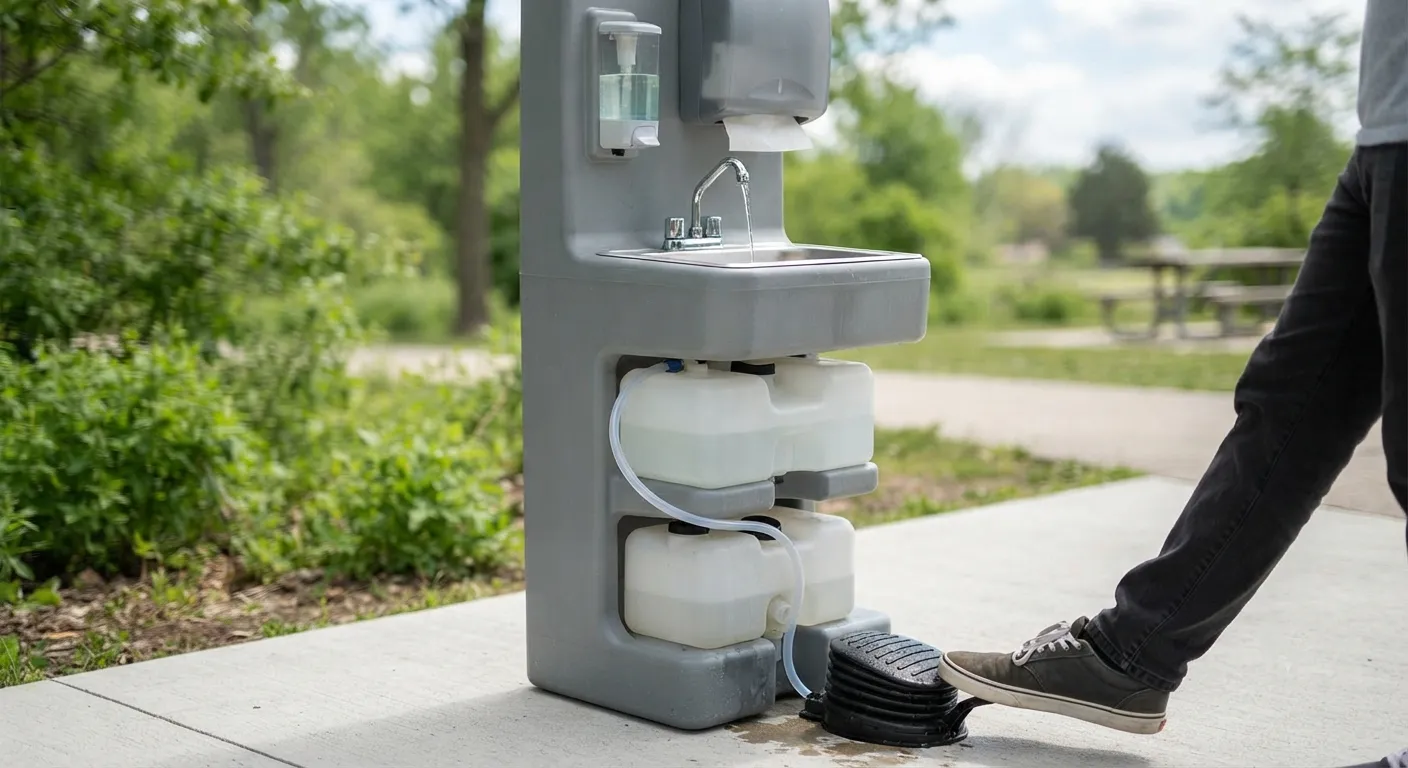
What is a portable sink?
A portable sink is a freestanding basin with an onboard fresh water tank, a pump, and a sealed greywater tank that catches the waste, so it needs no plumbing connection at either end. You fill it, people use it, we pump the grey side and refill the fresh side on a service visit.
That is the whole idea, and it is why they show up in three very different places:
- Jobsites with toilets but no water service yet
- Food vendors and caterers working outdoors
- Buildings mid renovation where the only working sink has been ripped out
If what you actually want is the two basin unit that stands next to a bank of toilets, that is a handwashing station and it is the cheaper answer. If you only need dry hygiene at the door of a unit, a sanitizer stand covers it.
How much water does a portable sink hold?
Enough for a day of ordinary use, and rarely enough for two. Manufacturer specifications for common two station gravity units put the fresh tank around 22 gallons, which is roughly 200 to 250 hand washes at the volume people actually use.
Working figures to plan against:
- 22 gallon fresh tank, about 183 pounds of water when full
- A matching greywater tank, because everything that goes in has to go somewhere
- Roughly one day of use for a crew of 10 on a jobsite
- Half a day at a busy food stall, sometimes less
- Refill or a second unit rather than rationing, since a dry sink is worse than no sink
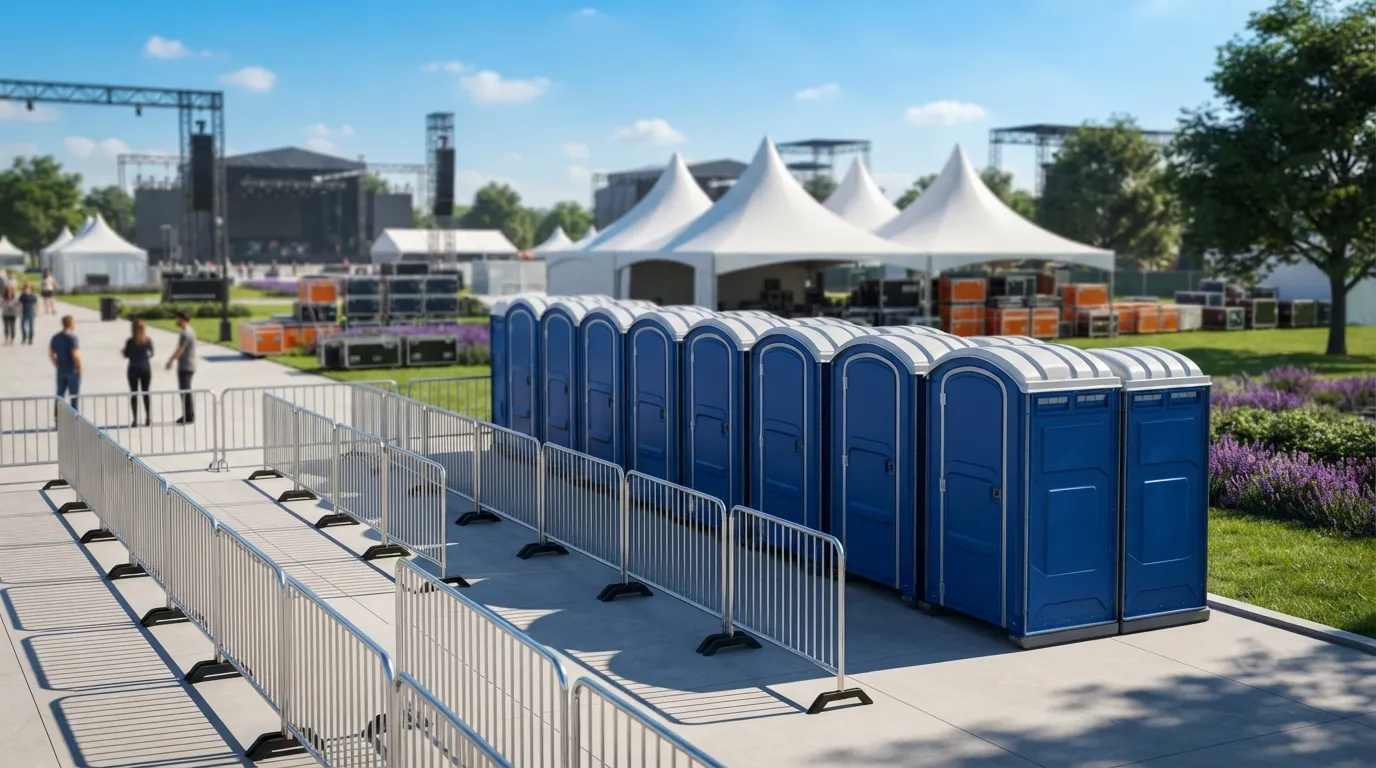
Undersizing is the common mistake. A single sink at a Penn's Landing food event will run dry by mid afternoon, and nobody notices until an inspector does. Book the refill visit into the quote. Our page on handwashing requirements sets out what the rules expect to be available.
Cold, warm and hot water sinks
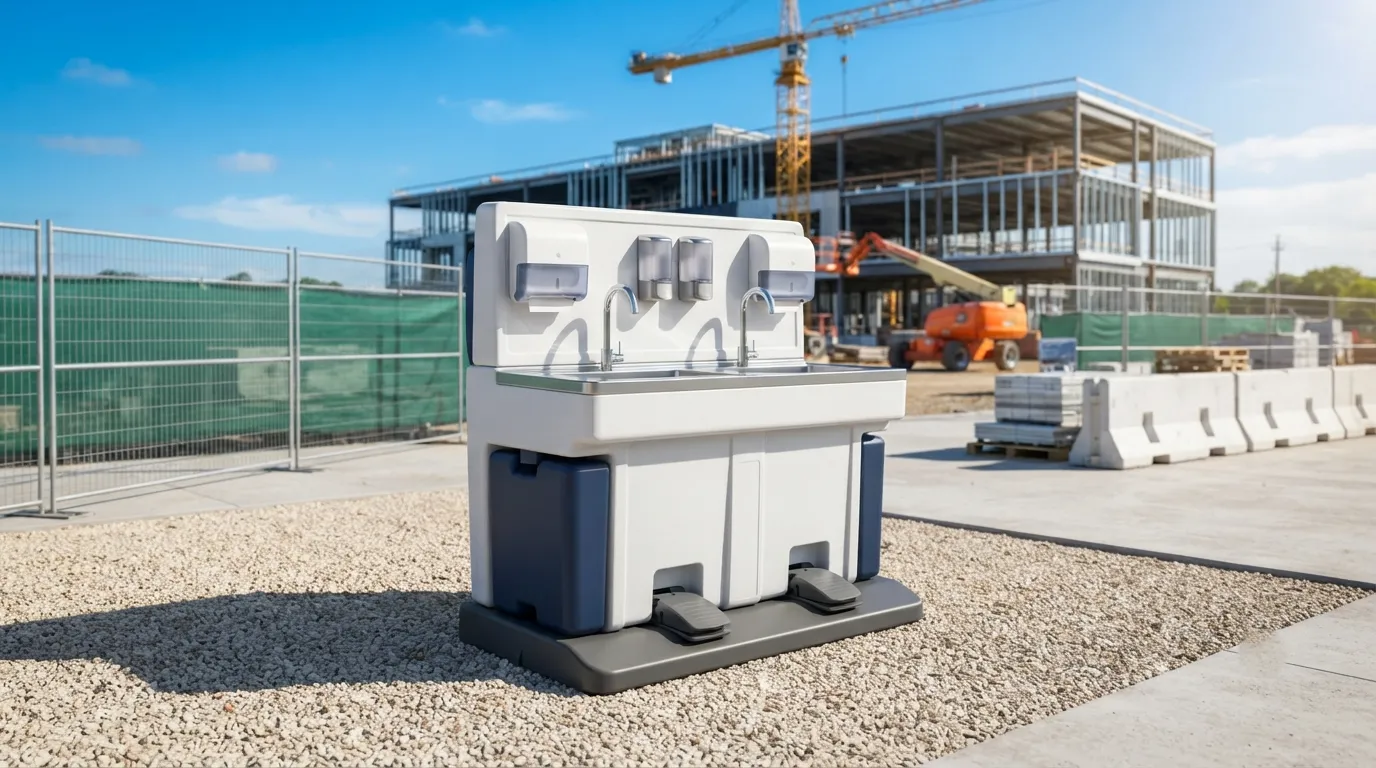
| Unit | Water | Power needed | Typical use |
|---|---|---|---|
| Two station gravity | Ambient | None | Jobsites, small events |
| Four station gravity | Ambient | None | Festivals, vendor rows |
| Heated single basin | Warm to hot | 110V | Food service, winter work |
| Deep basin catering sink | Warm to hot | 110V | Prep and pot washing |
| Trailer plumbed sinks | Hot | Trailer supply | Runs with a restroom trailer |
For a fixed workplace rather than a jobsite, the bar is written down. OSHA 1910.141(d)(2) calls for lavatories with hot and cold running water, or tepid running water, hand soap and individual towels or a warm air blower, which is the description a heated unit is built to satisfy. If accessibility matters, the 2010 ADA Standards hold a lavatory rim or counter surface at no higher than 34 inches above the floor in section 606.3, and most standard gravity units sit above that.
Heated units need a power source. On a jobsite that usually means the site panel, and if there is no service yet you are looking at a temporary power pole or a generator. At an event it means a run from the vendor distro. Say which one you have when you call, because a heated sink with nowhere to plug in is a cold sink.
A restroom trailer already has plumbed sinks with running hot water inside it, so on a wedding or a corporate event the trailer often removes the need for separate sinks entirely. Same with a shower trailer on a longer job.
Sinks for food service and catering
This is where the specification stops being a preference and starts being a pass or fail. The FDA Food Code, which Pennsylvania adopts, requires a handwashing sink to deliver water at a temperature of at least 100 degrees Fahrenheit through a mixing valve or combination faucet. A cold gravity unit does not meet that, no matter how clean it is.
Philadelphia runs its own food safety program through the Department of Public Health rather than leaving it to the state, so a temporary vendor here is inspected by city staff against city expectations. Ask for the heated unit, and ask early, because there are far fewer of them in the yard than cold ones.
Manual warewashing is a separate requirement again. The Food Code sets a three compartment sink as the standard for washing, rinsing and sanitizing equipment by hand, and a single basin handwash unit is not a substitute for it. If you need both, book both. Event work is set out on event restroom rental, festival restrooms and county fair restrooms.
Can I use a portable sink to wash hair?
Not one of ours, honestly. The salon style basins sold as portable hair washing sinks are a different product with a neck notch, a spray hose and a drain height built for a reclined client. What we rent is jobsite and event equipment, with a flat basin and a foot pump.
If you are running a hair or grooming station at a film shoot or a festival, the workable answer is a trailer with plumbed hot water, or a heated deep basin sink next to your own basin insert. Crews on film set restroom rental jobs solve it that way more often than not.
Camping and off grid use
We rent to sites and events, not to individual campers, and there is a practical reason. The minimum charge covers a truck driving to you twice, which for a weekend of camping costs more than the sink is worth to you. A collapsible camp sink from an outdoor retailer is the right tool for that job.
Where we do go out to remote ground is organised camping: scout camporees, agricultural shows and race support in the outer counties. That pairs with camping porta potty rental and farm and agricultural restrooms.
Where does the greywater go in Philadelphia?
Into our truck, and then to a permitted disposal point. It does not go down a storm drain and it does not go onto the ground. Roughly 60 percent of Philadelphia sits on a combined sewer system, where sanitary flow and stormwater share the same pipe, which is exactly why the Philadelphia Water Department is strict about what enters an inlet during wet weather.
Pennsylvania treats sink waste as sewage rather than as clean water, and the Department of Environmental Protection rules on sewage facilities under 25 Pa. Code Chapter 71 are what sit behind a hauler being permitted at all. If a vendor offers to tip your greywater into the gutter, that is a decision you do not want attached to your event name. Related: holding tank rental and septic pumping service.
Delivery on a Philadelphia block
The sink is not the problem. The approach is. On the tight rowhouse streets through South Philadelphia, Fishtown, Kensington and Grays Ferry, one car parked across your curb cut is enough to stop a delivery, and a full sink cannot be dragged 60 feet down an alley.
What helps us:
- The block, the side of the street and the nearest cross street
- Whether there is a gate, and how wide it opens
- Whether the unit lives inside a fenced area, since we need access on service day
- A phone number for someone who is actually on site
Outside the city the constraints ease off. We run to King of Prussia, Bensalem, Cherry Hill and the rest of the ring listed on service areas. The placement guide covers ground conditions.
What does a portable sink cost to rent?
It is quoted with the rest of the job, because the drive is the expensive part. Published market bands for this region, reviewed July 2026:
| Line | Typical range |
|---|---|
| Delivery and collection | $50 to $150 |
| Weekly service visit | $30 to $220, typically around $60 |
| Standard porta potty, per week | $130 to $500, typically $200 |
| Standard porta potty, per month | $125 to $325, typically $200 |
Ranges, not quotes. A heated unit sits above a gravity one, a four station above a two station, and a long term site rate below an event rate. Full detail on porta potty rental cost and monthly rental.
Questions about portable sink rental
Does it need to be plugged in?Only the heated ones. Gravity units run on a foot pump and nothing else.
How often do you service it?ANSI/PSAI Z4.3, the industry standard for non sewered waste disposal systems, treats weekly as the baseline under ordinary use. Food events usually need daily. See how often units are cleaned.
Can I refill it myself?Yes, from a hose, and plenty of sites do. You still need us for the greywater.
Will it freeze?Yes, if you leave water in it below freezing. Read porta potty in winter for how we handle December through March.
Do I need a permit?For portable units at an event in Philadelphia, the application goes to the Department of Public Health under its infectious waste program rather than to a streets department. See the permit requirements page.
Book a portable sink
Is there a hot water portable sink?
Yes, with a small inline heater. Cold-only units are cheaper and fine in summer.
Do you rent a camping portable sink?
We do. A portable sink and water tank arrive as one unit, no plumbing needed.
Give us the address, the water you need, the power you have and the dates. Request a quote or contact us. Also worth reading: standard porta potty rental, flushable units, construction site services, home renovation units, porta potty rental in Philadelphia, the FAQ and the home page.
Next step
Get a delivery date
Tell us the address, the dates and the headcount. We size the order and confirm the route.