
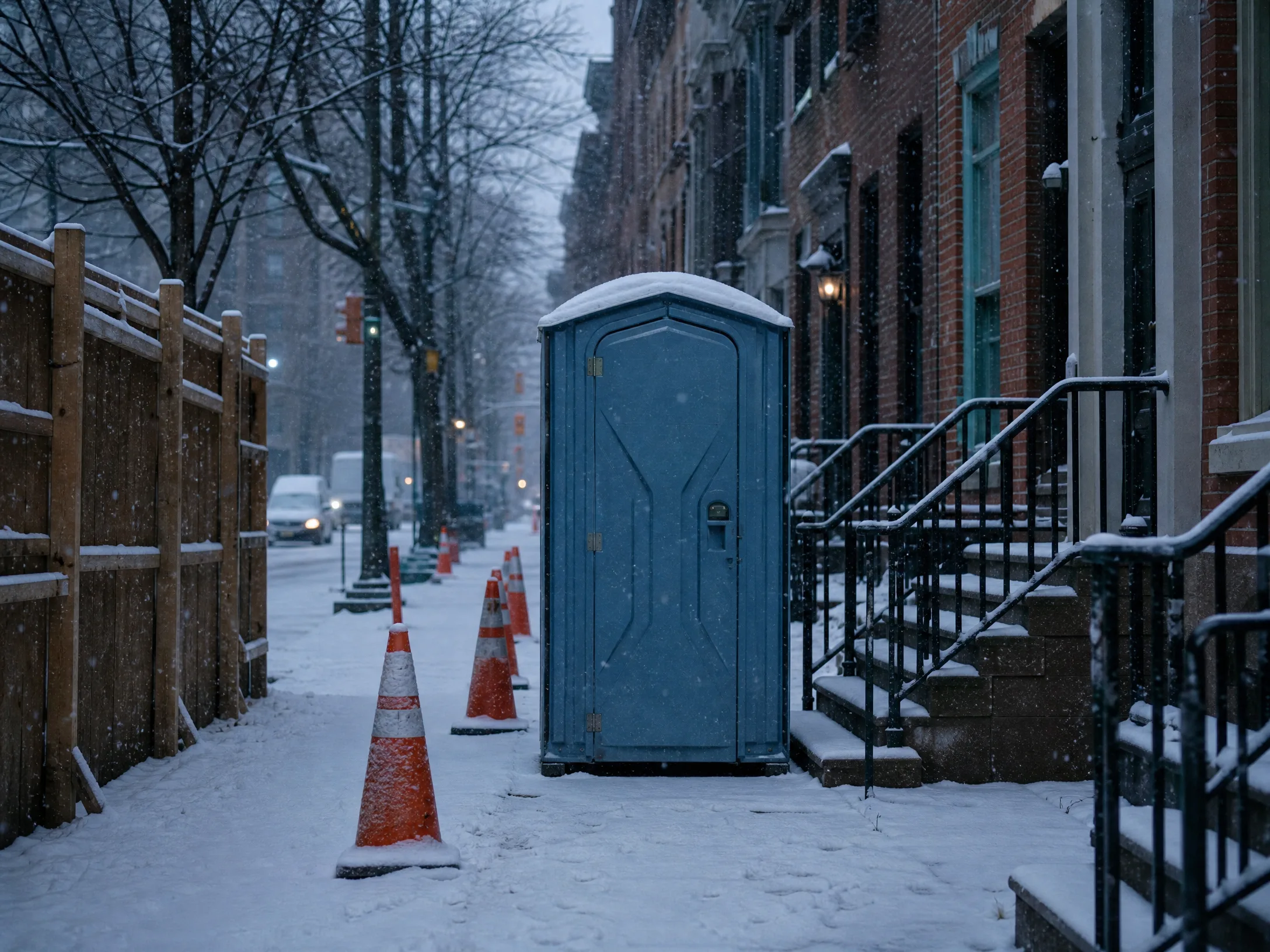
What changes in winter is the chemistry in the tank, the ground under the unit, and whether the truck can get down your street after a storm.
Can you use a porta potty in winter?
You can, and thousands of them stay out across the city every January on rowhouse renovations and hospital projects that do not pause for weather. A standard unit has no water line, no pump and no trap, so there is nothing in it to burst. The only liquid is what is in the sealed holding tank.
The changes we make for the cold season:
- A winter deodorizer charge with a much lower freeze point than the summer mix
- A reduced water volume in the tank, since water is what freezes, not waste
- Salt or an ice melt product around the base and on the approach
- A check on the door seal and the latch, which stiffen in the cold and get forced
- More frequent looks at whether the ground under the unit has shifted with a freeze and thaw cycle
Nothing here costs extra on a normal jobsite rental. See monthly porta potty rental for how a winter jobsite is usually billed.
What actually freezes, and what does not?
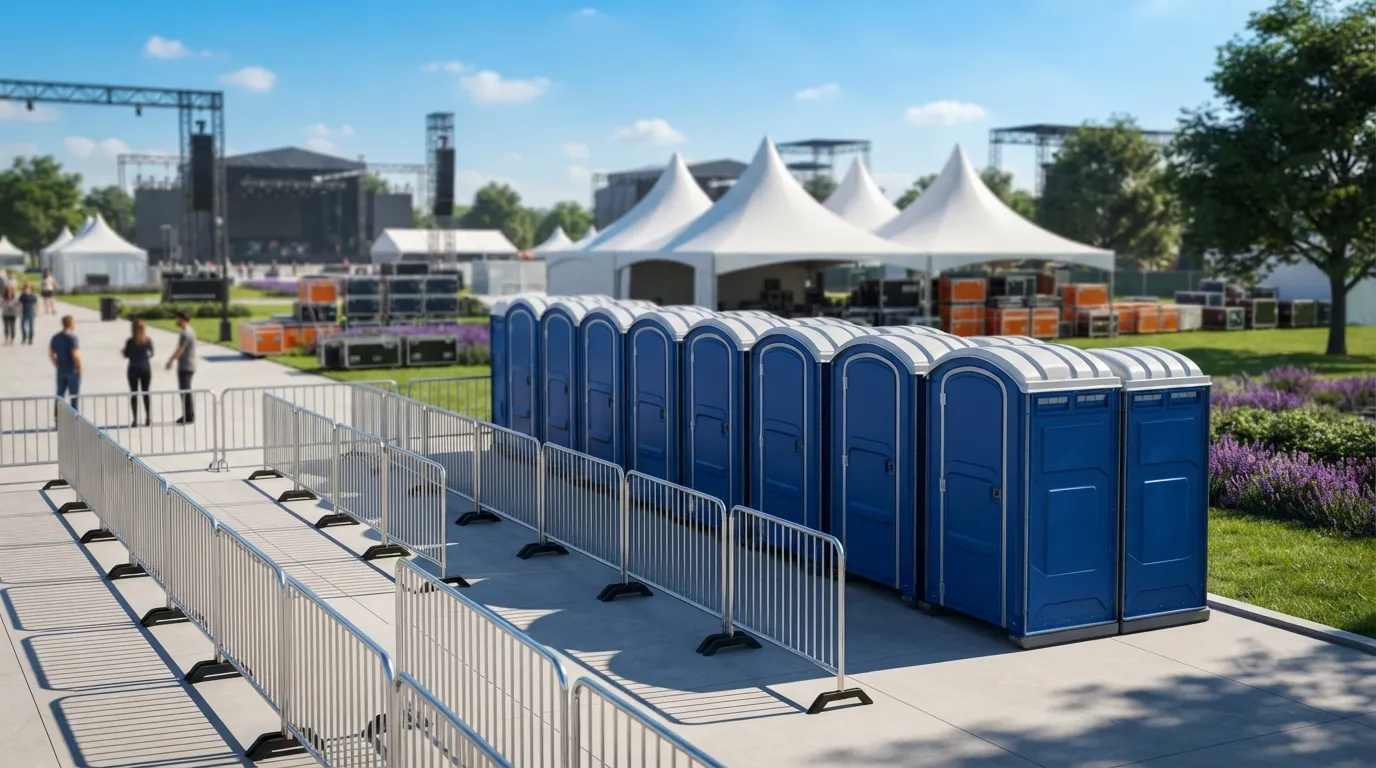
Waste has enough dissolved solids in it that it does not freeze at the same temperature clean water does. What freezes is the fresh water charge sitting on top, and in a bad cold snap the surface of the tank.
| Component | Freeze risk | What we do |
|---|---|---|
| Tank contents | Low to moderate | Winter charge, reduced water volume |
| Flush pump on a deluxe unit | High | Drain the freshwater reservoir or swap to a standard unit |
| Portable sink freshwater tank | High | Drain overnight, or use a heated station |
| Hand sanitizer | Very low | Alcohol based product stays liquid well below freezing |
| Door seal and latch | Moderate | Silicone treatment, do not force a stuck door |
| Ground under the base | Moderate | Re-level after a thaw |
The one to watch is a deluxe flushable unit. Its foot pump and separate freshwater reservoir are the parts most likely to freeze, so on a jobsite running through January most crews are better off with a plain standard unit and a heated wash station nearby.
What about handwashing in the cold?
This is where winter costs money, and it is worth doing properly. OSHA 1910.141(d)(2)(ii) requires each lavatory to be provided with hot and cold running water, or tepid running water, and OSHA 1926.51(f)(1) requires washing facilities on construction sites where workers apply paints, coatings, herbicides or insecticides or work where contaminants may be harmful.
A basic gravity or foot pump portable sink will freeze if it is left charged overnight below freezing. Three ways round it:
- A heated wash station with an on demand hot water supply, which needs power at the location
- Draining the freshwater tank at the end of each shift, which works and depends on somebody remembering
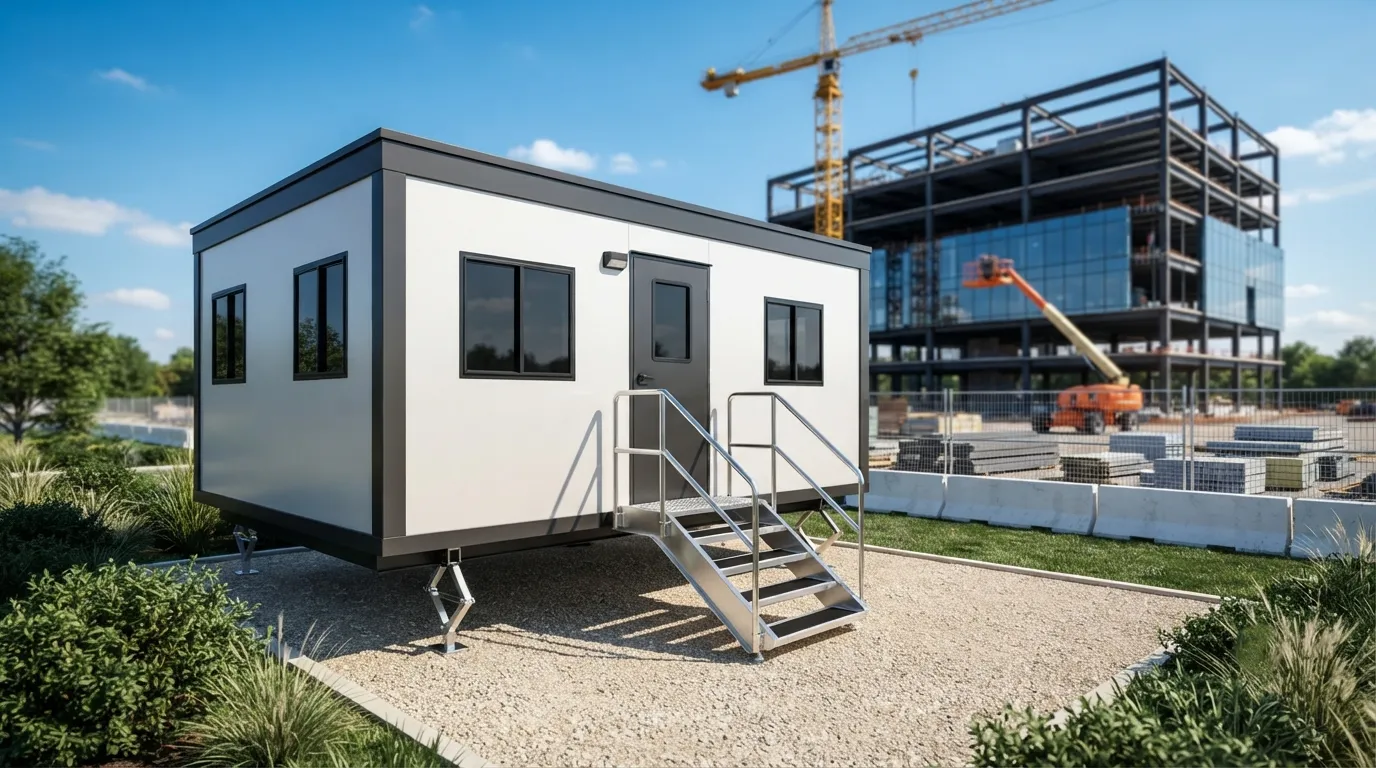
- Moving the wash station inside a heated space, such as a
mobile office trailer or a site cabin
Hand sanitizer stands do keep working in the cold, since alcohol based product stays liquid far below freezing, but they do not satisfy the washing requirement on their own. The handwashing requirements page has the detail, and handwashing station rental covers the equipment options.
How does snow affect delivery and service in Philadelphia?
More than the temperature does. National Weather Service normals put average seasonal snowfall in Philadelphia at roughly 23 inches, and it does not arrive evenly. One 10 inch storm changes a week.
Two city specific effects to plan for:
- Snow emergency routes. When the city declares a snow emergency, vehicles have to be moved off the designated snow emergency routes. If your unit or your dumpster is on one of those streets, the placement is the first thing that has to change. If that placement was permitted, the office to talk to is the Department of Public Health, which is where portable toilet permits are issued in Philadelphia rather than a streets or transportation department.
- Plowed snow ends up at the kerb. A unit sitting in a parking space gets buried by the plough, and a buried unit is not serviceable. Clearing 3 feet around it before the service day is the customer's job and it is genuinely the most common winter service failure we see.
Narrow rowhouse blocks compound both. A 26 foot cartway with cars parked both sides and a foot of snow piled along the kerb leaves nothing for a vacuum truck. Tell us early if your block gets tight and we will move the service window rather than miss it. The placement guide covers the approach a truck needs.
Does the smell go away in winter?
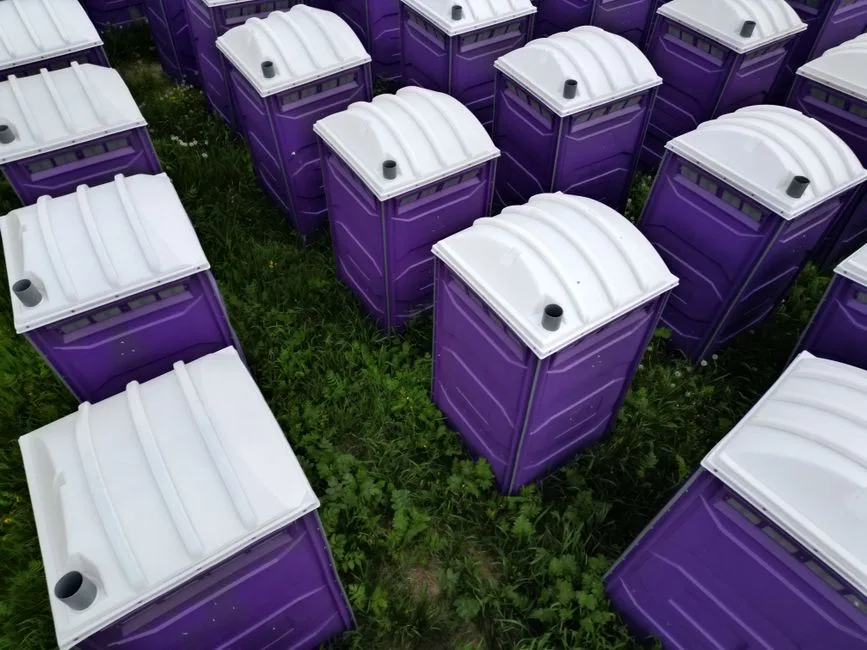
Largely, yes, and it is one of the few benefits of the season. Bacterial activity in the holding tank slows sharply as temperature drops, which is the reverse of the summer problem described on do porta potties smell.
That does not mean service can stop. ANSI/PSAI Z4.3 treats interior washing and restocking as part of a normal service visit, and the seat, floor and door still need cleaning whether or not the tank is quiet. What can change is frequency: a low use winter unit can sometimes move from weekly to fortnightly, and we will tell you honestly when that applies. See how often units are cleaned.
Do winter events still need units?
Yes, and the count does not drop. OSHA has nothing to say about events, so sizing comes from headcount and duration, and cold weather crowds actually use facilities more often rather than less.
Winter event work here clusters around the South Philadelphia sports complex at the bottom of Broad Street, where Lincoln Financial Field and Citizens Bank Park share the same run of lots and tailgating carries on through January, and around holiday markets and winter road races. For anything where guests are outdoors for hours, a restroom trailer with climate control changes the experience completely, since it is a towable unit with heat, flushing toilets and running water. 2 stall and 4 stall sizes cover most of it, and event restroom rental explains how the orders are put together. Counts come from the unit calculator.
What else changes on a winter jobsite?
Daylight, mostly. Sunset in December falls in the mid afternoon here, and a unit that was easy to find at 4pm in June is invisible at 4pm in December. A light tower near the sanitation cluster is a cheap safety fix.
Winter is also when temporary storage gets busy, because materials that sat outside all summer need to come in out of the weather. A 20 foot container or a 40 foot container on the same site solves that, and storage container rental has the sizes. OSHA 1926.51(c)(1) still sets the unit count at one toilet per 20 or fewer workers regardless of season.
Book winter units that keep working
Is there a portable sink hot and cold water option?
There is. A hot and cold portable sink runs off a small heater and a fresh tank.
Tell us the dates and whether the site has power and we will spec the right combination of units and wash stations for the cold months. Request a quote or contact us. Related pages: what rental costs, OSHA requirements, permits, construction site services, emergency rentals, the booking checklist, porta potty rental in Philadelphia, service areas, the FAQ and the home page.
Next step
Get a delivery date
Tell us the address, the dates and the headcount. We size the order and confirm the route.