
Below is the checklist we would use ourselves, in the order things actually happen.
What do you need before you call?
Six answers and one photo. The photo of the intended spot is worth more than any description, particularly on a rowhouse block.
| Have ready | Why it matters |
|---|---|
| Delivery address and cross street | Decides truck routing and access |
| Start and end dates | Drives whether you price daily, weekly or monthly |
| Crew size or guest count | Sets the unit count |
| Alcohol and food, yes or no | Alcohol adds 15 to 20 percent to an event count |
| Exact placement spot | Decides whether the unit can be serviced |
| Public or private ground | Decides whether a permit is needed at all |
On a jobsite the count comes straight from OSHA 1926.51(c)(1), which requires one toilet for 20 or fewer workers, then one toilet seat and one urinal per 40 workers above 20. For an event it comes from headcount and hours. The unit calculator works both.
Which unit type do you actually need?
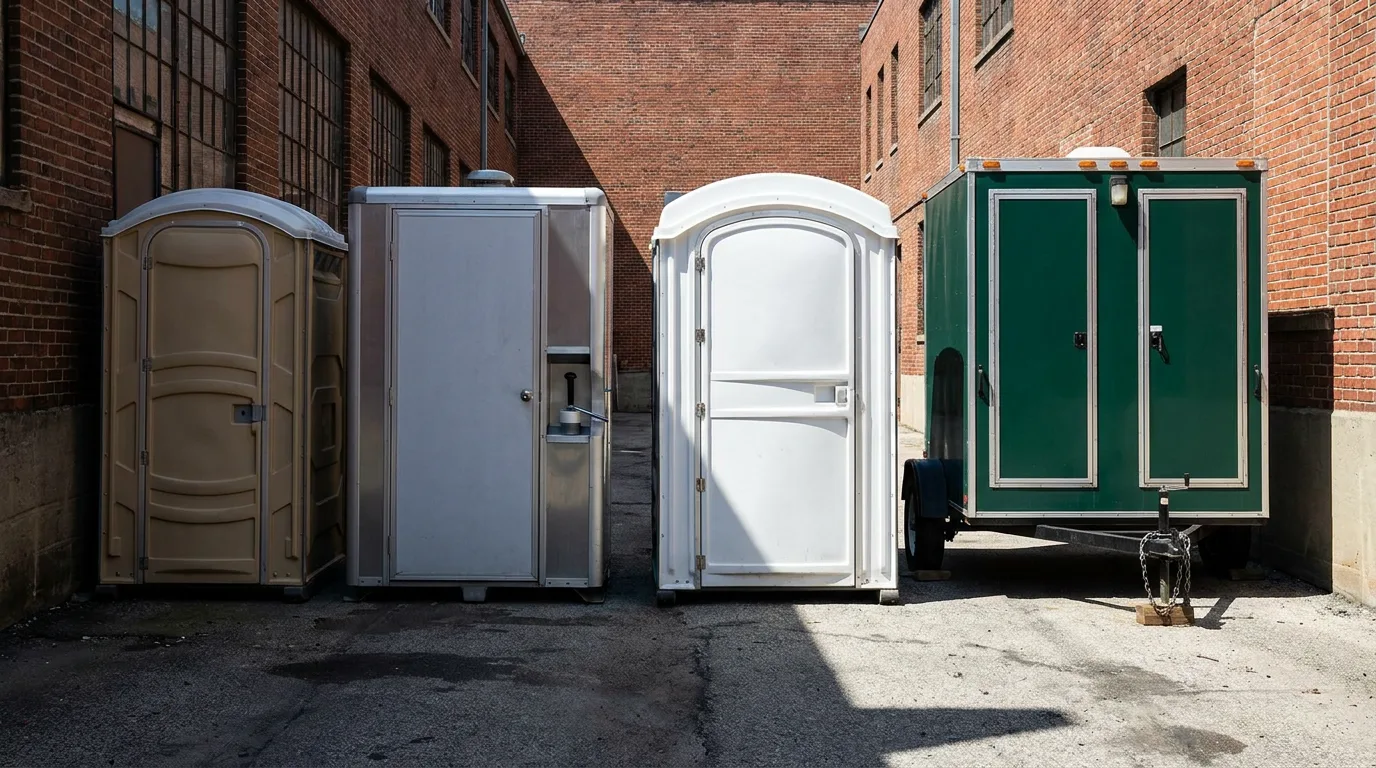
Match it to who is using it, then to how long. Four options and the cases each one owns:
- Standard unit. Jobsites, block parties, anything where function beats
comfort. The default, and the cheapest to service.
- Deluxe flushable unit. Foot pump flush and a separate freshwater
reservoir. Worth it for guest facing events under about 200 people.
- ADA accessible unit. Required at 5 percent of every cluster, minimum one,
under section 213.2 Exception 4 of the 2010 ADA Standards.
- Restroom trailer. A towable unit with flushing toilets, running water and
climate control, for weddings and corporate events.
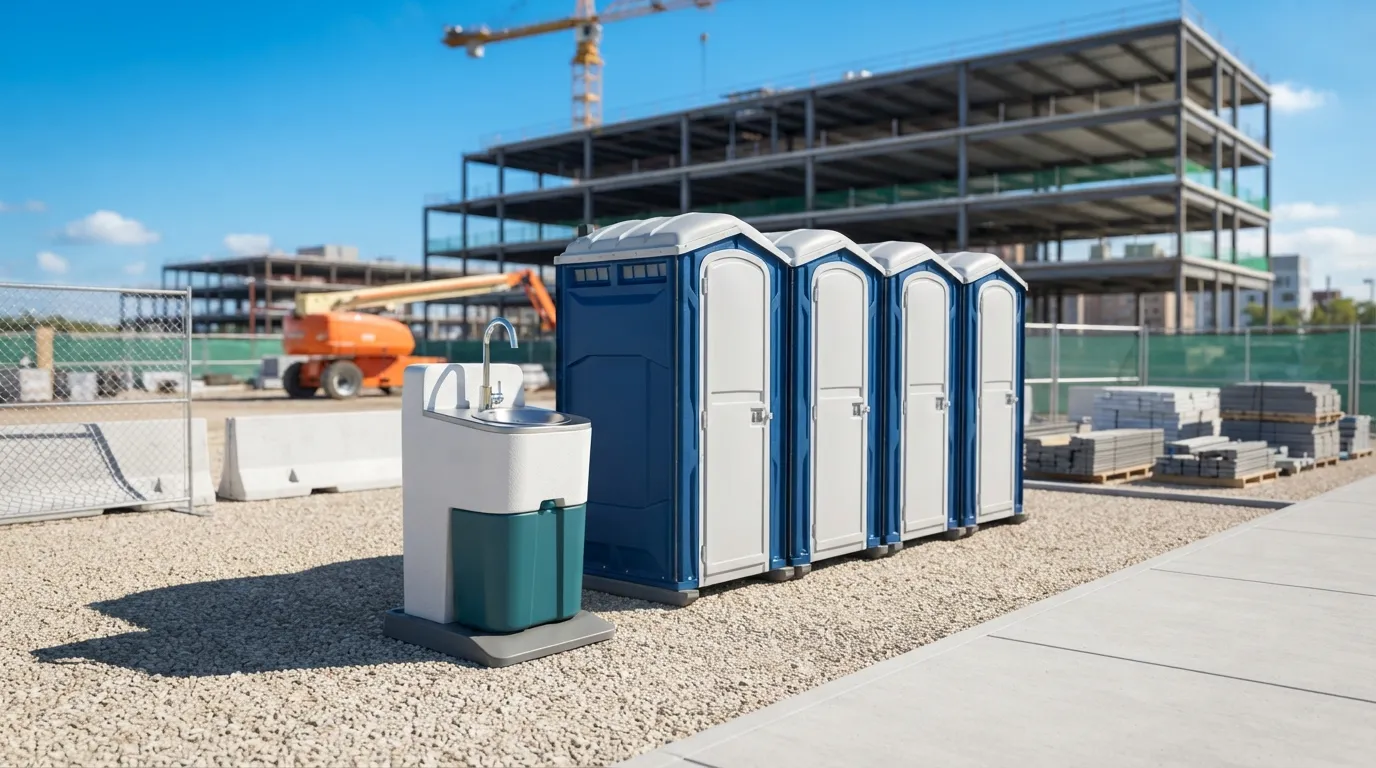
Also worth ordering alongside: a handwashing station, which OSHA
1926.51(f)(1) requires on sites where workers apply paints, coatings, herbicides or insecticides or work where contaminants may be harmful, and a sanitizer stand as a supplement rather than a substitute.
Questions to ask any supplier
Ask these five and the cheap quote usually stops being the cheap quote:
- Is service included, and how often? Weekly is standard for a jobsite unit under ANSI/PSAI Z4.3. A quote with monthly service on a 20 person crew is not a bargain.
- Does a service visit include washing the interior, or just pumping the tank? These are different jobs and only one of them is a service.
- What is the delivery and pickup charge? In this market delivery typically runs $50 to $150 depending on distance and access.
- What happens if you cannot reach the unit on service day? Ask before it happens on a narrow block.
- Who handles the permit if it is going on the street? In Philadelphia that application goes to the Department of Public Health, not a streets office.
Rental costs breaks the numbers out in full, including day rates and monthly hire.
How far ahead should you book in Philadelphia?
Longer than you think for events, shorter than you think for jobsites. Standard units for a construction site can usually be on the ground within a day or two. Event orders compete with a busy city calendar.
| Job type | Lead time |
|---|---|
| Jobsite standard unit | 1 to 2 business days |
| Small event, under 5 units | 3 to 5 days |
| Accessible unit | 3 to 5 days, smaller share of any fleet |
| Large event, 15 units or more | 2 to 4 weeks |
| Restroom trailer | 2 to 6 weeks in peak season |
| Emergency replacement | Same day where possible |
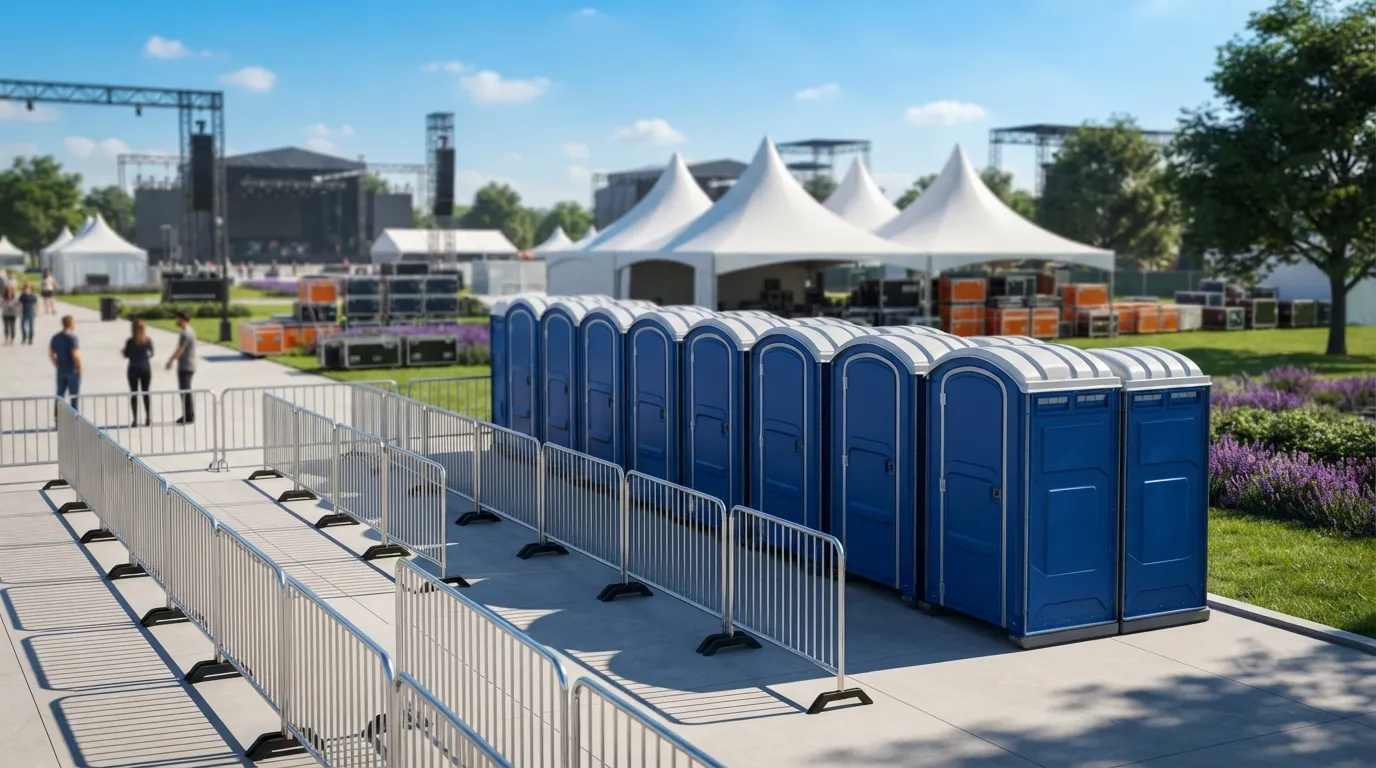
May, June, September and October are the tight months here, because the wedding calendar, the race calendar and the festival calendar all overlap. If your date is a Saturday in one of those months, book early. Emergency porta potty rental covers what happens when you cannot.
Site checks before delivery day
Walk the spot with this list. It takes four minutes and prevents most failed drops:
- Is the ground firm and level, under about 5 degrees of fall
- Can a truck stop within roughly 25 feet of the spot
- Is there 12 feet of overhead clearance for the drop
- Does at least 36 inches of clear pedestrian route remain, which is what section 403.5.1 of the 2010 ADA Standards requires
- Is anything critical blocked: hydrant, fire escape landing, egress door, corner sight line
- Will the vent stack get air on two sides
- Who unlocks the gate, and what is the code
On a Philadelphia rowhouse street add one more. Flag a parking space the night before and put a note on whatever is parked in it, because the 26 foot cartway plus cars both sides leaves a truck no room to improvise. The placement guide has the full detail.
What do you need on delivery day?
A phone number that gets answered and one person who knows where the unit is going. That is genuinely most of it.
Beyond that: confirm the placement with the driver before the unit comes off the truck, since it is far easier to move at that moment than at any point afterwards. Check the door latch, look up the vent stack for a wasp nest, and note the service day you have been given. If the unit is going near a dumpster, decide which one gets the kerb frontage before both arrive.
What about permits and paperwork?
Only for public ground. A unit on a driveway, in a rear yard or inside a fenced site needs nothing from the city. On a footway or a street you need the City of Philadelphia Department of Public Health application covering portable toilets and holding tanks, which is a routing that surprises contractors expecting a streets department process.
If a container is going out at the same time, that splits across two other agencies. Licenses and Inspections issues the dumpster license under Philadelphia Code Section 10-722 and the Streets Department issues the placement permit, with a temporary no parking permit published at $40 for up to seven days. See porta potty permit requirements and dumpster permit requirements.
End of hire checklist
Four things, and the first one is the one people forget:
- Give notice for pickup. A unit nobody called about keeps billing.
- Clear access again on pickup day, same as delivery.
- Take anything of yours out of the unit, including hoses, cones and the padlock.
- Ask for a final invoice that shows the service visits actually made, not the ones scheduled.
If the job has run long, extending is nearly always cheaper than a pickup and a fresh delivery, because delivery and collection are the two fixed costs in any rental.
Ready to book
What gets checked on delivery day?
Level ground and truck access. The placement guide has the clearances.
How many units should I order?
Run the unit calculator, then check service areas.
Have the six answers from the top of this page and we will quote it properly in one call. Request a quote or contact the office. Related reading: how many units you need, OSHA requirements, ADA restroom requirements, servicing frequency, winter rentals, how porta potties work, event restrooms, porta potty rental in Philadelphia, service areas, the FAQ and the home page.
Next step
Get a delivery date
Tell us the address, the dates and the headcount. We size the order and confirm the route.