
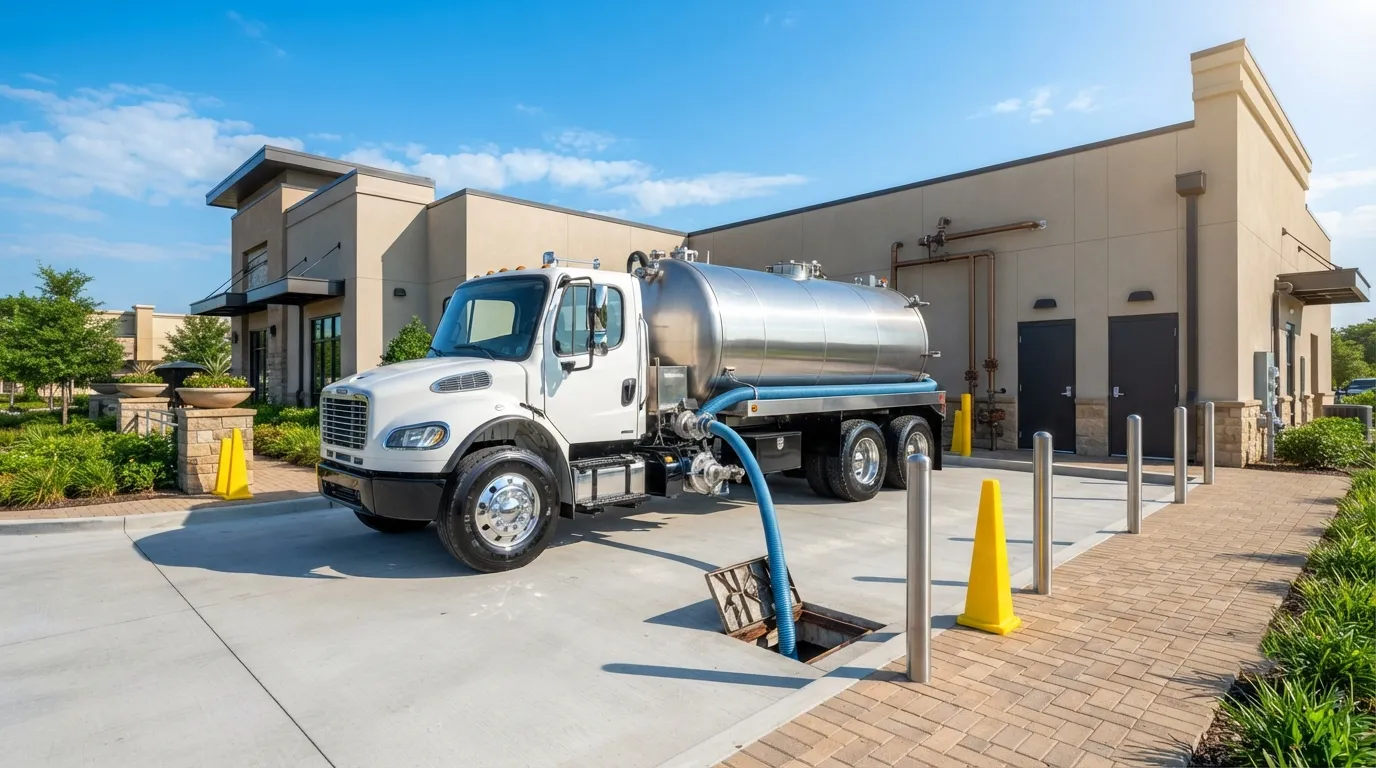
What is a grease trap and what does pumping it involve?
A grease trap, properly a grease interceptor, is a chamber between the kitchen fixtures and the sewer lateral that slows the flow so fats and oils float and food solids settle, leaving cleaner water to leave the building. Pumping it is the complete removal of both layers plus the water in between, followed by scraping the walls and baffles and refilling.
The visit covers:
- Full evacuation of the interceptor, not skimming the floating layer
- Scraping the interior walls, the baffle and the underside of the lid
- Checking the inlet and outlet tees and the flow control fitting
- Refilling with clean water so the unit works from the moment the kitchen restarts
- A disposal manifest showing where the waste went
Skimming instead of pumping is the shortcut that shows up two weeks later as a slow floor sink. The solids on the bottom are the half nobody sees. Our septic pumping service runs on the same trucks, but grease is a separate waste stream with its own disposal route and its own cost.
How often should a grease trap be pumped?
When accumulated grease and solids reach a quarter of the interceptor's liquid depth, which is the 25 percent rule most municipal fats, oils and grease programs are written around. In practice that lands between 30 and 90 days for a working kitchen, and monthly for a fryer heavy operation.
Volume of covers, menu and interceptor size decide it. A 20 gallon under sink unit behind a busy cheesesteak counter fills faster than a 1,000 gallon in ground tank behind a bakery. Set the schedule from the first two pump outs rather than from an assumption, and keep the manifests, because they are the record that matters if the city asks.
Why grease matters more in Philadelphia
The Philadelphia Water Department serves the city, and roughly 60 percent of it drains through a combined sewer system that carries stormwater and sanitary flow in the same pipe, which is what the Green City, Clean Waters program has been addressing since 2011. Grease that reaches a combined sewer does not simply go away downstream. It coats the pipe, narrows it, and turns a heavy storm into a backup that surfaces in somebody's basement.
Federal pretreatment rules at 40 CFR 403.5(b)(3) prohibit discharging solid or viscous pollutants in amounts that obstruct flow in a sewer, and that is the rule a neglected interceptor breaks. Philadelphia's plumbing subcode, which follows the International Plumbing Code, requires an interceptor where fixtures discharge grease in the first place.
The restaurant density this actually applies to runs along East Passyunk Avenue, South Street, Chinatown, Northern Liberties and Fishtown, plus the concession operations around Lincoln Financial Field, Citizens Bank Park and the Wells Fargo Center in South Philadelphia. Those blocks share the rowhouse access problem with everything else we do here, which the Philadelphia page covers.
What does grease trap pumping cost?
Priced by interceptor size and access rather than by a flat call out, because a 20 gallon under sink unit and a 1,500 gallon in ground tank are not the same job. Grease disposal costs more per gallon than septage, so a grease price sits above the $150 to $300 band published for a residential septic pump out.
What moves the number:
- Interceptor capacity, which is the main one
- Whether the unit is under a sink, under a floor plate or buried in the parking lot
- Hose run, since a typical vacuum truck carries 100 to 200 feet of 3 inch hose
- Time of service, because most kitchens want the truck before opening or after close
- Frequency, since a contract schedule prices better than an emergency single visit
Interceptor sizing itself is rated in gallons per minute under PDI G101, the Plumbing and Drainage Institute test standard, so the number stamped on the unit tells you what you have. Send us a photo of the plate and we can quote properly.
Do you handle emergency grease calls?
Yes. A blocked interceptor that has backed a kitchen floor sink up is a same day problem, since the alternative is closing the service. Emergency septic service explains how out of hours work runs and what changes about the price.
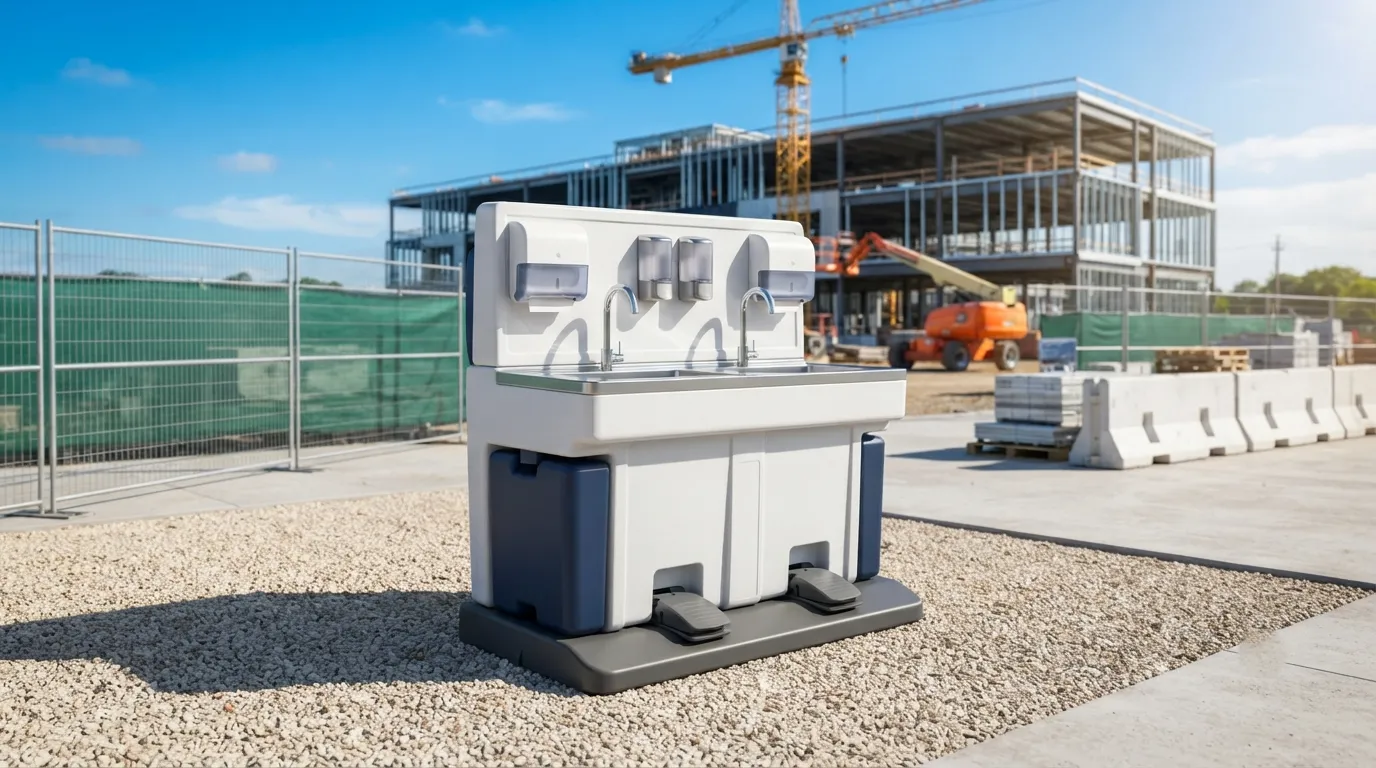
If a kitchen has to keep operating while plumbing is down, the temporary answer is rented facilities rather than hope. That means portable toilet rental, handwashing stations or a portable sink, which is also what OSHA 1926.51(f) asks for on any site with workers and no plumbing.
Questions about grease trap pumping
Can enzymes replace pumping?No. Emulsifying grease so it passes the interceptor moves the problem into the sewer, which is the exact discharge 40 CFR 403.5(b)(3) prohibits.
Do you provide a manifest?Yes, every visit. Keep them.
Can you service outside opening hours?Yes, and for most kitchens that is the only sensible window.
Do you cover the suburbs too?Yes, out to Doylestown at 26.2 miles, Bensalem at 14.8, King of Prussia at 17.3 and Cherry Hill at 13.6. See service areas.
What about a holding tank instead?Different thing entirely. See holding tank rental.
Book a grease trap service
Is grease trap pumping service the same as a clean-out?
Pumping empties it. A clean-out scrapes the walls. Grease trap pumping services usually mean both.
Is grease trap pumping near me available on a schedule?
Yes. Most Philadelphia kitchens run a standing interval rather than calling when it smells.
Send the interceptor size, the address and the hours you can let a truck in. Request a quote or contact us. Also useful: septic tank cleaning, the warning signs on a septic system, pumping frequency, what rental equipment costs, about us, the FAQ and the home page.
Next step
Get a delivery date
Tell us the address, the dates and the headcount. We size the order and confirm the route.