
What is a temporary power pole?
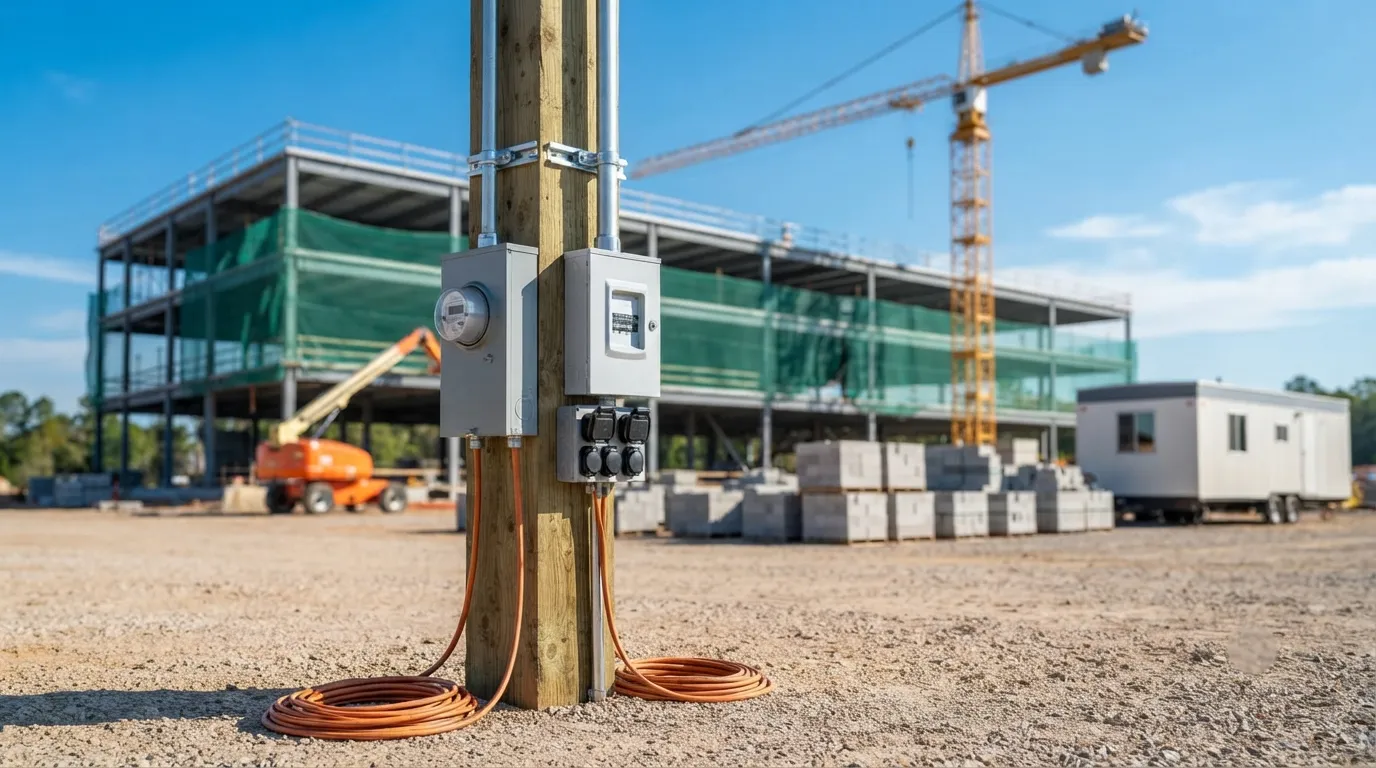
A temporary power pole is a braced post carrying a meter socket, a main breaker panel and weatherproof receptacles, connected to the utility's overhead service so a jobsite has metered power before any permanent service exists. It stands for the duration of the build and comes down at the end.
The parts, in the order the power passes through them:
- The utility service drop from the pole in the street
- The weatherhead and drip loop at the top of the post
- The meter socket, at the height the utility specifies
- The main breaker, commonly 100 amp or 200 amp on a construction service
- The panel, with GFCI protected receptacles and a grounding electrode
- The bracing, because a post carrying a service drop is under constant pull
That is the diagram in words. Any competent electrical contractor will draw the version that matches your site, and it is worth having before you dig anything.
What we do, and what we do not do
We do not install temporary power poles. We are a site services company and electrical work in Philadelphia has to be done by a licensed electrical contractor working under a permit, which is exactly how it should be.
What we do is everything that plugs into the result, and the coordination around it:
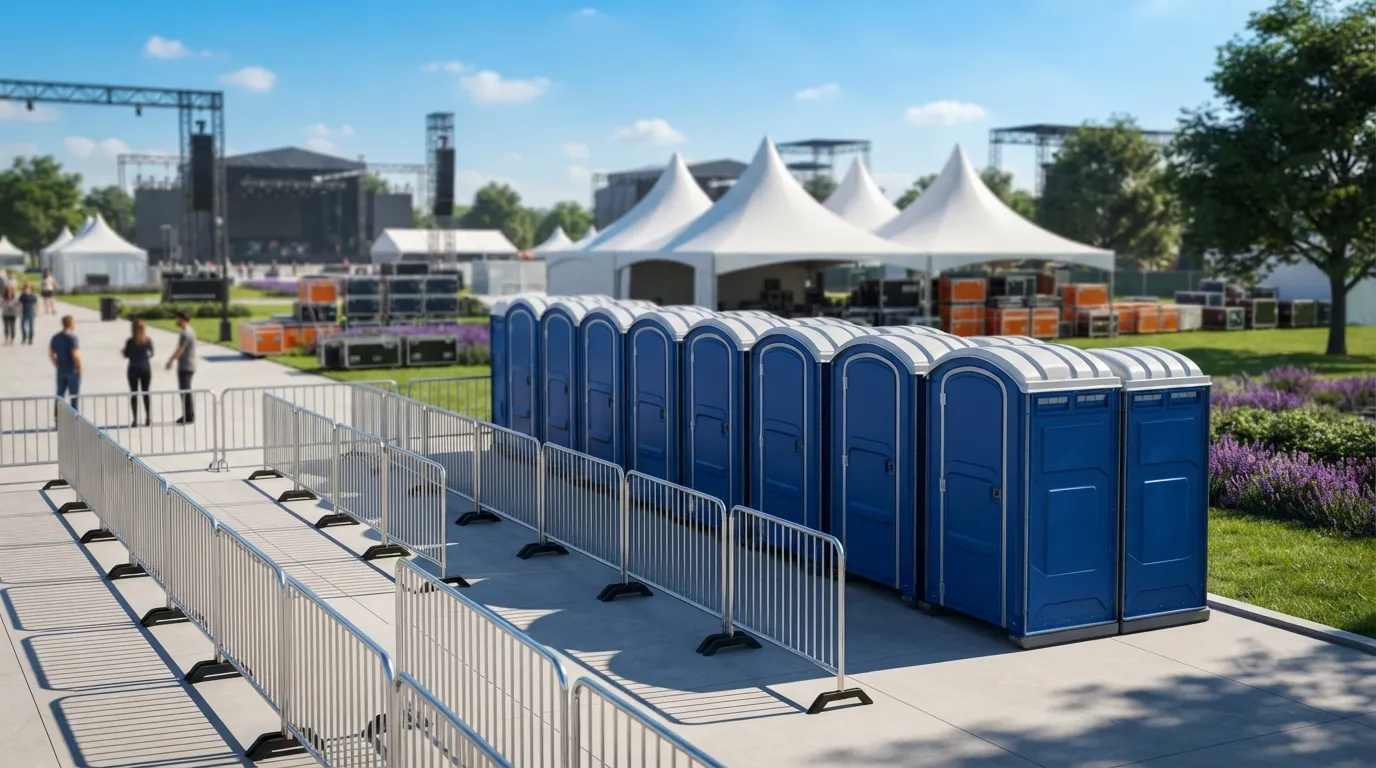
- Portable toilet rental and handwashing stations that need no power at all
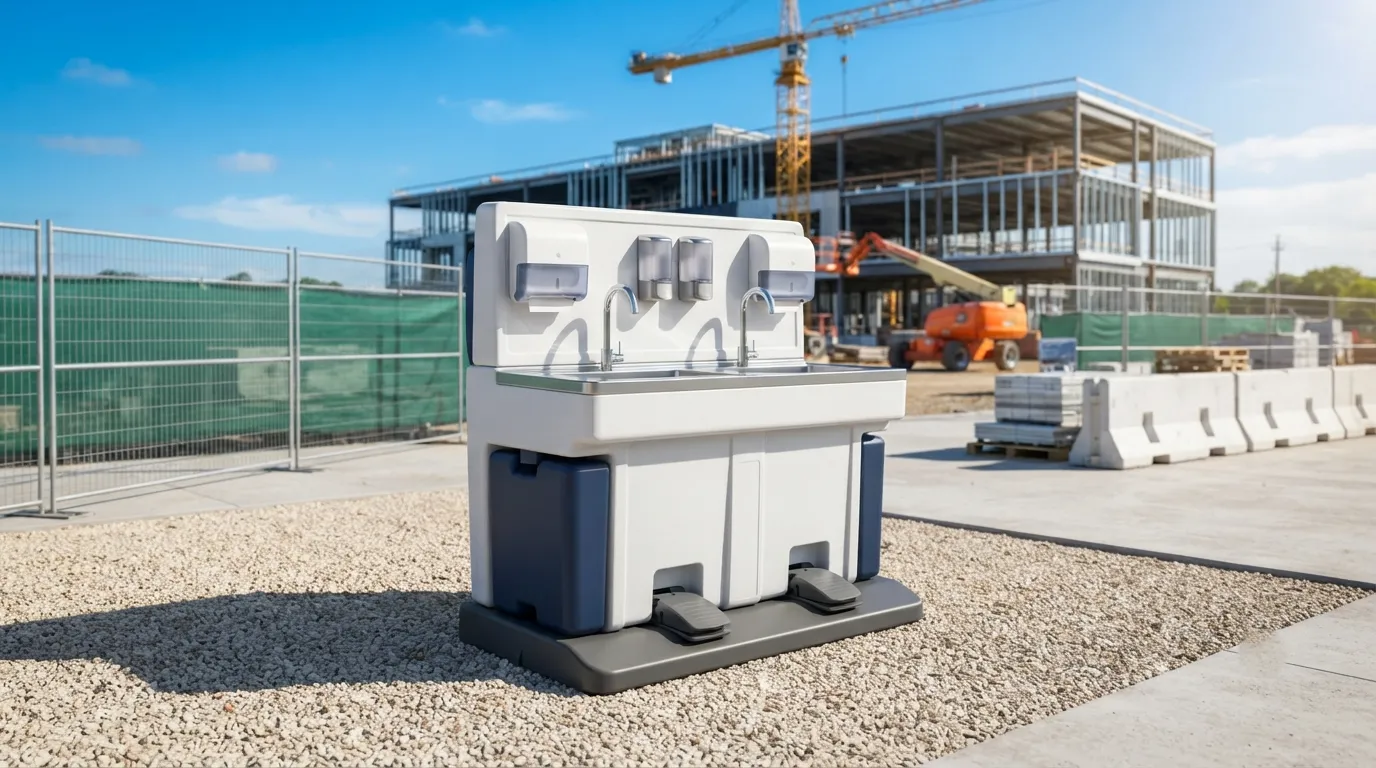
- Heated portable sinks, which do
- Light tower rental for the period before the pole is live
- Mobile office trailer rental, which needs the pole before it is useful
- Storage container rental, including refrigerated boxes that need a continuous feed
This page exists because the sequencing question comes up on nearly every site we serve, and getting it wrong costs weeks. Read it as planning information rather than as a service listing.
What the code actually requires
Temporary wiring on a construction site is covered by Article 590 of the National Electrical Code, which is adopted in Philadelphia through the city's electrical subcode in Title 4. Two requirements come up on every inspection.
Ground fault protection. NEC 590.6(A)(1) requires GFCI protection for all 125 volt, single phase, 15, 20 and 30 ampere receptacle outlets used for temporary power. OSHA says the same thing from the other direction: 1926.404(b)(1)(ii) requires GFCI on all 120 volt, single phase 15 and 20 ampere receptacle outlets that are not part of the permanent wiring, with an assured equipment grounding conductor program under (b)(1)(iii) as the only alternative.
Clearance. NEC 225.18 sets the minimum vertical clearances for overhead conductors, and these are the numbers that decide how tall the post has to be.
| Over | Minimum clearance |
|---|---|
| Finished grade, accessible to pedestrians only | 10 ft |
| Residential property and driveways, and commercial areas not subject to truck traffic | 12 ft |
| Public streets, alleys, roads and parking areas subject to truck traffic | 18 ft |
That 18 foot figure is the one that catches city sites, because a temporary drop crossing a rowhouse street or an alley used by delivery vehicles has to hold it.
Who issues the permit in Philadelphia?
The Department of Licenses and Inspections. The electrical permit is pulled by a licensed electrical contractor, the work is inspected, and the utility connects once the installation passes. PECO is the electric utility for Philadelphia and the surrounding counties, and its published service requirements set the attachment point, the meter height and the location the pole has to sit in.
Two pieces of sequencing worth writing down:
- The permit and inspection come before the utility connection, not alongside it
- The pole position is agreed with the utility, and it may not be where your site plan wanted it
For contrast, Philadelphia's genuinely unusual routing is portable sanitation. Portable toilet and holding tank applications go to the Department of Public Health under its infectious waste program rather than to a streets or transportation department, which surprises contractors every week and is set out on porta potty permit requirements. Skip permits run differently again through dumpster permit requirements.
100 amp or 200 amp?
It depends on what is actually running, and the honest answer is usually more than the first estimate.
What pushes a site toward 200 amp:
- A mobile office trailer with HVAC, which is a real load in a Philadelphia August
- Site lighting on a permanent circuit rather than a towable light tower
- A refrigerated container
- Welders, compressors and multiple large tools at once
- A second trailer added mid project, which happens more often than it is planned
Undersizing means either a service upgrade later or a generator alongside, and both cost more than getting it right at the start. Ask the electrical contractor to size it against the full compound rather than against day one.
Sequencing the compound around the pole
The pole is the item with the longest lead time on most Philadelphia sites, and it is usually the last thing anyone orders. Work backwards from it.
A realistic order of operations:
- Site fenced, so the compound is defined. See temporary fence rental and
- Toilets and washing on site from day one, because OSHA 1926.51(c)(1) puts the toilet requirement at one
unit for 20 or fewer workers regardless of what else is ready
- Light towers covering the dark months while the pole is pending
- Pole permitted, installed, inspected and energised
- Office trailer set, connected and occupied
- Storage and skips as the work phases demand, from
20ft containers to construction dumpsters
Steps 1 to 3 are ours and can happen in days. Step 4 is not, and it is not fast.
What does a temporary power pole cost?
We do not price electrical work, and we will not publish a number for something we do not sell. Get that figure from a licensed electrical contractor, and get it as an itemised quote covering the pole, the panel, the permit, the inspection and the utility connection.
What we can put published numbers against is the rest of the compound, from market data reviewed July 2026: delivery and collection at $50 to $150, storage containers at $100 to $250 a month with $125 typical, temporary fencing at $30 to $75 a day with $50 typical, and weekly service on portable units at $30 to $220 with $60 typical. Detail on storage container rental cost, temporary fence cost and porta potty rental cost.
Questions about temporary power poles
Can I use a generator instead?For a short job, often yes, and it is what most rowhouse renovations do. For a year long build with an office trailer, a metered service is cheaper and quieter. Note that Philadelphia Code Title 10, Chapter 10-400 covers noise and excessive vibration, which is worth reading before a generator runs overnight next to houses.
Who owns the pole?Your electrical contractor installs it and it comes down at the end of the job. It is not utility property.
Does it need lighting on it?Not by itself, but the site does. OSHA 1926.56(a) requires 5 foot candles across general construction areas and 30 foot candles in offices and first aid stations.
Can you deliver equipment before the power is on?Yes, and that is the normal sequence. Toilets, washing, fencing and lighting all arrive before any electrician does. See construction site services.
What about a rowhouse renovation with no room for a compound?Then it is a generator, a 10 yard dumpster and units on the frontage, which is the standard home renovation setup in this city.

Book the site services around it
Is temporary power pole rental a thing?
Some yards rent them. Most Philadelphia jobs buy and install, then remove at the end.
Who handles installing temporary power pole work?
A licensed electrician. Temporary power pole installation is inspected before the utility connects.
What are the temporary power pole requirements?
Height, bracing, a weatherproof panel and a ground rod. The inspector checks all four.
Tell us the site, the phase and the dates, and we will get toilets, washing, fencing and lighting standing while the electrical work goes through permit. Request a quote or contact us. Also read monthly porta potty rental, 40ft storage containers, service areas, porta potty rental in Philadelphia, the FAQ and the home page.
Next step
Get a delivery date
Tell us the address, the dates and the headcount. We size the order and confirm the route.